

| 1. | PROLOG |
| 2. | POZADINA |
| 3. | PERCEPCIJE - NEKADA I SAD |
| 3.1. | Enes Zlatar Bure |
| 3.2. | Nedžad Begović |
| 3.3. | Una Bejtović |
| 3.4. | Amina Begović |
| 3.5. | Adi Sarajlić |
| 3.6. | Sabrina Begović-Ćorić |
| 3.7. | Srđan Jevđević |
| 3.8. | Haris Pašović |
| 3.9. | Vesna Mišanović |
| 3.10. | Amra Zulfikarpašić |
| 3.11. | Amina Begović |
| 3.12. | Fuad Babić |
| 3.13. | Riad Ljutović |
| 3.14. | Prof. Rešad Arnautović |
| 3.15. | Arijana Saračević Helać |
| 3.16. | Selma Hodžić / Sanina Rizvanbegović |
| 3.17. | Prof. Ognjenka Finci |
| 3.18. | Ferida Duraković |
| 3.19. | Dr. Bakir Nakaš / Dr. Vesna Čengić |
| 3.20. | Mladen Jeličić Troko |
| 3.21. | Maja Tulić |
| 3.22. | Dragan Rokvić |
| 3.23. | Šemsa Mehmedović |
| 3.24. | Adnan Harambašić |
| 4. | INTERAKTIVNA MAPA OPSTANKA |
| 5. | REFERENCE |
|
Umijeće preživljavanja #2
BITI ISPRED STRAHA |
|
Umijeće preživljavanja #1
MAPIRANJE GRADA POD OPSADOM |
| 1. | PROLOG |
| 2. | POZADINA |
| 3. | PERCEPCIJE - NEKADA I SAD |
| 3.1. | Enes Zlatar Bure |
| 3.2. | Nedžad Begović |
| 3.3. | Una Bejtović |
| 3.4. | Amina Begović |
| 3.5. | Adi Sarajlić |
| 3.6. | Sabrina Begović-Ćorić |
| 3.7. | Srđan Jevđević |
| 3.8. | Haris Pašović |
| 3.9. | Vesna Mišanović |
| 3.10. | Amra Zulfikarpašić |
| 3.11. | Amina Begović |
| 3.12. | Fuad Babić |
| 3.13. | Riad Ljutović |
| 3.14. | Prof. Rešad Arnautović |
| 3.15. | Arijana Saračević Helać |
| 3.16. | Selma Hodžić / Sanina Rizvanbegović |
| 3.17. | Prof. Ognjenka Finci |
| 3.18. | Ferida Duraković |
| 3.19. | Dr. Bakir Nakaš / Dr. Vesna Čengić |
| 3.20. | Mladen Jeličić Troko |
| 3.21. | Maja Tulić |
| 3.22. | Dragan Rokvić |
| 3.23. | Šemsa Mehmedović |
| 3.24. | Adnan Harambašić |
| 4. | INTERAKTIVNA MAPA OPSTANKA |
| 5. | REFERENCE |
|
Umijeće preživljavanja #2
BITI ISPRED STRAHA |
|
Umijeće preživljavanja #1
MAPIRANJE GRADA POD OPSADOM |
3.15.
Arijana Saračević Helać
"Jednog dana ste novinar, a već narednog ste ratni izvještač"
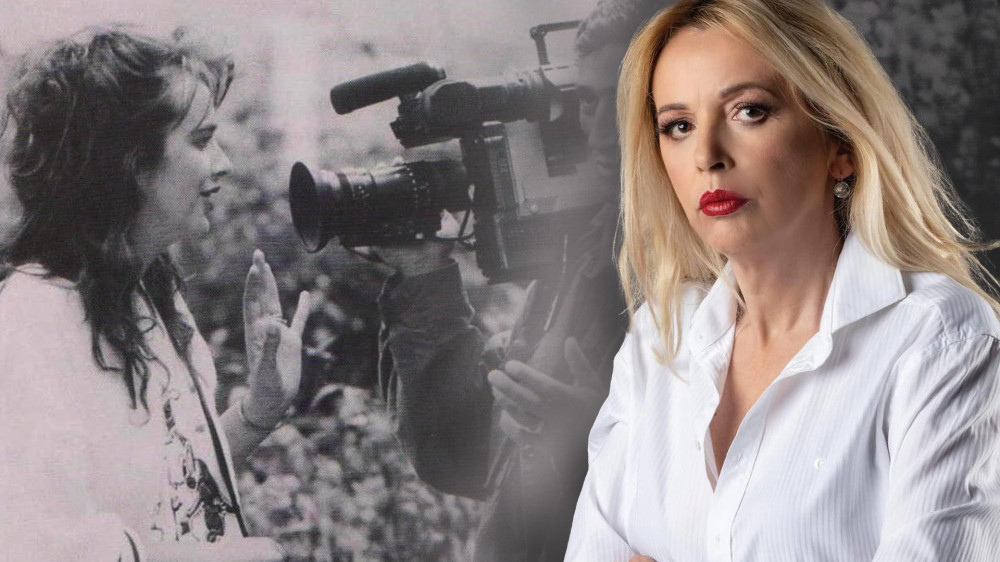
Arijana Saračević Helać, lični arhiv - Nekada (Opsada Sarajeva 1992-96.) i sada...
Novinari i reporteri tokom opsade Sarajeva pokazuju iznimnu hrabrost i požrtvovanost. Oni rizikuju živote da bi zabilježili događaje u gradu pod opsadom i da bi svoje sugrađane opskrbljivali najvažnijim informacijama koje su mnogo značile za dnevno preživljavanje. Njima se vjeruje i njihov glas se čita i čuje u domovima dok izvještavaju sa mjesta masakra, svakodnevno sa ulica ili direktno sa linije. Arijana Saračević Helać govori o radu ratnih reportera i rizicima o kojima za vrijeme opsade grada nisu razmišljali.
"Ali u takvim situacijama adrenalin preuzima, a svaka nova priča postaje misija. Strah se potiskuje jer znate da ako stanete, ako ne ispričate ono što ste vidjeli, onda će ti ljudi koji pate ostati bez glasa. Možda je to bio moj način da se borim. S mikrofonom i kamerom protiv nepravde i zaborava. Danas, kad se osvrnem unazad, shvatim koliko je bilo važno da ostanemo i radimo svoj posao. Jer bez tih izvještaja, svijet možda nikada ne bi saznao istinu o opsadi Sarajeva."
FAMA Methodology has dedicated its work to the culture of remembrance, and you are the right interlocutor for this topic. You are the author of several documentaries whose topic is the siege of Sarajevo. Among them are “Shoot, I am still teaching class” about schooling during the siege, which was shown at the 30th Sarajevo Film Festival, among other, and “Remember my song” about the musical unit of the 1st Art Company of the Army of the Republic of Bosnia and Herzegovina. What are your personal and professional motives for telling these important stories from everyday life during the siege of the city today? What is your opinion on today's culture of remembrance about the city under siege?
Arijana Saračević Helać: Journalists deal with the culture of memory of the siege of Sarajevo for several key reasons. First of all, to preserve the historical truth, because the siege of Sarajevo is one of the longest and most documented war events of the modern era. Journalists have the responsibility to protect facts from distortion and forgetting through investigative articles, documentaries and interviews with witnesses. At a time when history is often revised for political reasons, journalistic work serves as a counterweight to misinformation.
Also, our obligation is to educate new generations who did not directly experience the siege and who learn about it through media content. Journalists play a key role in transmitting knowledge, whether through television reports, digital projects or multimedia documents. Journalists analyse the social and political consequences. The siege of Sarajevo left deep traces on the society, economy and politics of Bosnia and Herzegovina. We investigate how war traumas, migrations and urban development shaped contemporary Sarajevo. We also investigate how the politics of remembrance is reflected in education, laws and international relations. Personally, I believe that facing the past and reconciliation is very important today and perhaps that is why I do not give up on these difficult topics that we remember less and less. The culture of remembrance plays a key role in the reconciliation process. The media opens up space for dialogue between different communities, enabling facing the past through the testimonies of survivors, research on war crimes and court verdicts.
I will never give up on the fact that the siege as a symbol of resistance is of global importance. It has become a symbol of civil resistance and survival in extreme conditions. International journalists and filmmakers continue to explore this topic because it carries universal messages about human endurance, courage and suffering. Sarajevo has become a metaphor for besieged cities in later conflicts, which further motivates journalists to deal with this topic, especially me, who witnessed the event. After my last documentary, my colleague from the Culture Desk, who is not from Sarajevo, came to me and said: “Thank you. I knew nothing about the siege of Sarajevo, watching your films, I learned everything.” Well, that is my mission. Essentially, journalists deal with the siege of Sarajevo because it is a key part of collective memory, while at the same time providing insight into the broader themes of war, justice and human rights.
During the siege, you became a war reporter. Due to the daily uncertainty, the citizens of Sarajevo eagerly awaited your every report from the war front or with news from different parts of the city. Can you describe your first journalistic assignments during the siege? How did your work change during the four years of the siege? How did you cope with the constant risk of death and fear, if there was any?
Arijana Saračević Helać: My first journalistic assignments during the siege were completely different from anything I had done before. In the early days of the war, everything was chaotic. None of us were prepared for what was coming. One day you are a journalist, and the next you are a war correspondent, without any prior training or protection. The first reports were almost improvised. We ran through the city under shelling, searching for information, talking to people who were already losing their homes, loved ones, and sometimes even hope.
During the four years of siege, my work changed along with the war. In the first months, we all still believed that this would end quickly, but as the years passed, we realized that we were reporting not only on the conflict, but also on the incredible struggle of citizens to survive. In addition to reporting from the front lines, we increasingly documented life inside the city, people improvising tin stoves, playing concerts in basements, writing songs while snipers lurked from the hills.
Dealing with constant risk was challenging, but fear could never take control. Of course, there were moments when I felt panic: a grenade falls close, snipers shoot without warning, colleagues are killed... But in such situations, adrenaline takes over, and each new story becomes a mission. Fear is suppressed because you know that if you stop, if you don't tell what you saw, then those people who are suffering will be left without a voice. Maybe that was my way of fighting. With a microphone and a camera against injustice and oblivion. Today, when I look back, I realize how important it was for us to stay and do our job. Because without those reports, the world might never have known the truth about the siege of Sarajevo
Which assignment from the time of the siege of Sarajevo was particularly difficult for you and which would you not want to repeat?
Arijana Saračević Helać: If there is a worst job in journalism, it is definitely being a war reporter. In that position, you see and experience the darkest scenes. In one hand you have a microphone, and in the other, very often, a wounded person whom you are helping to get to an ambulance, a car or while waiting for help. I remember that in those moments I always waited for my death because the unwritten rule was: Another grenade is coming. I definitely would not tolerate any more massacres, like the one at the Markale market where I found myself nearby and helping the wounded. A human brain stuck to my pants.
You gave hope to the citizens, you were the voice that said that the future exists. That life exists. And in crisis situations, you were the voice of reason. Were you aware of your important role at the time?
Arijana Saračević Helać: During the siege, I didn't think about my role in the way you're describing it now. Everything was too intense, too raw. Every day was a struggle for information, for a way to convey it, for my own survival. I didn't allow myself to think about being someone's "voice of reason" or a symbol of hope. It was only later that I realized how much what we did meant to people.
We witnessed horror, but also resilience. We may not have been able to change the course of the war, but we could tell people that they were not alone. When we could bring news from the scene that a hill had been liberated or lost, that humanitarian aid had arrived somewhere, that a bakery was open, that a street was passable, that was information that literally meant life.
Was I aware of my role? At that moment, no. I didn't have time to look back. But now, when people meet me and tell me that they survived those days because they listened to us, because we reminded them that they were not alone, I only now understand how important that was. I was always on the locations where people wanted, expected news. And people remember that today. I am grateful to them for that.
During the siege, you became the embodiment of courage and truthful reporting. You were trusted then. You are trusted today. How do you explain the great trust of the citizens of Sarajevo in your reporting, from the very beginning? If we think of this interview as a "masterclass" on journalism, what would you single out as the qualities that a journalist must possess in order to become authentic, objective and recognizable in times of crisis and peace? Do journalists today strive for such qualities or is journalism moving away from such values?
Arijana Saračević Helać: Trust is not built overnight. I think the citizens of Sarajevo trusted me because I shared their fate. I was not reporting from a safe studio, but from the same streets they ran through under sniper fire. When you smell the burning, hear the scream of a wounded child, see a man carrying a canister of water while bullets whizz around him. That's when you realize that there is no room for sensationalism, no room for untruth. People trusted my words because they knew they came from real experience, without embellishment, but also without unnecessary fear-mongering.
What makes a journalist authentic, objective, and recognizable? First of all, the courage to seek the truth, even when it is not desirable. Empathy, because without it, a journalist becomes just a cold transmitter of information. Integrity, because once you betray the audience's trust, there is no going back. And, perhaps most importantly, the ability to find the human story in everything. Because war, politics, crises—it all ultimately comes down to people and their destinies.
And today? Do journalists strive for these values? I think many are still committed to the truth, but we live in a time when speed often trumps accuracy, and sensation replaces substance. Journalism faces the challenges of the digital age, where clicks have become more important than credibility, and algorithms determine what the audience will read. However, I believe that there will always be those who will fight for the true value of the profession. Because if we lose true journalism, then we also lose the ability to understand the world around us.
We all agree that women played an extremely important role in everyday survival during the siege of Sarajevo. Women played an important role as mothers, doctors, educators, breadwinners, scientists, actresses, journalists... War journalism in itself carries a special weight of task and great responsibility, courage. However, being a war reporter represents a special professional challenge. What did it mean to be a woman during the siege, and what did it mean to be a female war reporter?
Arijana Saračević Helać: Being a woman under siege meant carrying a double burden: that of daily survival, and that of emotional strength for others. Women were the pillars of families, communities, institutions. Mothers kept children in basements while shells fell around them. Female doctors saved lives in impossible conditions. Actresses performed plays in shelters to give people moments of normality. Every woman under siege was both a warrior and a guardian of life.
And being a female war reporter? That meant another extra struggle. There were days when I would run around the city all day, reporting from the battlefield, and then return to an apartment with no electricity, no running water, no heating. There was no special treatment because I was a woman, the shells didn't choose, the snipers didn't discriminate. Yet there was also an invisible struggle: proving that you were just as ready, just as brave, and just as capable as your male colleagues.
But what the war did, paradoxically, was make us all equal. In that chaos, it no longer mattered whether you were a man or a woman, but only whether you were there, whether you were able to bring information, to shoot a frame, to ask the right question.
Today, when I look back, I am proud of the women of Sarajevo. Of each and every one of them. Of the mothers who carried water canisters, of the female doctors who operated by candlelight, of the female journalists who told the story of this city under sniper fire. They were the invisible heroes of the siege. And we, who had the opportunity to speak, were their voice.
Looking back from today's perspective, would you have done anything differently?
Arijana Saračević Helać: Looking back from today's perspective, it's hard to say I would have done anything differently, because in war there is no room for planning, strategy, or ideal decisions. Everything we did was driven by the moment, instinct, the need to convey the truth and survive.
Maybe I would have filmed more, recorded even more stories, even more destinies. So many people have passed through my reports, but just as many never got the chance to tell their story. Today I regret every testimony that was not recorded, because with time memories fade, and the truth must remain permanent.
Maybe I would have taken better care of myself. Back then, we didn't think about mental health, about the traumas we carry for years afterwards. War teaches you to suppress fear, pain and fatigue, but all of that catches up with you eventually. I was also pregnant during the siege and had a son in impossible conditions.
But what I certainly wouldn't change is my decision to stay, to be here, to do my job without compromise. Because if we helped the world see what was happening with at least one report, if we gave hope to at least one person, then nothing was in vain.
In our archive we found a video in which you talk about the World Journalism Award for Courage that you were awarded in 1993. What did it mean to you then, and what does this award mean today? You are among the rare civilians who have recieved the decoration Zlatni ljiljan (Golden Lily). What do awards and decorations for your journalistic engagement during the war mean to you from today's perspective?
Arijana Saračević Helać: When I received the World Journalism Award for Courage in 1993, I was in the besieged city, in a war that did not choose its victims. Honestly, I did not have time to think about awards at that time. All that mattered to me was that we kept working, that we kept telling the story of Sarajevo and its people. But when you receive recognition of that magnitude, you realize that your work resonates, that the truth still finds its way to the world. That award was not just mine—it belonged to all the journalists who reported from the siege in impossible conditions, conveying the voices of those who did not have the opportunity to be heard. Today, from this perspective, that award carries a different weight. It is a reminder of a time when journalism was more than a profession, it was a mission, a fight against oblivion.
The Golden Lily? Being one of the few civilians to receive this decoration is a huge honour for me, but also a reminder of all those who fought not only with weapons, but also with words, cameras, and truth. I knew how much that medal meant to the soldiers, the people who defended this city, and that's why it was a special symbol of recognition for me.
But awards alone are not what remain. What remains are the stories, the testimonies, the truth we recorded. If our words helped the world understand what was happening in Sarajevo, if they helped it not be forgotten, then those are the most important recognitions we could have received.
Describe your day during the siege of Sarajevo.
Arijana Saračević Helać: Every day in the siege of Sarajevo was uncertain, but they all started the same—with the sound of shells. There were no alarms, no morning news to listen to with your coffee. Instead, we woke up to explosions. If it was a "quieter" day, we knew it would soon get worse.
Getting up quickly, getting dressed in the dark. There was usually no electricity, water came occasionally, and food, as much as could be found. We didn't think about breakfast, we thought about where we would go that day and how we would move through the city without becoming a target for snipers.
Going out for an assignment was a game of survival. Where to go? Which street? Which bridge is not a target today? We filmed destroyed buildings, people queuing for water, a hospital full of wounded. The hardest part was doing interviews with those who had lost someone. You watch a mother talking about her son who is no longer there, you watch a man who has just lost his home. And you have no right to show weakness.
Live broadcasts were a special story. The technology was limited, the connections were bad, but the voice had to be confident, clear. People listened to us not only to find out the news, but also to feel that they were not alone.
Returning home did not mean rest. If we were lucky, we would catch a few hours of sleep, but always listening with half an ear to see if there was a detonation somewhere. The darkness in Sarajevo was a special fear—in the dark, snipers are even more dangerous, grenades even more devastating. And so, day after day. Each one was the same, and yet completely different. You never knew if you would see tomorrow. But what I remember, besides the fear and destruction, is the incredible strength of people. Horror and death were all around us, but despite that, Sarajevo lived. People played the piano in the ruins, made exhibitions, sang in shelters. And we journalists were there to record every moment, so that the world would not forget.
Više na ovu temu u našoj Makro priči.