
Bosnia language flag

Chronology → Video Oral History

The Siege of Sarajevo 1992–1996

This Interactive FAMA Project integrates the documented chronology of the Siege of Sarajevo with first-hand testimonies within a single interface.

The material can be explored month by month by selecting any point between March 1992 and March 1996. For each chosen month, the user can review the corresponding textual chronology alongside video oral history interviews from the same period. By aligning the chronology of events with personal experiences, the platform enables a more layered, contextual exploration of how the siege unfolded over time.

The Siege of Sarajevo: Chronology 1992-1996

Compiled shortly after the war, this comprehensive chronology of the Sarajevo siege covers the period from March 1992 to March 1996. Structured by month and year, it draws on articles from the "Oslobođenje" newspaper, UN archives, reports from foreign correspondents, and citizen testimonies to document key social, political, military, cultural, and personal events of that time. By recording major developments and everyday survival, the chronology remains a vital reference for understanding how the siege unfolded and transformed every aspect of city life.

Oral History: The Siege of Sarajevo 1992-1996, video

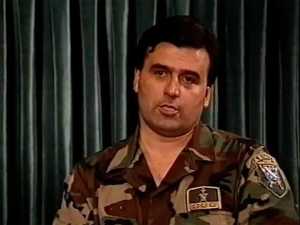
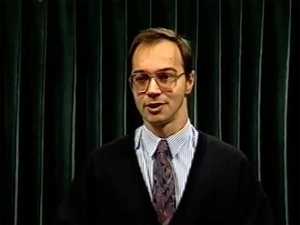
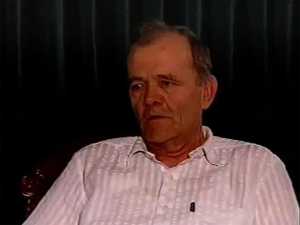
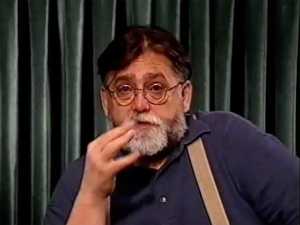
Structured chronologically and thematically, this is the first and largest video oral history of the Sarajevo siege in the world, featuring nearly 1,000 interviews with over 450 citizens from diverse backgrounds. Produced soon after the war, it presents personal testimonies covering all aspects of life in the besieged city. This 30-hour collection serves as both an educational resource and a historical record, offering future generations an unparalleled insight into first-hand accounts of the longest urban siege in modern history.

Chronology → Video Oral History

The Siege of Sarajevo 1992–1996

This Interactive FAMA Project integrates the documented chronology of the Siege of Sarajevo with first-hand testimonies within a single interface.

The material can be explored month by month by selecting any point between March 1992 and March 1996. For each chosen month, the user can review the corresponding textual chronology alongside video oral history interviews from the same period. By aligning the chronology of events with personal experiences, the platform enables a more layered, contextual exploration of how the siege unfolded over time.

The Siege of Sarajevo: Chronology 1992-1996

Compiled shortly after the war, this comprehensive chronology of the Sarajevo siege covers the period from March 1992 to March 1996. Structured by month and year, it draws on articles from the “Oslobođenje” newspaper, UN archives, reports from foreign correspondents, and citizen testimonies to document key social, political, military, cultural, and personal events of that time. By recording major developments and everyday survival, the chronology remains a vital reference for understanding how the siege unfolded and transformed every aspect of city life.

Oral History: The Siege of Sarajevo 1992-1996, video

Structured chronologically and thematically, this is the first and largest video oral history of the Sarajevo siege in the world, featuring nearly 1,000 interviews with over 450 citizens from diverse backgrounds. Produced soon after the war, it presents personal testimonies covering all aspects of life in the besieged city. This 30-hour collection serves as both an educational resource and a historical record, offering future generations an unparalleled insight into first-hand accounts of the longest urban siege in modern history.
Chronology

  • The Serbs set up anti-aircraft defenses near Sarajevo.
  • Willy Claes, NATO Secretary General: "The important thing is unity within the organization - Bosnia has created conflict between us.
  • Sarajevo: The Bosnian Serbs close the valves on the gas lines.
  • Bihac Krajina: The Fifth Corps manages to repel attacks; the aggressor is losing power.
  • Radovan Karadzic threatens to order fire on NATO planes if they continue to monitor the airspace of Bosnia and Herzegovina.
  • Missile attack on the Presidency building.
  • A child killed by a bullet from a sniper.
  • "Oil War": In 10 days diesel fuel for the UN will be gone, and in three days there will be no gasoline. The UN will stop all activities: no repairs, no escort for humanitarian aid, no anti-sniper teams.
  • In the city on the post office building graffiti appears: "THIS IS SERBIA!" A reply written next to it: "THIS IS A POST OFFICE, YOU IDIOT." At another building: “TITO, COME BACK TO US!" The written reply:" I'M NOT INSANE." - with Tito's signature.
  • The city takes action collecting signatures for a declaration on an undivided Sarajevo. Moscow: at the organization of the European Cultural Club, 120 public and cultural workers sign the declaration on an undivided Sarajevo.
  • The Pope receives a visit from the Sarajevo choir "Trebevic."
  • Nobel Peace Prize awarded to Rabin, Arafat and Peres.
  • Danish convoy with fuel hijacked near the airport. They were surrounded by Bosnian Serbs with rifles pointed, who then jumped into the trucks. Ilidza is now popularly called the Bermuda Triangle, because it’s where equipment and fuel disappear.
  • Gas pressure increases, the price of firewood is dropping: sacks of firewood - 15 DM.
  • Chess Olympiad in Moscow. BiH – Ukraine; 3 -1 in favor of BiH.
  • Moscow does not want UN troops to leave BiH, since it would mean that the arms embargo would be lifted for the Government of BiH.
  • In Belgrade, Podgorica, Zagreb, France and Spain people give their signatures to the declaration for an indivisible Sarajevo.
  • A new round of humanitarian aid in the city: 1 kilogram of rice, 200 grams of beans, 150 grams of oil, a can with 340 grams of processed meat, 2 kilograms of flour.
  • The anti-sniper team returns fire 19 times.
  • Discussion at NATO: Is the UN pulling out from Bosnia or not?
  • Employees of the UN learn over the television news that former U.S. President Jimmy Carter comes to Bosnia with the latest peace initiative, at the invitation of the Bosnian Serbs. Karadzic calls CNN in Atlanta and presents this initiative to the public. On the occasion, Jimmy Carter says: "I come as a private citizen and as a representative of the Carter Center."
  • Boutros Boutros-Ghali: "The UN has no money. Bangladesh could not furnish their UN team and this is why the situation is so dire in Bihac. "
  • The U.S. government supports Carter's mission.
  • For each released "blue helmet" UNPROFOR gives 1 ton of fuel to the Bosnian Serbs.
  • 179,653 signatures collected from 35 countries for "Sarajevo, an undivided city."
  • Carter meets in Zagreb with Croatian President, Franjo Tudjman, and Prime Minister of the Federation of BiH, Haris Silajdzic.
  • Vatican: After talks with Carter, the Pope says: "It's time that peace reign."
  • Prime Minister of France, François Léotard: "We decided to deliver humanitarian aid, regardless of the consequences, to deploy a new peacekeeping force and open corridors, because otherwise the Americans will lift the arms embargo, and with that we will be forced to leave."
  • A representative of the White House, regarding Carter's peace initiative: "Carter argues that the Bosnian Serbs want peace and that the American people do not understand them. The Serbs were the aggressors in this war. Americans can see what is going on there. Carter says that this is just one side of the story. The motives of this mission raise suspicion, but if it is successful, we will agree to it. "
  • Carter: "The Bosnian Serbs agreed to a four-month ceasefire and during that time to begin negotiating a peace plan." Radovan Karadzic, on this occasion: "It’s remarkable, but he brought me back to the negotiating table."
  • The Russian army attacks Grozny, the capital of Chechnya.
  • At the chess Olympiad in Moscow, the BiH team wins a silver medal. A Christmas concert is held at the National Theatre, organized by the "King Tvrtko" brigade for morale.
  • The Ministerial Council of the European Union: "We agree to the mediation of Jimmy Carter, provided he agrees to achieve a peace plan according to a 51:49 division."
  • Santa Claus arrives from Cannes.
  • Ceasefire agreement for 4 months and 7 days
  • Command of the United Nations for Bosnia receives permission from Karadzic's Serbs for 11 convoys of the requested 12.
  • Christmas Mass held in the Cathedral. Nine popular Christmas carols are sung by the choir "Trebevic".
  • The aggressor does not respect the cease-fire in Bihac.
  • At the border of Bosnia with Serbia and Montenegro: shooting at night, so observers hide in nearby houses, while passage for smuggling of "anything" is free. Because of the observers, the helicopters are flying with a false label of the Red Cross. They carry smuggled goods.
  • The Mayor of Venice arrives in Sarajevo.
  • The Bosnian Serbs give consent for candles, blankets and tarps to enter Sarajevo. Negotiations are ongoing over the delivery of firewood.
  • For New Year’s every Sarajevan can turn on one lamp and a TV. The utility company Elektrodistribucija hopes citizens will respect it.
  • Among their humanitarian aid residents receive 50 year-old biscuits.

Video Oral History

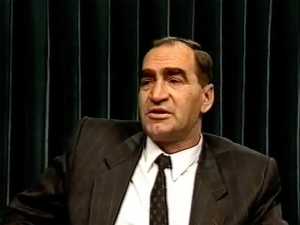
Bećir Gribajčević
SERBS CLOSE THE GAS VALVES
FC-VOH-99-858 | Video
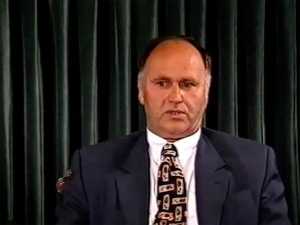
Nijaz Duraković
SHELLING OF THE PRESIDENCY BUILDING
FC-VOH-99-859 | Video
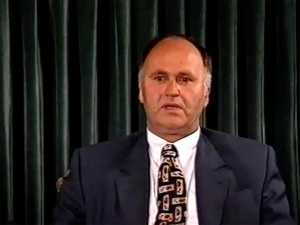
Vahid Karavelić
BH ARMY SUCCESS ON IGMAN
FC-VOH-99-865 | Video
Vlastimir Mijović
RUSSIAN ARMY ATTACKS GROZNY
FC-VOH-99-866 | Video
Ivan Mršo
CHRISTMAS MASS IN THE CATHEDRAL
FC-VOH-99-870 | Video
Huso Česko
GAS EXPLOSIONS
FC-VOH-99-871 | Video
Sulejman Kukavica
KUKAVICA STARTS THE SHOES MANUFACTURING
FC-VOH-99-861 | Video
Vlatko Določek
SIGNATORIES OF THE DECLARATION
FC-VOH-99-864 | Video
Mijat Zubak
VRHBOSNA BROADCASTS AGAIN
FC-VOH-99-868 | Video
Mladen-Troka Jeličić
SANTA ARRIVES FROM CANNES
FC-VOH-99-869 | Video