
Bosnia language flag

Chronology → Video Oral History

The Siege of Sarajevo 1992–1996

This Interactive FAMA Project integrates the documented chronology of the Siege of Sarajevo with first-hand testimonies within a single interface.

The material can be explored month by month by selecting any point between March 1992 and March 1996. For each chosen month, the user can review the corresponding textual chronology alongside video oral history interviews from the same period. By aligning the chronology of events with personal experiences, the platform enables a more layered, contextual exploration of how the siege unfolded over time.

The Siege of Sarajevo: Chronology 1992-1996

Compiled shortly after the war, this comprehensive chronology of the Sarajevo siege covers the period from March 1992 to March 1996. Structured by month and year, it draws on articles from the "Oslobođenje" newspaper, UN archives, reports from foreign correspondents, and citizen testimonies to document key social, political, military, cultural, and personal events of that time. By recording major developments and everyday survival, the chronology remains a vital reference for understanding how the siege unfolded and transformed every aspect of city life.

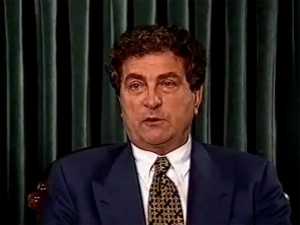
Oral History: The Siege of Sarajevo 1992-1996, video

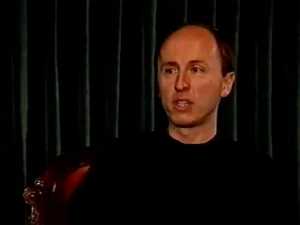
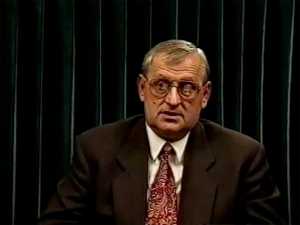
Structured chronologically and thematically, this is the first and largest video oral history of the Sarajevo siege in the world, featuring nearly 1,000 interviews with over 450 citizens from diverse backgrounds. Produced soon after the war, it presents personal testimonies covering all aspects of life in the besieged city. This 30-hour collection serves as both an educational resource and a historical record, offering future generations an unparalleled insight into first-hand accounts of the longest urban siege in modern history.
Chronology → Video Oral History

The Siege of Sarajevo 1992–1996

This Interactive FAMA Project integrates the documented chronology of the Siege of Sarajevo with first-hand testimonies within a single interface.

The material can be explored month by month by selecting any point between March 1992 and March 1996. For each chosen month, the user can review the corresponding textual chronology alongside video oral history interviews from the same period. By aligning the chronology of events with personal experiences, the platform enables a more layered, contextual exploration of how the siege unfolded over time.

The Siege of Sarajevo: Chronology 1992-1996

Compiled shortly after the war, this comprehensive chronology of the Sarajevo siege covers the period from March 1992 to March 1996. Structured by month and year, it draws on articles from the “Oslobođenje” newspaper, UN archives, reports from foreign correspondents, and citizen testimonies to document key social, political, military, cultural, and personal events of that time. By recording major developments and everyday survival, the chronology remains a vital reference for understanding how the siege unfolded and transformed every aspect of city life.

Oral History: The Siege of Sarajevo 1992-1996, video

Structured chronologically and thematically, this is the first and largest video oral history of the Sarajevo siege in the world, featuring nearly 1,000 interviews with over 450 citizens from diverse backgrounds. Produced soon after the war, it presents personal testimonies covering all aspects of life in the besieged city. This 30-hour collection serves as both an educational resource and a historical record, offering future generations an unparalleled insight into first-hand accounts of the longest urban siege in modern history.
Chronology

  • Izetbegovic: The conditions for a ceasefire open the way to Gorazde.
  • Holbrooke: “The U.S. thinks the time has come for the fighting to stop.”
  • Holbrooke again in Sarajevo.
  • BiH delegation in Russia. Russia is ready to unblock the delivery of gas, but the debt problem remains.
  • Borisav Jovic, former president of the new Yugoslavia gives an interview to the Austrian television network SRS: “We asked for support from Russia at the start of the war and a guarantee that they would protect us if the West intervened against us. When they refused support, the Serb aggression began. Symbolically in Slovenia, in Croatia on a wider scale and genocidally destructively in BiH.
  • Russia will deliver gas and recognize Bosnia and Herzegovina.
  • Mostar: after three years the traffic lights function.
  • Sarajevo: head of the UNPROFOR repair team: “There will be electricity by the end of the week, while the matter of its distribution is a political decision."
  • The Serb Civic Council of Sarajevo receives the “Just life” award from Sweden for achievements in ethnic acceptance and democracy.
  • The bombing of Serb anti-aircraft positions serves as a preventive measure to eliminate a threat to alliance planes.
  • Holbrooke in Sarajevo.
  • The U.S. requests renewed attacks in case of attacks on the safe areas in BiH. The U.S. will also consider any interruptions in the supply of electricity, water and gas to Sarajevo a breach of the agreement.
  • Ceasefire agreed upon on Tuesday, October 10.
  • The American negotiating team travels to Belgrade, Sarajevo and Zagreb within 24 hours.
  • ARBiH nears Doboj.
  • Nicolas Burns: “The U.S. will not send its troops into battle. We will not send them into a peace that cannot be preserved, but we will send them to insure the preservation of peace when it is achieved.”
  • Assassination attempt against Kiro Gligorov, president of Macedonia.
  • The Pope performs mass in Central Park in New York.
  • The making and breaking up of Bosnia. For some, defining institutions “through an exhaustive constitution” will strengthen a federal, unified BiH; for others, facilitate its break up.
  • Massacre with cluster bombs in Zivinice in a Muslim refugee camp: nine dead, 50 wounded.
  • NATO planes fly over the site of the attack, but do not act.
  • Negotiations between Russia and the U.S. over Moscow’s participation in multinational forces.
  • Izetbegovic: “The conditions have not been met for a truce. There is no gas, no electricity.”
  • NATO planes operate in the vicinity of Tuzla.
  • After four and a half months, electricity arrives in Sarajevo via Vogosca.
  • Yeltsin signs a decree on the restoration of gas delivery which is Russia’s contribution to the lifting of the siege in Sarajevo and fulfills conditions for a ceasefire. An unnamed Russian diplomat: “It takes at least 6-8 hours for the tubes to fill with gas and have adequate pressure.”
  • Breaking news: the Russian government informs the Clinton administration that they have allowed the flow of natural gas to Bosnia. It is released at the Hungarian border and takes 4-6 hours to reach Sarajevo.
  • The Federal Army liberates Mrkonjic Grad.
  • No agreement reached on the length of the ceasefire.
  • Yasushi Akashi, at his own request, leaves his position at the UN. He will be replaced by Kofi Annan.
  • Commentary of the international community: Akashi is not the right person for relations with NATO at this time.
  • Liberation of Sanski Most. The ARBiH and HV on their way to Prijedor and Banja Luka.
  • The ceasefire is effective on October 12, at 12:01am.
  • Haris Silajdzic: “If you re-establish the supply of electricity to its full capacity we will have a ceasefire.”
  • State Department: “The current ceasefire will be more stable than those which failed over the last 42 months of this Balkan conflict, because it is invested with the credibility of the U.S.”
  • New distribution of force: The Federation of BiH holds 52 %, and the RS 48 % of the territory.
  • “Hit” Square in Mostar becomes the “Spanish” Square. On the 12th a celebration is held on its renaming, because it marks the day Spanish mariners discovered the New World.
  • UNPROFOR report: Water from the Bacevo source can be used after purification through an RS valve to the BiH valve.
  • John Fawcett, a member of the civil administration of the UN in Sarajevo: “Sarajevo didn’t receive water from Bacevo for political reasons. Everything was ready, the pump worked. But water was not a condition for the ceasefire.”
  • The gas travels 3,500 km - a long way from the western Siberian gas fields through the Ukraine, Hungary, Serbia, and the RS to Sarajevo. The Russians have made a political, not a commercial decision. This year Moscow has halted supplying gas to Sarajevo at the request of the Government of BiH because the Bosnian Serbs had been diverting it for their own use.
  • Dispute between Washington and Moscow: Washington does not accept the dual key for commanding international forces.
  • The Pope is desperate to visit Sarajevo.
  • UN civil administrator for Sarajevo, William Eagleton: “We failed with one oversight - WATER. We thought that the flow of water into the city would logically follow the arrival of electricity.” In short, the arrival of supply of water to Sarajevo was not specified in the conditions for the ceasefire.
  • Discovery of mass graves.
  • UNPROFOR Commander General Rupert Smith and Thorvald Stoltenberg are relieved of duty.
  • Willy Claes leaves his position as Secretary General of NATO over charges of corruption.
  • Market reopened at “Markale”.
  • Meeting between Clinton and Yeltsin. The two presidents leave it to military strategists to agree on the command of Russian troops in Bosnia.
  • Yeltsin suggests the Balkan leaders first meet in Moscow and then continue to Dayton for peace negotiations.
  • Bob Dole, a Republican, calls for Milosevic to be refused entry into the U.S.
  • Clinton: “I do not think that anyone in the U.S. should do anything that will undermine an opportunity to end this terrible war."
  • Beginning of the removal of a destroyed bridge near Orasje on the Sava.
  • The Federation at the negotiations in Dayton appears as a unified front.
  • Negotiation meetings in Moscow cancelled. The Russian President Boris Yeltsin has been hospitalized for a month.
  • Russia is no longer a world power. But the U.S. preserves this false image, understanding that the truth about Russia’s power would cause internal chaos in the country.
  • Holbrooke: “The U.S. wanted to launch attacks earlier. When the Dutch battalion was in danger on their base in Potocari, we couldn’t get them, communication was impossible. The entire chain of command was obstructed and paralyzed on both sides of the dual key, because of the Dutch presence in Potocari. It was horrible, horrible…”
  • Pavel Grachev, Russian defense minister: “Russian troops will be under the command of American generals, but not under the NATO banner.”