
Bosnia language flag

Chronology → Video Oral History

The Siege of Sarajevo 1992–1996

This Interactive FAMA Project integrates the documented chronology of the Siege of Sarajevo with first-hand testimonies within a single interface.

The material can be explored month by month by selecting any point between March 1992 and March 1996. For each chosen month, the user can review the corresponding textual chronology alongside video oral history interviews from the same period. By aligning the chronology of events with personal experiences, the platform enables a more layered, contextual exploration of how the siege unfolded over time.

The Siege of Sarajevo: Chronology 1992-1996

Compiled shortly after the war, this comprehensive chronology of the Sarajevo siege covers the period from March 1992 to March 1996. Structured by month and year, it draws on articles from the "Oslobođenje" newspaper, UN archives, reports from foreign correspondents, and citizen testimonies to document key social, political, military, cultural, and personal events of that time. By recording major developments and everyday survival, the chronology remains a vital reference for understanding how the siege unfolded and transformed every aspect of city life.

Oral History: The Siege of Sarajevo 1992-1996, video

Structured chronologically and thematically, this is the first and largest video oral history of the Sarajevo siege in the world, featuring nearly 1,000 interviews with over 450 citizens from diverse backgrounds. Produced soon after the war, it presents personal testimonies covering all aspects of life in the besieged city. This 30-hour collection serves as both an educational resource and a historical record, offering future generations an unparalleled insight into first-hand accounts of the longest urban siege in modern history.
Chronology → Video Oral History

The Siege of Sarajevo 1992–1996

This Interactive FAMA Project integrates the documented chronology of the Siege of Sarajevo with first-hand testimonies within a single interface.

The material can be explored month by month by selecting any point between March 1992 and March 1996. For each chosen month, the user can review the corresponding textual chronology alongside video oral history interviews from the same period. By aligning the chronology of events with personal experiences, the platform enables a more layered, contextual exploration of how the siege unfolded over time.

The Siege of Sarajevo: Chronology 1992-1996

Compiled shortly after the war, this comprehensive chronology of the Sarajevo siege covers the period from March 1992 to March 1996. Structured by month and year, it draws on articles from the “Oslobođenje” newspaper, UN archives, reports from foreign correspondents, and citizen testimonies to document key social, political, military, cultural, and personal events of that time. By recording major developments and everyday survival, the chronology remains a vital reference for understanding how the siege unfolded and transformed every aspect of city life.

Oral History: The Siege of Sarajevo 1992-1996, video

Structured chronologically and thematically, this is the first and largest video oral history of the Sarajevo siege in the world, featuring nearly 1,000 interviews with over 450 citizens from diverse backgrounds. Produced soon after the war, it presents personal testimonies covering all aspects of life in the besieged city. This 30-hour collection serves as both an educational resource and a historical record, offering future generations an unparalleled insight into first-hand accounts of the longest urban siege in modern history.

Chronology

  • U.S. Secretary of Defense, William Perry, expects NATO to take action. Disagreements between NATO, the United States and the UN on how to punish the Serbs. NATO asks that the UN to determine adequate provocation for attacks. NATO strikes are an important part of international pressure.
  • Owen and Stoltenberg say that the Serbian border is closed and that the sanctions against Yugoslavia should be lifted.
  • Phantom negotiations over the airport. The Bosnian Serbs claim that they will not allow the use of the airport if UNPROFOR does not guarantee that in the case of a UN withdrawal the airport will be handed over to the Serbs. Presidency member Ejup Ganic: "In 1992, the legitimate BiH goverment signed an agreement surrendering the airport to UN troops. This is the only legal agreement. "
  • The Bosnian Serbs set up a missile system near Bihac.
  • While the Belgrade and Podgorica airports are open in reward for cooperation, Tuzla and Sarajevo airports are closed. Nothing enters the town, and the Serbs do not give consent for the passage of humanitarian convoys. Natural gas pressure is decreasing.
  • NATO claims that the suppression of Sarajevo is sufficient reason for NATO air strikes. They request permission from UN Secretary General Boutros Boutros-Ghali to launch strikes.
  • Willy Claes becomes the new Secretary General of NATO.
  • With the "Sow of Death" (M-84 machine gun) the Bosnian Serb form a stronghold in the hills from which they attack a tram. The driver is killed, 12 people are wounded. UN soldiers hid behind containers and APCs. Tram traffic is suspended. Akashi is shocked by the incident: "It is a clear violation of the agreement on the termination of sniper fire."
  • The airport is closed because several aircraft are hit, as pilots discover upon landing.
  • Promotion of the new BH dinar.
  • Road brigands on Bosnian roads. Serbs attack and abduct UNHCR convoys.
  • TV School for survival gives 2500 advice on the topic "Let's plant on every bit of our land!"
  • The ARBiH is required to withdraw from the demilitarized zone on Igman. They request that the UN protect Igman road when they withdraw.
  • In California a “sniper lifeguard” is invented as protection against snipers after one of its inventors watches a Serb on television boast of having killed 300 civilians through hilltop sniper fire.
  • The film "Bosnia" by French philosopher Bernard Henri Lévy screened.
  • The National Theatre has its premiere performance of "Romeo and Juliet" for children. Director - Olja Kostic.
  • The Fifth Corps of ABiH is advancing.
  • The Institute for Strategic Research in London issues an analysis of the situation in BiH: "The Serbs are slowly losing the military supremacy that they had at the beginning of the war."
  • There is no oil in the city. The minimum amount reaches the city, and goes toward UN needs.
  • The City government expects that UN troops will again ride the tram as protection, as well as UN APCs to follow trams Marin Dvor to Dolac Malta. The City government again requests anti-sniper teams
  • François Léotard, French Defense Minister: "Our troops will be withdrawn from Bosnia if the arms embargo is lifted for Bosnia."
  • The BBC shows video footage of Russian writer Eduard Limonov in 1992 shooting at Sarajevo from its surrounding hills.
  • Progress in cooperation between NATO and UN. They agree on the prompt use of strikes and the choice of multiple targets without warning.
  • Igman road is unprotected, as Bosnian Serbs fire on it.
  • Liberated territory of BiH expands.
  • By decision of the Pope, Vinko Puljic, head of the Catholic Church in BiH, will become a cardinal.

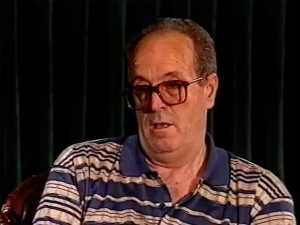
Video Oral History

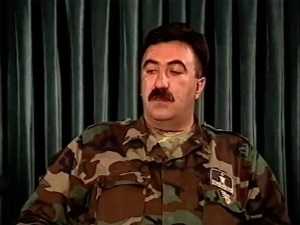
Sead Ibišević
CITY IS FUMIGATED
FC-VOH-99-835 | Video
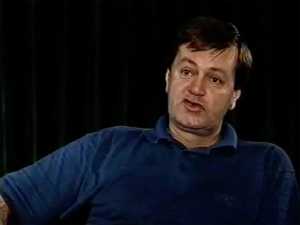
Fahro Pašagić
STOP THE RATS!
FC-VOH-99-838 | Video
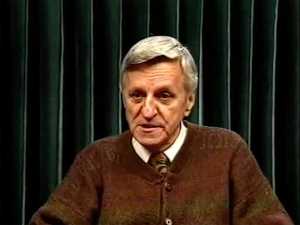
Obrad Piljak
PROMOTION OF THE NEW BH DINAR
FC-VOH-99-839 | Video
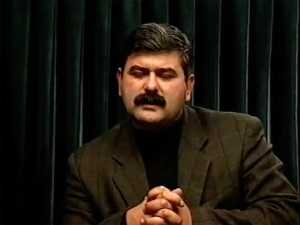
Senad Malohodžić
TV SCHOOL OF SURVIVAL
FC-VOH-99-842 | Video
Olivera Kostić
CHILDREN PLAY “ROMEO AND JULIET”
FC-VOH-99-844 | Video
Sead Ibišević
CITY IS FUMIGATED
FC-VOH-99-836 | Video
Ibrahim Jusufranić
TRAFFIC STOPS
FC-VOH-99-837 | Video
Mirjana Stanić
TRAMS RUN FROM 7 a.m. TO 6 p.m.
FC-VOH-99-840 | Video
Zijad Memišević
SURVIVAL IN THE NURSING HOME
FC-VOH-99-841 | Video
Šefkija Okerić
TRAMS ARE MOVING TARGETS
FC-VOH-99-846 | Video
Munib Bisić
IGMAN ROAD IS NOT PROTECTED
FC-VOH-99-847 | Video
Nedžad Ajnadžić
COUNTERATTACK BY THE BH ARMY
FC-VOH-99-843 | Video