
Bosnia language flag

Chronology → Video Oral History

The Siege of Sarajevo 1992–1996

This Interactive FAMA Project integrates the documented chronology of the Siege of Sarajevo with first-hand testimonies within a single interface.

The material can be explored month by month by selecting any point between March 1992 and March 1996. For each chosen month, the user can review the corresponding textual chronology alongside video oral history interviews from the same period. By aligning the chronology of events with personal experiences, the platform enables a more layered, contextual exploration of how the siege unfolded over time.

The Siege of Sarajevo: Chronology 1992-1996

Compiled shortly after the war, this comprehensive chronology of the Sarajevo siege covers the period from March 1992 to March 1996. Structured by month and year, it draws on articles from the "Oslobođenje" newspaper, UN archives, reports from foreign correspondents, and citizen testimonies to document key social, political, military, cultural, and personal events of that time. By recording major developments and everyday survival, the chronology remains a vital reference for understanding how the siege unfolded and transformed every aspect of city life.

Oral History: The Siege of Sarajevo 1992-1996, video

Structured chronologically and thematically, this is the first and largest video oral history of the Sarajevo siege in the world, featuring nearly 1,000 interviews with over 450 citizens from diverse backgrounds. Produced soon after the war, it presents personal testimonies covering all aspects of life in the besieged city. This 30-hour collection serves as both an educational resource and a historical record, offering future generations an unparalleled insight into first-hand accounts of the longest urban siege in modern history.
Chronology → Video Oral History

The Siege of Sarajevo 1992–1996

This Interactive FAMA Project integrates the documented chronology of the Siege of Sarajevo with first-hand testimonies within a single interface.

The material can be explored month by month by selecting any point between March 1992 and March 1996. For each chosen month, the user can review the corresponding textual chronology alongside video oral history interviews from the same period. By aligning the chronology of events with personal experiences, the platform enables a more layered, contextual exploration of how the siege unfolded over time.

The Siege of Sarajevo: Chronology 1992-1996

Compiled shortly after the war, this comprehensive chronology of the Sarajevo siege covers the period from March 1992 to March 1996. Structured by month and year, it draws on articles from the “Oslobođenje” newspaper, UN archives, reports from foreign correspondents, and citizen testimonies to document key social, political, military, cultural, and personal events of that time. By recording major developments and everyday survival, the chronology remains a vital reference for understanding how the siege unfolded and transformed every aspect of city life.

Oral History: The Siege of Sarajevo 1992-1996, video

Structured chronologically and thematically, this is the first and largest video oral history of the Sarajevo siege in the world, featuring nearly 1,000 interviews with over 450 citizens from diverse backgrounds. Produced soon after the war, it presents personal testimonies covering all aspects of life in the besieged city. This 30-hour collection serves as both an educational resource and a historical record, offering future generations an unparalleled insight into first-hand accounts of the longest urban siege in modern history.
Chronology

  • A home for the blind becomes a perch for armed Serb paramilitary troops.
  • The JNA leaves the largest barracks, “Marsal Tito,” in the city center.
  • Telephone connection cut: Sarajevo – the World.
  • The citizens, shut in their apartment blocks and basements because of the unending shelling, begin organizing block events.
  • The city faces severe food shortages. The local community creates a mini farm at Buljakov stream to survive.
  • When the aggressor attacks Aerodromsko naselje citizens turn their radios up to the song, “Don’t give up, Bosnia!”
  • The UN leads negotiations on reclaiming the airport, which is under the control of the JNA and Serb terrorists.
  • Sarajevan psychiatrists give advice to citizens on how to mentally survive: establish as many contacts as possible, avoid isolation, show solidarity, share everything with others, and do as much as possible – invent tasks rather than sit with folded arms.
  • Methadone runs out, a treatment for narcotics addicts.
  • The electrical power system in BiH is divided up.
  • The Presidency of BiH proclaims a state of war and general mobilization.
  • Louis Mackenzie, UNPROFOR Commander, brokers a two day truce as a condition for opening the airport.
  • The building of the "Oslobodjenje" newspaper burns, under heavy artillery attacks.
  • JNA planes target the TV transmitter in Mostre near Visoko, in the vicinity of Sarajevo.
  • Serb paramilitary troop expel Muslim and Croat citizens from the Sarajevo suburb of Ilidza.
  • The President of the Presidency of BiH announces that he will leave for a conference in Strasbourg on April 25 if the airport is opened and if UNPROFOR secures the road to the airport.
  • Before the conference in Strasbourg, special units of MUP petition against a cantonized and divided Bosnia.
  • The Public Prosecutor’s Office of BiH in Sarajevo issues a ban on the SDS. The proceedings are initiated by the Center for Antiwar Activities and the Prosecutor’s office makes the ruling.
  • SDS barricades halt BiH Olympians on their way to the Olympic Games in Barcelona.
  • "Gras" tram conductors transport Sarajevans, and a fifth column inquires as to the departure times of trams which are then told to SDS terrorists so that they can fire upon them fro the hills.
  • Klaus Kinkel, the German Foreign Minister, feels helpless rage and falls into a deep depression over the inability of the international community to help Bosnia and Sarajevo.
  • Strasbourg, June 25, 1992. A summit on BiH begins in Strasbourg. Presiding over the summit is Lord Carrington. Participants: Haris Silajdzic, Slobodan Milosevic and Franjo Tudjman.
  • Waiting for a ceasefire before opening the airport, Louis Mackenzie: the BiH government has an effective military in the city, while the Serbs state they will not fire at civilian targets, meaning they can fire at military targets.
  • Sarajevans, being heavy smokers, smoke a variety of types of cigarettes in the besieged city; the healthiest are the KOKTEL cigarettes.
  • MUP issues guidelines for safe movement in the city amid shelling and sniper fire.
  • In the Sarajevo neighborhood of Alipasino polje, B block, a chess competition is held.
  • The peace conference in Strasbourg collapses.
  • Abandoned house pets roam the city because their owners have fled.
  • Sarajevo′s “Velepekara” (mass bakery) no longer produces bread, the staple food of Sarajevo, because it lacks yeast.
  • Table tennis players from Sarajevo go to Crkvenica to prepare for a European tournament.
  • French President François Mitterand, makes a completely unannounced landing at the closed Sarajevo airport, and later goes on a tour of the besieged city. He visits the State and Military Hospitals, and on this visit resolves the crisis over the delivery of humanitarian aid, just as he later blocks eventual air strikes against Bosnian Serb positions.

  • The Presidency decides to implement work quotas for all civilians.
  • The blue UN flag flaps over the runway of Sarajevo airport, three minutes before the UN Security Council convenes at the deadline of the ultimatum given the Bosnian Serbs. The first planes carrying humanitarian aid arrive in Sarajevo.
  • All contact with the outside world is cut off.
  • New York, June 30, 1992. The UN Security Council adopts Resolution 761 which authorizes the Secretary General to employ UNPROFOR to establish the security and functioning of Sarajevo airport. Article 2 of the Resolution urges all parties to maintain an absolute and unconditional ceasefire.

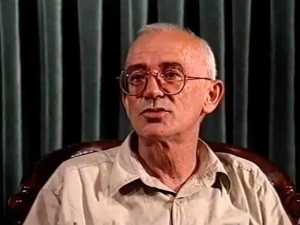
Video Oral History

Stjepan Kljujić
NENAD KECMANOVIĆ’S ROLE IN THE BH PRESIDENCY
FC-VOH-99-127 | Video
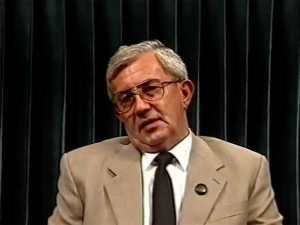
Senad Avdić
PLANNING THE SIEGE OF SARAJEVO
FC-VOH-99-131 | Video
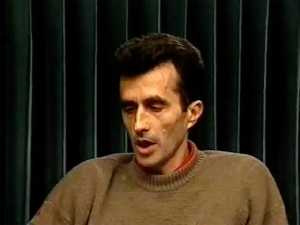
Hajrudin Alispahić
SAVING THE HAGGADAH
FC-VOH-99-134 | Video
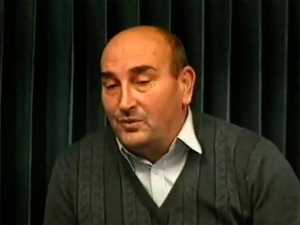
Faik Kulović
ARMS MANUFACTURING
FC-VOH-99-136 | Video
Zlatan Hrenovica
MUSIC AGAINST TERRORISTS
FC-VOH-99-137 | Video
Suljo Babić
SERB DEMOCRATIC PARTY BANNED FROM ACTIVITY
FC-VOH-99-145 | Video
Stjepan Šiber
MILITARY OBJECTIVES IN THE CITY
FC-VOH-99-149 | Video
Mubera Mehičević
CONSTRUCTOR OF THE COCKTAIL CIGARETTE
FC-VOH-99-150 | Video
Husein Hujić
CHESS TOURNAMENT AT ALIPAŠINO POLJE
FC-VOH-99-151 | Video
Amela Vilić
PETS WANDERING AROUND TOWN
FC-VOH-99-152 | Video
Kemal Mešak
NO YEAST
FC-VOH-99-155 | Video
Mustafa Čutahija
LILY FOR MITTERAND
FC-VOH-99-156 | Video
Jusuf Pušina
WALK WITH MITTERAND
FC-VOH-99-157 | Video
Muhamed Kreševljaković
FIRST PLANES WITH HUMANITARIAN AID LAND
FC-VOH-99-162 | Video
Jovan Divjak
PLATFORM OF THE PRESIDENCY
FC-VOH-99-163 | Video
Juraj Martinović
SAVING THE HAGGADAH
FC-VOH-99-132 | Video
Enver Imamović
SAVING THE HAGGADAH
FC-VOH-99-133 | Video
Salem Spahić
MINI-FARMS EMERGING
FC-VOH-99-135 | Video
Mimo Šahinpašić
PHENOMENON OF WAR RADIO
FC-VOH-99-139 | Video
Zlatko Dizdarević
OSLOBOĐENJE BUILDING ON FIRE
FC-VOH-99-142 | Video
Azra Begić
APPEAL FOR THE PROTECTION OF ART WORKS
FC-VOH-99-143 | Video
Merim Tabaković
HOW TO FEED THE PETS
FC-VOH-99-154 | Video
Abdulah Nakaš
MITTERAND VISITS THE STATE HOSPITAL
FC-VOH-99-158 | Video
Muhamed Kreševljaković
WALK WITH MITTERAND
FC-VOH-99-159 | Video
Stjepan Kljujić
PRESIDENCY’S DECISION ON COMPULSORY WORK
FC-VOH-99-160 | Video
Omer Stambolić
SPEEDING AGAINST SNIPERS
FC-VOH-99-164 | Video
Muniba Ajdinović
LIFE IN THE CELLAR
FC-VOH-99-140 | Video
Josip Krasni
PETS WANDERING AROUND TOWN
FC-VOH-99-153 | Video
Abdulah Nakaš
NEW KINDS OF INJURIES
FC-VOH-99-144 | Video
Stjepan Šiber
BLUE FLAG FLIES OVER THE RUNWAY
FC-VOH-99-161 | Video