
Bosnia language flag

Chronology → Video Oral History

The Siege of Sarajevo 1992–1996

This Interactive FAMA Project integrates the documented chronology of the Siege of Sarajevo with first-hand testimonies within a single interface.

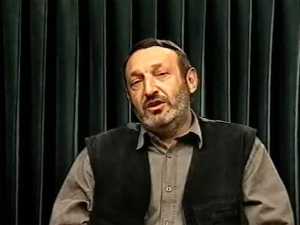
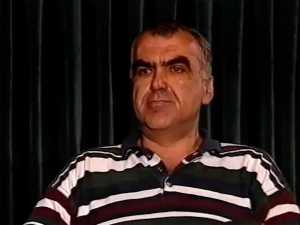
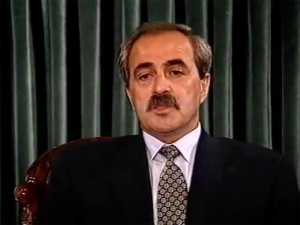
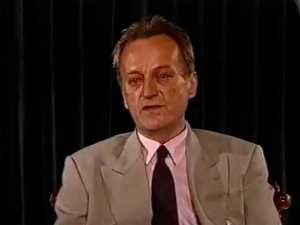
The material can be explored month by month by selecting any point between March 1992 and March 1996. For each chosen month, the user can review the corresponding textual chronology alongside video oral history interviews from the same period. By aligning the chronology of events with personal experiences, the platform enables a more layered, contextual exploration of how the siege unfolded over time.

The Siege of Sarajevo: Chronology 1992-1996

Compiled shortly after the war, this comprehensive chronology of the Sarajevo siege covers the period from March 1992 to March 1996. Structured by month and year, it draws on articles from the "Oslobođenje" newspaper, UN archives, reports from foreign correspondents, and citizen testimonies to document key social, political, military, cultural, and personal events of that time. By recording major developments and everyday survival, the chronology remains a vital reference for understanding how the siege unfolded and transformed every aspect of city life.

Oral History: The Siege of Sarajevo 1992-1996, video

Structured chronologically and thematically, this is the first and largest video oral history of the Sarajevo siege in the world, featuring nearly 1,000 interviews with over 450 citizens from diverse backgrounds. Produced soon after the war, it presents personal testimonies covering all aspects of life in the besieged city. This 30-hour collection serves as both an educational resource and a historical record, offering future generations an unparalleled insight into first-hand accounts of the longest urban siege in modern history.
Chronology → Video Oral History

The Siege of Sarajevo 1992–1996

This Interactive FAMA Project integrates the documented chronology of the Siege of Sarajevo with first-hand testimonies within a single interface.

The material can be explored month by month by selecting any point between March 1992 and March 1996. For each chosen month, the user can review the corresponding textual chronology alongside video oral history interviews from the same period. By aligning the chronology of events with personal experiences, the platform enables a more layered, contextual exploration of how the siege unfolded over time.

The Siege of Sarajevo: Chronology 1992-1996

Compiled shortly after the war, this comprehensive chronology of the Sarajevo siege covers the period from March 1992 to March 1996. Structured by month and year, it draws on articles from the “Oslobođenje” newspaper, UN archives, reports from foreign correspondents, and citizen testimonies to document key social, political, military, cultural, and personal events of that time. By recording major developments and everyday survival, the chronology remains a vital reference for understanding how the siege unfolded and transformed every aspect of city life.

Oral History: The Siege of Sarajevo 1992-1996, video

Structured chronologically and thematically, this is the first and largest video oral history of the Sarajevo siege in the world, featuring nearly 1,000 interviews with over 450 citizens from diverse backgrounds. Produced soon after the war, it presents personal testimonies covering all aspects of life in the besieged city. This 30-hour collection serves as both an educational resource and a historical record, offering future generations an unparalleled insight into first-hand accounts of the longest urban siege in modern history.

Chronology

  • The European Community (EC) decides a referendum should be held as a condition of the recognition of Bosnia and Herzegovina’s independence. The Serbian Democratic Party urges a boycott of the referendum.
  • Following the close of polling places in Sarajevo for the referendum on independence, barricades are set up along the city’s key roads after midnight. The barricades are formed from transport trucks, and communicate by walkie-talkie. Every entrance to the city is blocked. They are held by armed civilians. The SDS (Serbian Democratic Party) issues a press release announcing they have blockaded the city. The Crisis Council of the SDS demands six conditions, seeking the suspension of any further engagement of the recognition of BiH independence until an agreement has been reached between the Croats, Muslims and Serbs.
  • Formation of the Republic’s Crisis Council, headed by Ejup Ganic. By order of the members of the BiH Presidency, Plavsic, Kukanjac and Delimustafic, set out to remove the blockade at the intersection of Vojvode Putnika and Bratstva i Jedinstva.
  • Crisis in the city: Through armed intervention the SDS attempts to nullify the referendum results. The city’s transportation is blockaded – trolley buses are hijacked, the airport is closed. The routine of normal daily life is halted, it emerges that the train rails have been mined.
  • Meeting of the Presidency held: The referendum does not prejudice the organization of BiH. Under EC supervision, negotiations are held between all three nationalities. A decision is reached to remove the barricades.
  • The referendum on BiH independence draws out 57.10 % of eligible voters.
  • Sarajevo: Peace demonstration move on the barricades. At around 10pm the crowd breaks through and destroys the barricades. Citizens from the parade call towards residential buildings, inviting people to come out. It is a call to join the fight against fear.
  • In the Sarajevo neighborhood of Mojmilo, on Olimpijska street, no. 31-35, citizens hold “barricade barbecues”. Together they celebrate their destruction with food, drinks and music.
  • The Presidency unanimously agrees to the SDS’ conditions. At the second meeting the SDS announces two additional conditions: “the abolishment of the Muslim paramilitary unit “The Green Berets,” the removal of Ejup Ganic from office and the abolishment of the Republican Crisis Committee.
  • Formation of a joint patrol from MUP (Interior Ministry) and Yugoslav People’s Army (JNA). These patrols contribute to the deblockade of the city. Specialist Dragan Vikic manages the joint action patrols. For the JNA, this constituted a peacekeeping mission. Pale refuses joint patrol, citing its concern over the “Green Berets.”
  • The President of the Presidency of BiH, Alija Izetbegovic, sends a message to the citizens of Sarajevo: “Stroll outside, do not succumb to fear and panic!”
  • Radio M, Youth Radio on the second program of Radio Sarajevo invites citizens to a peaceful gathering in front of the Parliament Building.
  • Journalists from Radio Television Sarajevo make this appeal: “Help so that we aren’t divided, that we don’t divide ourselves!”
  • In front of the Parliament Building a magnificent gathering convenes as an ode to peace.
  • The leaders of the nationalist parties leave for a meeting in Brussels for peace negotiations under the auspices of the EC.
  • March 8, a large barricade barbecue is held at Vraca in Sarajevo under the banner: “Neighbors come before brothers.”
  • Slobodan Milosevic does not come to the conference in Brussells, despite the fact that the EC considers him the key figure in the emerging crisis.
  • The first American Hercules lands at the Sarajevo Airport, carrying humanitarian aid.
  • The Assembly of the SDS rejects the proposals of the EC. Alija Izetbegovic spreads optimism that war will be avoided because of his aim of receiving recognition by the EC. Radovan Karadzic, president of the SDS, warns that war could break out any minute, and otherwise spreads psychosis, in order to postpone recognition.
  • Mass demonstrations in Belgrade.
  • SDA – is committed to the concept of a Federation of BiH, with constituent units and a strong central government.
  • SDS – is committed to the concept of the three constituent peoples forming a confederation, with a weak and decentralized government.
  • Sarajevo: Negotiations begin at Konak House.
  • At Konak, Cutileiro pays tribute to JNA Commander, Milan Kukanjac for his efforts to forestall the war in BiH. Radovan Karadzic claims that a united MUP no longer exists, having been fractured along national lines. He also pushes for a tri-partite BiH divided along national lines.
  • Satish Nambiar, Force Commander of UNPROFOR in BiH, upon arriving with UN forces to BiH, announces: “We have received guarantees that the paramilitaries will be disarmed. Our mission is exclusively peaceful in character.”
  • UN troops move into a Sarajevo home for retirees.
  • BiH in a state of chaos: Possible reasons for the conflict include a funeral, gunfire on a JNA observation post, or gasoline rations.
  • The UN Headquarters in Sarajevo is established.
  • Vice President of the Croatian Democratic Union (HDZ), Vlado Santic, presents a map of a partitioned BiH.
  • The SDS takes control of the RTV transmitters, allowing for the broadcast of TV Belgrade.
  • Members of the Presidency of BiH, as well as high ranking officials in the SDS, Nikola Koljevic and Biljana Plavsic, send a letter to the UN and EC complaining of the aggression of Croat and Muslim paramilitary formations in BiH, warning that the Serb people and the JNA are on the defensive.
  • Major scandal erupts over MUP’s burning of money.
  • Proclamation of the Constitution of the Socialist Republic of Bosnia and Herzegovina.
  • In the village of Sijekovac, 12 Serbs are killed.
  • In Sarajevo a congress is held of Serb Intellectuals.
  • The President of the Presidency, Alija Izetbegovic, visits Saudi Arabia.
  • Negotiations continue in Brussels. The three delegations travel by separate planes to Brussels. For Alija Izetbegovic, leader of the SDA and President of the Presidency of BiH, there can be no change to the notion of BiH as an independent state, drawing the line on any further concessions. The leader of the HDZ, Miljenko Brkic: “The JNA must hand over control to the civil authorities. The HDZ is for a federal BiH.” Radovan Karadzic, leader of the SDS: “We will not accept the EC’s recognition of BiH’s independence.”
  • BiH: Mass flight of the Croat and Muslim populations from Kupres.

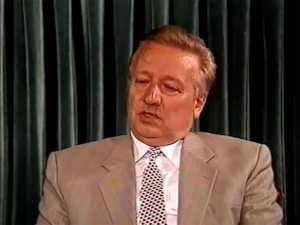
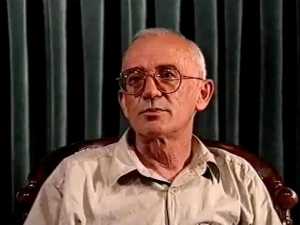
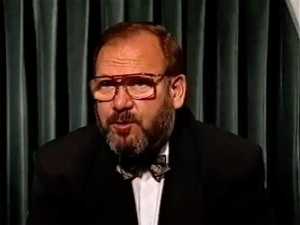
Video Oral History

Sadik Beširević
RAILWAYS ARE MINED
FC-VOH-99-005 | Video
Stjepan Kljujić
ARRIVAL AT THE PRESIDENCY SESSION IS BLOCKED
FC-VOH-99-006 | Video
Mirsad Mutapčić
GUNFIRE FROM “MARŠALL TITO” BARRACKS
FC-VOH-99-007 | Video
Haris Kulenović
LIVE TV BROADCAST
FC-VOH-99-009 | Video
Konstantin Jovanović
DIVISION AMONG JOURNALISTS
FC-VOH-99-011 | Video
Obrad Piljak
BURNING MONEY AFFAIR
FC-VOH-99-013 | Video
Muhamed Kreševljaković
POLICE DEPARTMENT REACTS SLOWLY TO THE PRESENCE OF BARRICADES
FC-VOH-99-004 | Video
Jusuf Pušina
BURNING MONEY AFFAIR
FC-VOH-99-014 | Video
Muhamed Kreševljaković
AMERICAN HERCULES LANDS
FC-VOH-99-012 | Video
Dragan Vikić
JNA AND POLICE PATROL TOGETHER
FC-VOH-99-010 | Video
Senada Kreso
EUROPEAN OBSERVERS DEPARTURE FROM SARAJEVO
FC-VOH-99-002 | Video
Jusuf Pušina
SERB DEMOCRATIC PARTY TEST
FC-VOH-99-003 | Video
Stjepan Kljujić
PRESIDENCY ACCEPTS SDS TERMS
FC-VOH-99-008 | Video