
Bosnia language flag

Chronology → Video Oral History

The Siege of Sarajevo 1992–1996

This Interactive FAMA Project integrates the documented chronology of the Siege of Sarajevo with first-hand testimonies within a single interface.

The material can be explored month by month by selecting any point between March 1992 and March 1996. For each chosen month, the user can review the corresponding textual chronology alongside video oral history interviews from the same period. By aligning the chronology of events with personal experiences, the platform enables a more layered, contextual exploration of how the siege unfolded over time.

The Siege of Sarajevo: Chronology 1992-1996

Compiled shortly after the war, this comprehensive chronology of the Sarajevo siege covers the period from March 1992 to March 1996. Structured by month and year, it draws on articles from the "Oslobođenje" newspaper, UN archives, reports from foreign correspondents, and citizen testimonies to document key social, political, military, cultural, and personal events of that time. By recording major developments and everyday survival, the chronology remains a vital reference for understanding how the siege unfolded and transformed every aspect of city life.

Oral History: The Siege of Sarajevo 1992-1996, video

Structured chronologically and thematically, this is the first and largest video oral history of the Sarajevo siege in the world, featuring nearly 1,000 interviews with over 450 citizens from diverse backgrounds. Produced soon after the war, it presents personal testimonies covering all aspects of life in the besieged city. This 30-hour collection serves as both an educational resource and a historical record, offering future generations an unparalleled insight into first-hand accounts of the longest urban siege in modern history.

Chronology → Video Oral History

The Siege of Sarajevo 1992–1996

This Interactive FAMA Project integrates the documented chronology of the Siege of Sarajevo with first-hand testimonies within a single interface.

The material can be explored month by month by selecting any point between March 1992 and March 1996. For each chosen month, the user can review the corresponding textual chronology alongside video oral history interviews from the same period. By aligning the chronology of events with personal experiences, the platform enables a more layered, contextual exploration of how the siege unfolded over time.

The Siege of Sarajevo: Chronology 1992-1996

Compiled shortly after the war, this comprehensive chronology of the Sarajevo siege covers the period from March 1992 to March 1996. Structured by month and year, it draws on articles from the “Oslobođenje” newspaper, UN archives, reports from foreign correspondents, and citizen testimonies to document key social, political, military, cultural, and personal events of that time. By recording major developments and everyday survival, the chronology remains a vital reference for understanding how the siege unfolded and transformed every aspect of city life.

Oral History: The Siege of Sarajevo 1992-1996, video

Structured chronologically and thematically, this is the first and largest video oral history of the Sarajevo siege in the world, featuring nearly 1,000 interviews with over 450 citizens from diverse backgrounds. Produced soon after the war, it presents personal testimonies covering all aspects of life in the besieged city. This 30-hour collection serves as both an educational resource and a historical record, offering future generations an unparalleled insight into first-hand accounts of the longest urban siege in modern history.
Chronology

  • Bosnian Serb offensive against Gorazde.
  • Massacre at a playing field in Dobrinja. 13 people are killed.
  • Dobrica Cosic, President of the Yugoslav government, is relieved of duty.
  • Moscow: BH Consul Ibrahim Djikic addresses Moscow’s biased behavior. He is contacted by the head of a Russian center for recruiting mercenaries, who promises to withdraw his men from BiH if the bodies of the three Russian mercenaries who had been killed in combat around Visegrad are retrieved.
  • Mustafa Pamuk, of the City Assembly : “Many entrepreneurs have left with the intention of securing a means of getting food into the city; none of them have returned.”
  • Viktor Jakovich becomes the first American ambassador to BiH.
  • New York, June 5, 1993. The UN Security Council adopts a resolution on the creation of “Safe Areas.” According to this resolution, Sarajevo, Zepa, Bihac, Tuzla, Gorazde and Srebrenica are proclaimed secure areas. Members of UNPROFOR will be authorized to retaliate for any attacks on the “Safe Areas”; to monitor ceasefires; to encourage the withdrawal of military and paramilitary units; as well as to take hold of certain positions. With this resolution UNPROFOR is authorized to defend itself using any necessary measures, including the use of force, as well as to retaliate for the bombing of the “safe areas,” and any obstruction to its own freedom of movement and that of humanitarian convoys. UN members, in this case NATO members, are authorized, in cooperation with UNPROFOR and the Secretary General, to use air power to protect the “safe areas” and the mandate of UNPROFOR.
  • Croats increase pressure on the Catholic Archbishop Vinko Puljic to leave Sarajevo.
  • Rasim Delic appointed Commander of the ARBiH Main Staff, replacing Sefer Halilović, previous commander of the ARBiH. The head of MUP, Jusuf Pusina, is dismissed and replaced by Bakir Alispahic.
  • Klaus Kinkel, German Foreign Minister: “Sanctions should be introduced against Croatia.”
  • U.S. Marines enter Somalia, to prevent the spread of the conflict.
  • In Geneva a joint session is held of the Presidency of BiH.
  • To a question on possible military intervention in Bosnia, U.S. President Bill Clinton replies: “I can’t without allies, but I haven’t changed my mind.”
  • The Bosnian Serb Army fires on people praying at a funeral. Eight people are killed at Budakovic cemetery. Mesihat: “It’s only possible to hold funerals at night.”
  • Statement from Croatia: “Bosnian politicians must announce their arrivals to Croatia in advance. Visits of a private nature will not be allowed."
  • Croatian President Franjo Tudjman and Serbian President Slobodan Milosevic suggest a new map for Bosnia and Herzegovina.
  • Geneva, June 18, 1993. Peace negotiations in Geneva: Alija Izetbegovic, President of the Presidency of BiH rejects the peace plan.
  • Athletes travelling to the Mediterreanean Games in Montpelier are stopped in Jablanica. Twenty athletes manage to get through.
  • Bill Clinton wishes for an intact BiH, “…but if they agree otherwise, we will accept it.”
  • The Children’s Embassy celebrates its second year with acrobatics, rock and roll, songs, contests and games.
  • New York, June 20, 1993. The UN adopts a new resolution implementing the protection of the “safe areas.” The UN Security Council, with the key provisions of Resolution 844, "decide to authorize an increase of UNPROFOR forces in order to meet the UN Secretary General’s report on engaging 7,500 new soldiers.
  • Geneva: Lord Owen announces: “Our biggest problem is how to coax the Muslims into continuing negotiations.”
  • President of the Presidency of BiH, Alija Izetbegovic, returns to Sarajevo from negotiations in Geneva. Other members of the presidency remain in Geneva to see what it will offer. After fifteen months Abdic, Lazovic, Lasic, Akmadzic, and Boras meet for the first time.
  • Transmission lines are destroyed, power plants lack materials, the hydroelecrtic plant is held by the HVO and gas is at the mercy of the Bosnian Serb. There is neither water nor electricity.
  • Head Commander of UNPROFOR General Morillon is dismissed.
  • Members of the BH Presidency Alija Izetbegovic and Ejup Ganic will not travel to Geneva to continue negotiations because of urgent business. The other members of the Presidency are expected to return from Zagreb.
  • The team behind the song entry for “Eurovision 93” sprint across the airport runway in order to reach the competition.
  • A fashion show is held at the Hotel “Holiday inn”. The fashion collection is made from UNHCR bags and tarpaulins used to cover broken windows.
  • The U.S. bombs Baghdad.
  • Pavarotti sings in Central Park in New York.
  • Various members of the Presidency of BiH discuss the partitioning of BiH at a meeting held at Sarajevo airport.
  • At a session of the UN Security Council a suggestion by Islamic and non-aligned countries to lift the arms embargo on Bosnia and Herzegovina is rejected. The U.S. votes in favor; France, the U.K. and Russia against.
  • Dr Bakir Nakas, a physician from the state hospital in Sarajevo: “This year was easier, though it was still terribly difficult. I know what I have, and what I can expect,what I have at my disposal and how long it’s going to last.”

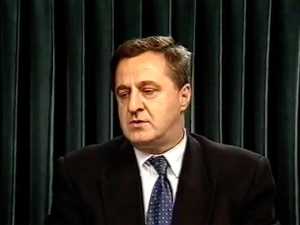
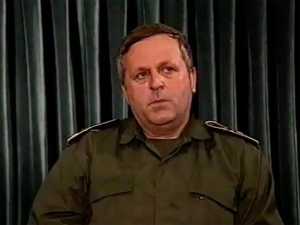
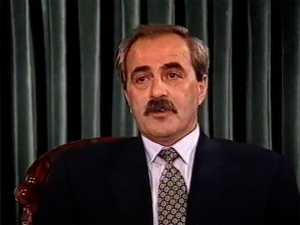
Video Oral History

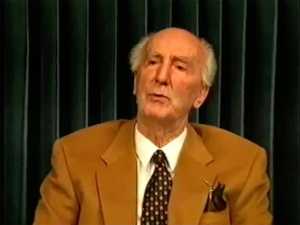
Ahmed Fazlić
MASSACRE AT A PLAYGROUND IN DOBRINJA
FC-VOH-99-488 | Video
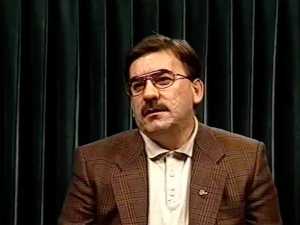
Sulejman Begović
GARDENS; THE ONLY SOURCE OF FOOD
FC-VOH-99-490 | Video
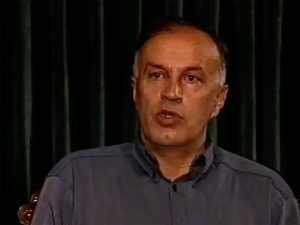
Rasim Delić
DELIĆ BECOMES COMMANDER OF THE BH ARMY HQ
FC-VOH-99-492 | Video
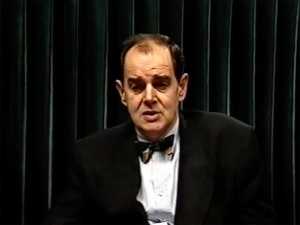
Sefer Halilović
DELIĆ BECOMES COMMANDER OF THE BH ARMY HQ
FC-VOH-99-493 | Video
Irfan Durmić
NO WATER; NO GAS; NO ELECTRICITY…
FC-VOH-99-500 | Video
Muhamed Filipović
BH PRESIDENCY MEETS IN ZAGREB
FC-VOH-99-501 | Video
Miro Lazović
BH PRESIDENCY MEMBERS MEET AFTER 15 MONTHS
FC-VOH-99-499 | Video
Esad Džemat
TAXI RIDE WORTH THREE PACKS OF CIGARETTES
FC-VOH-99-496 | Video
Jusuf Pušina
MINISTER OF INTERNAL AFFAIRS DISCHARGED
FC-VOH-99-494 | Video
Ibrahim Đikić
MOSCOW’S PARTIALITY
FC-VOH-99-489 | Video
Munir Alibabić
UNPROFOR VEHICLES HITTING
FC-VOH-99-491 | Video
Muharem Omerdić
EIGHT PEOPLE ARE KILLED AT A FUNERAL
FC-VOH-99-497 | Video
Braco Suljić
DIPLOMATIC SERVICE UNDER SIEGE
FC-VOH-99-502 | Video