
Bosnia language flag

Chronology → Video Oral History

The Siege of Sarajevo 1992–1996

This Interactive FAMA Project integrates the documented chronology of the Siege of Sarajevo with first-hand testimonies within a single interface.

The material can be explored month by month by selecting any point between March 1992 and March 1996. For each chosen month, the user can review the corresponding textual chronology alongside video oral history interviews from the same period. By aligning the chronology of events with personal experiences, the platform enables a more layered, contextual exploration of how the siege unfolded over time.

The Siege of Sarajevo: Chronology 1992-1996

Compiled shortly after the war, this comprehensive chronology of the Sarajevo siege covers the period from March 1992 to March 1996. Structured by month and year, it draws on articles from the "Oslobođenje" newspaper, UN archives, reports from foreign correspondents, and citizen testimonies to document key social, political, military, cultural, and personal events of that time. By recording major developments and everyday survival, the chronology remains a vital reference for understanding how the siege unfolded and transformed every aspect of city life.

Oral History: The Siege of Sarajevo 1992-1996, video

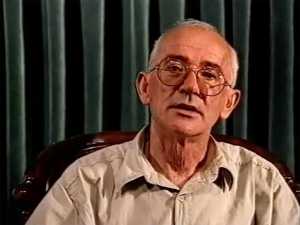
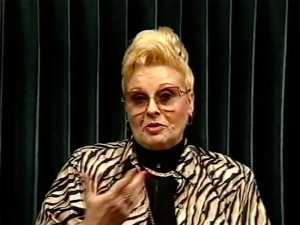
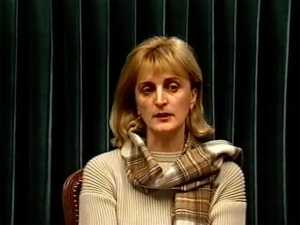
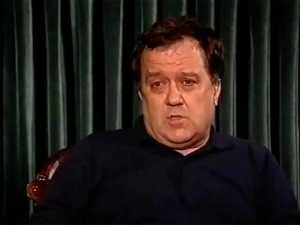
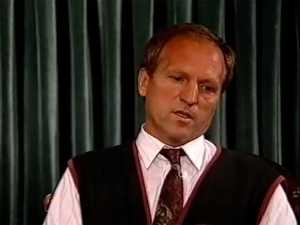
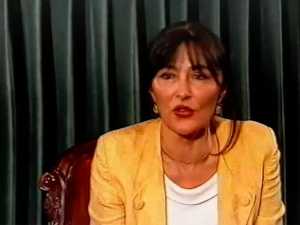
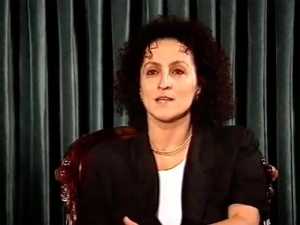
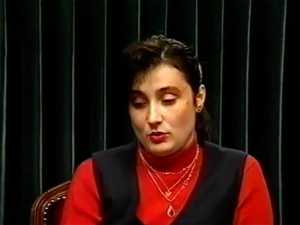
Structured chronologically and thematically, this is the first and largest video oral history of the Sarajevo siege in the world, featuring nearly 1,000 interviews with over 450 citizens from diverse backgrounds. Produced soon after the war, it presents personal testimonies covering all aspects of life in the besieged city. This 30-hour collection serves as both an educational resource and a historical record, offering future generations an unparalleled insight into first-hand accounts of the longest urban siege in modern history.
Chronology → Video Oral History

The Siege of Sarajevo 1992–1996

This Interactive FAMA Project integrates the documented chronology of the Siege of Sarajevo with first-hand testimonies within a single interface.

The material can be explored month by month by selecting any point between March 1992 and March 1996. For each chosen month, the user can review the corresponding textual chronology alongside video oral history interviews from the same period. By aligning the chronology of events with personal experiences, the platform enables a more layered, contextual exploration of how the siege unfolded over time.

The Siege of Sarajevo: Chronology 1992-1996

Compiled shortly after the war, this comprehensive chronology of the Sarajevo siege covers the period from March 1992 to March 1996. Structured by month and year, it draws on articles from the “Oslobođenje” newspaper, UN archives, reports from foreign correspondents, and citizen testimonies to document key social, political, military, cultural, and personal events of that time. By recording major developments and everyday survival, the chronology remains a vital reference for understanding how the siege unfolded and transformed every aspect of city life.

Oral History: The Siege of Sarajevo 1992-1996, video

Structured chronologically and thematically, this is the first and largest video oral history of the Sarajevo siege in the world, featuring nearly 1,000 interviews with over 450 citizens from diverse backgrounds. Produced soon after the war, it presents personal testimonies covering all aspects of life in the besieged city. This 30-hour collection serves as both an educational resource and a historical record, offering future generations an unparalleled insight into first-hand accounts of the longest urban siege in modern history.

Chronology

  • Barbara Hendrix, opera diva, holds a New Year's concert in Sarajevo, as a gesture of solidarity with the sufferings of the city.
  • Massacres of civilians from artillery attacks by Bosnian Serb positions in all parts of the city.
  • Massimo Schuster, puppeteer-director from France, directs a play at the Sarajevo Youth Theatre: "I'm here because I am a citizen of Europe. This play is a means of spiritual support to this city. "
  • In Belgium, the body of the Sarajevo guerrilla Juka Prazina is found in a car in a parking lot.
  • Illegal connections to electricity removed in sweep as well as revocation of electrical cables used for stealing electricity from priority cases.
  • UNPROFOR's General Bricquemont withdraws from office. He no longer reads UN resolutions because conditions are unfavorable to implement them on the ground.
  • In Vienna, meeting between the Foreign Ministers of Croatia and BiH, Mate Granic and Haris Silajdzic. They agree on the need to devise a plan for the permanent cessation of hostilities between Bosnian Croats and Muslims.
  • Bosnian Serb forces carry out the false executions of 11 Canadian UN troops just before Christmas.
  • UNPROFOR's General Jean Cote says of the Bosnian Serbs: "They are cowards, bastards who shoot children, women and the elderly. We will set up an anti-sniper system so they think twice before they shoot. "
  • Croatian Cardinal Franjo Kuharic visits Sarajevo to attend a concert, along with the 'concert' offered by falling shells. His message: "The inner spiritual resistance to evil is eternal and always triumphant over the forces of darkness." At a dinner at Kamerni teatar 55 in honor of the Kuharic’s visit, actor Vladimir Jokanovic recites the verses of Pope John Paul II.
  • During the siege of the city, Kamerni tetar performs 652 multimedia projects, an average of two a day.
  • French President François Mitterrand sends a New Year’s message: "Our policy must be brave and wise. There will be innovations in our policy toward Bosnia in 1994”.
  • UNPROFOR's report reads: Problems with electricity in the territory of Bosnia and Herzegovina are a vicious circle. The Bosnian Serbs refuse to repair the Vogosca-Velesici lines. The system at the thermal power plant in Kakanj broke down; it has been repaired, but the Muslims won‘t connect it, asking for the Serbs to first repair the Vogosca-Velesici lines. The Croats requested that the Muslims switch on electricity from the power plant in Kakanj (TE Kakanj) so that people in Kiseljak can have electricity. This has not been done, so in the end, near Kiseljak, the Jablanica-Kakanj lines were cut, leaving the Muslims without electricity. As a result of all of this, BiH largely remains without electricity.
  • The curfew in Sarajevo is repealed for the celebrateon of Orthodox Christmas: Orthodox priest Avakum Rosic sends Christmas greetings.
  • Crisis in Srebrenica; Canadian UN troops are surrounded by the Bosnian Serbs. French General Jean Cote asks for air strikes against the Bosnian Serbs. UN Secretary General Boutros Boutros-Ghali refuses. The UN chain of command is established so that the commanders in the field cannot issue an order. Commands can be issued only by the Special Representative of the Secretary General, Yasushi Akashi.
  • Sarajevo airport has already been closed for a long period. President of the Presidency of BiH, Alija Izetbegovic, does not travel to Bonn for a meeting with Tudjman due to the suspension of flights at the Sarajevo airport. Departure from Sarajevo is impossible.
  • In Belgrade, the capital of the new Yugoslavia, the inflation rate is 1 million%.
  • U.S. Secretary of State Warren Christopher on possible air strikes against the Bosnian Serbs: "Air strikes could threaten the delivery of humanitarian aid. If requested by the alliance, whose units are on the ground, we will take part in the strikes."
  • NATO develops a project for enlargement in Eastern Europe called "Partnership for Peace."
  • At a NATO meeting the decision is made to support the Franco-British proposal for fast-action in the release of Canadian UN troops in Srebrenica, and the opening of the airport in Tuzla. The prevailing opinion is that negotiations, rather than battlefield agreements, will resolve the conflict. On this occasion the Special Representative of the UN Secretary-General, Yasushi Akashi, states: "The Bosnian Serbs are for a multicultural Bosnia, and will stop all hostilities. It's best not to bother the Serbs during their holiday. This is why the ton of oil for the Sarajevo hospital will have to wait till the end of Serb New Year celebrations. "
  • Vatican: "The lack of collective action is the most shameful cowardice."
  • The Office for Relocation announces that new documents are required for those who want to leave the city in convoys.
  • Pensioners will receive flour, instead of their pensions.
  • The Soros Foundation builds an alternative water system.
  • Boutros Boutros-Ghali requests from Akashi a preliminary study about the situation on the ground: the Bosnian side from the center of the city fire shells at the positions of the Bosnian Serbs, who fiercely counter by shelling civilian targets in Sarajevo. Foreign journalists located in the city are angered by the report, believing it an attempt to prevent intervention.
  • The British are against attacking because their troops are on the ground.
  • The city alternates between massacres from the shelling and cultural events.
  • Lord Owen thinks that Bosnia should be divided. He accuses the Muslims of prolonging the war.
  • French snipers assigned to the establishment of an anti-sniper team are on their way to Sarajevo.
  • Islamic countries renew their request for air strikes and announce the possibility of oil sanctions against those countries that support the division of Bosnia.
  • Akashi is against NATO operations for the release of Canadian UN troops in Srebrenica and the opening of Tuzla airport.
  • Susan Sontag arrives in Sarajevo. She and David Riff, a writer from New York, bring a donation for Sarajevo writers that was gathered as a sign of support at a literary evening in New York.
  • The burial of a Sarajevan: You need to have Deustch Marks or oil, otherwise you must arrange everything yourself. Someone brings the body in a handcart to the mortuary. Burials cost 60 DM. In the city there is no oil. On the black market oil costs between 25-30 DM. People acquire planks for coffins and gravestones from smugglers. There are no tools. In order to made a coffin school desks and cabinets are used.
  • Establishment of a cultural corridor from France to Sarajevo.
  • Children are massacred as they go sledding at the C block of Alipasino polje.
  • British General Michael Rose takes over as Commander of UNPROFOR from General Bricquemont, who resigns. Bricquemont said that he felt personally humiliated in Bosnia, where on his arrival at a checkpoint, boys between 18 and 20 years old drunkenly held him at riflepoint.
  • The UN issues a statement implicating UNPROFOR in the smuggling of cigarettes, coffee, alcohol, fuel, people and drugs, as well as prostitution.
  • The new UNPROFOR commander, General Michael Rose, arriving to his office announces he is not afraid of the challanges that face him in Bosnia.
  • Through a decisive MUP operation the “rat canals” which ran from downtown to the occupied territory of Grbavica held by the Bosnian Serbs is cut off. Seven fugitives arrested. The group includes five doctors and one nurse. The Bosnian Serbs react sharply with a threat of blackmail: "We will not treat the Muslims in our territory and we will not let medicines come into the city."
  • Marathon runner Islam Dzugum is on Mount Igman as a ARBiH soldier. He runs between 16-22 km daily. He is satisfied with the quality of training on Igman, "And now I just need the chance to race somewhere. In the world in 1994 there will be a number of sporting events."
  • U.S. Secretary of State Warren Christopher dismisses claims that the United States have been standing aside and watching idly the bloodshed in Bosnia.
  • At a meeting the Government of BiH ascertain that the Croatian Armed Forces are conducting open aggression against BiH.
  • The Commander of UNPROFOR, General Michael Rose: "Sarajevo is not under siege."

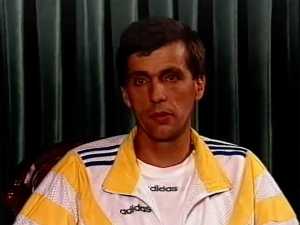
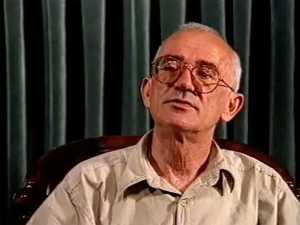
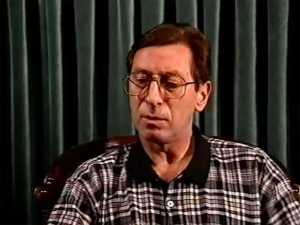
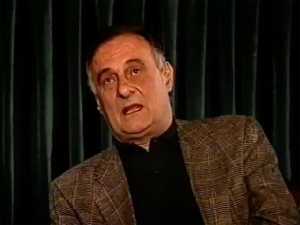
Video Oral History

Faruk Kulenović
MASSARCES IN DIFFERENT PARTS OF THE CITY
FC-VOH-99-660 | Video
Faruk Konjhodžić
MASSARCES IN DIFFERENT PARTS OF THE CITY
FC-VOH-99-661 | Video
Muhamed Kreševljaković
GENERAL BRICQUEMONT RETIRES
FC-VOH-99-663 | Video
Gertruda Munitić
FIRST TIME OUT OF THE CITY
FC-VOH-99-665 | Video
Vlado Jokanović
CARDINAL KUHARIĆ VISITS THE CHAMBER THEATER 55
FC-VOH-99-666 | Video
Don Ivo Tomašević
CARDINAL KUHARIĆ VISITS THE CHAMBER THEATER 55
FC-VOH-99-667 | Video
Edhem Bičakčić
ELECTRICITY A NEVER ENDING STORY
FC-VOH-99-668 | Video
Muhamed Kreševljaković
HUMANITARIAN AID STOPS
FC-VOH-99-669 | Video
Hajrudin Smajić
NEW TYPES OF PERSONAL DOCUMENTS
FC-VOH-99-670 | Video
Arif Halimić
ALTERNATIVE SOROS WATER SYSTEM
FC-VOH-99-672 | Video
Alma Lazarevska
I READ EVERYTHING I MISSED BEFORE
FC-VOH-99-674 | Video
Muhamed Kreševljaković
DIESEL CRISIS
FC-VOH-99-677 | Video
Islam Džugum
DŽUGUM RUNS ON IGMAN 16-22 KM EACH DAY
FC-VOH-99-682 | Video
Radmila Stojadinović
MOUNT IGMAN AND KULA PRISON
FC-VOH-99-684 | Video
Amira Sadiković
IT IS NECESSARY TO DIVIDE POLITICS FROM FOOD
FC-VOH-99-658 | Video
Muhamed Zlatar
OPERA SINGER BARBARA HENDRIX HAS A CONCERT
FC-VOH-99-659 | Video
Alija Hodžić
DEAD; DEAD…
FC-VOH-99-664 | Video
Fuad Hadžihalilović
FRANCE – SARAJEVO
FC-VOH-99-678 | Video
Amela Sučeska
SHELL KILLS CHILDREN WHILE SLEDDING
FC-VOH-99-679 | Video
Munir Alibabić
UNPROFOR IS INTO THE BLACK MARKET
FC-VOH-99-680 | Video
Munir Alibabić
RAT CHANNEL IS CUT
FC-VOH-99-681 | Video
Muhamed Kreševljaković
DISCUSSION OVER “THE TUNNEL WHICH IS NOT THERE”
FC-VOH-99-683 | Video
Mirsad Brajlović
UNHOOKING THE ILLEGAL ELECTRICITY USERS
FC-VOH-99-662 | Video
Zlatko Dizdarević
EVENING OF LITERATURE IN NEW YORK
FC-VOH-99-675 | Video