
Bosnia language flag

Chronology → Video Oral History

The Siege of Sarajevo 1992–1996

This Interactive FAMA Project integrates the documented chronology of the Siege of Sarajevo with first-hand testimonies within a single interface.

The material can be explored month by month by selecting any point between March 1992 and March 1996. For each chosen month, the user can review the corresponding textual chronology alongside video oral history interviews from the same period. By aligning the chronology of events with personal experiences, the platform enables a more layered, contextual exploration of how the siege unfolded over time.

The Siege of Sarajevo: Chronology 1992-1996

Compiled shortly after the war, this comprehensive chronology of the Sarajevo siege covers the period from March 1992 to March 1996. Structured by month and year, it draws on articles from the "Oslobođenje" newspaper, UN archives, reports from foreign correspondents, and citizen testimonies to document key social, political, military, cultural, and personal events of that time. By recording major developments and everyday survival, the chronology remains a vital reference for understanding how the siege unfolded and transformed every aspect of city life.

Oral History: The Siege of Sarajevo 1992-1996, video

Structured chronologically and thematically, this is the first and largest video oral history of the Sarajevo siege in the world, featuring nearly 1,000 interviews with over 450 citizens from diverse backgrounds. Produced soon after the war, it presents personal testimonies covering all aspects of life in the besieged city. This 30-hour collection serves as both an educational resource and a historical record, offering future generations an unparalleled insight into first-hand accounts of the longest urban siege in modern history.

Chronology → Video Oral History

The Siege of Sarajevo 1992–1996

This Interactive FAMA Project integrates the documented chronology of the Siege of Sarajevo with first-hand testimonies within a single interface.

The material can be explored month by month by selecting any point between March 1992 and March 1996. For each chosen month, the user can review the corresponding textual chronology alongside video oral history interviews from the same period. By aligning the chronology of events with personal experiences, the platform enables a more layered, contextual exploration of how the siege unfolded over time.

The Siege of Sarajevo: Chronology 1992-1996

Compiled shortly after the war, this comprehensive chronology of the Sarajevo siege covers the period from March 1992 to March 1996. Structured by month and year, it draws on articles from the “Oslobođenje” newspaper, UN archives, reports from foreign correspondents, and citizen testimonies to document key social, political, military, cultural, and personal events of that time. By recording major developments and everyday survival, the chronology remains a vital reference for understanding how the siege unfolded and transformed every aspect of city life.

Oral History: The Siege of Sarajevo 1992-1996, video

Structured chronologically and thematically, this is the first and largest video oral history of the Sarajevo siege in the world, featuring nearly 1,000 interviews with over 450 citizens from diverse backgrounds. Produced soon after the war, it presents personal testimonies covering all aspects of life in the besieged city. This 30-hour collection serves as both an educational resource and a historical record, offering future generations an unparalleled insight into first-hand accounts of the longest urban siege in modern history.
Chronology

  • Geneva, October 2, 1992: The conference on the former Yugoslavia in Geneva continues. Two announcements from Geneva:
    - The demilitarization of Sarajevo as the first step towards peace;
    - Continued discussion on the constitutional order of BiH under the auspices of the Conference;
    - Signing of the Declaration in which Croatia and Yugoslavia agree to respect existing borders, in accordance with the decisions of the London Conference. An agreement is reached on the return of refugees.
    - Under the auspices of the International Red Cross and the UN High Commissioner for Refugees, an agreement is signed on the release of civilians in concentration camps.
  • The Mayor of Sarajevo issues an announcement: "Citizens, do not cut the trees! You only need to wait for the opening of the corridor, and that will probably be soon. Poplars can be cut, but those are needed by the army. "
  • Statement by Rassek, the new commander of UNPROFOR, "One of the primary tasks of UNPROFOR - is to provide a continuous and smooth flow of water into the city."
  • In Sarajevo, massive car theft. Although the owners remove the tires to prevent theft, thieves bring their own wheels, install them and take the car.
  • The Ski Association of BiH submits an application for admission to the International Ski Federation. At the meeting they will be represented by a Slovenian delegation, because the representatives of BiH can’t leave the besieged city.
  • At the peace conference in Geneva, the Foreign Minister of BiH, seeks an abolition of the arms embargo.
  • New York, October 8th, 1992: the UN Security Council adopts two resolutions:
    - The first forms the basis for the establishment of a commission for the investigation of war crimes in Bosnia;
    - The second allows UNPROFOR to take control of the territory after the withdrawal of the former Yugoslav army from Prevlaka.
  • New York, October 9th, 1992: New UN Security Council resolution 781: The UN Security Council orders a ban on all military flights over Bosnia except for UN aircraft. The prohibition is effective immediately.
  • Mile Akmadzic, Prime Minister of Bosnia and Herzegovina, asks for republic officials to return to Sarajevo within five days or lose their positions.
  • Generators producing electricity work in coffee shops but not in hospitals.
  • Salaries of the members of the Presidency - 20 DEM - the black market rate.
  • A fierce debate between the directors of the Red Cross and the Commander of the Army Forces over a convoy departure with 6,500 people from Sarajevo leaving in their private cars.
  • The Volkswagen "Golf" becomes the vehicle of the season. The "Golf" can drive under any conditions.
  • A convoy with 180 Jews leaves Sarajevo.
  • No one has information on incoming humanitarian aid: e.g, who the donors are, the quantity of goods that has arrived, nor the quality of the goods.
  • The phenomenon of survival in the besieged city:
    - Bicycle – in the movie "Miracle in Milan" cyclists ascend to to heaven; in Sarajevo cyclists rush through the streets to avoid a premature trip to heaven.
    - Heating - people search for sunlight to warm up, but can die because of it.
    - Bathing - you can wash yourself with a cup of water and look clean, and wash your hair with a pot of water and dry it in the oven.
    - Sawing- Sarajevans are awoken by the sound of chainsaws at dawn, the best time to cut down trees.
  • The news of the coup in Sarajevo is launched by TV "Srna", a television station run by the Bosnian Serbs. Belgrade has taken over deceptive news broadcasts. Foreign journalists in Belgrade pass the news along to the world, bearing the TV "Srna" logo. The news comes back to Belgrade where its given the headline: "As Radio Geneva reports, a coup took place today in Sarajevo."
  • On Igman the OSBiH arrests Juka Prazina, a leader of special urban guerrilla units, because of attacks on Sarajevo from Igman; cooperation with HVO units; and attacks on the BiH Armed Forces.
  • "Velepekara" (a large bakery) is heavily shelled. Its mill is burnt down.
  • For 21 days Sarajevo is without electricity or gas, has had no water for 19 days; and bread is distributed only on the basis of priority. The transmitter in Vogošća has been shelled. There is no electricity, and no one knows when it will be back on again.
  • In Sarajevo, a command is issued to finally reckon with the crime in the city: all armed groups must be incorporated into the city defense or be forcibly disarmed. All stolen goods must be returned within 48 hours. A subsequent operation uncovers warehouses of looted goods.
  • In Belgrade, Koca Popovic dies, one of the greatest figures in partisan and political circles of Socialist Yugoslavia.
  • Sarajevans find water using a divining rod.
  • Under UN supervision, a meeting is held between a working group comprised of military representatives from the Armed Forces of BiH and the Bosnian Serb Army.
  • Sarajevo Mayor Muhamed Kresevljakovic returns from a tour. On that occasion he says: “If ships from Spain arrive in Ploce, and the Croatian side allows transport, Sarajevans could have 300 tons of potatoes." He brings a bag of letters from Ljubljana to Sarajevans.
  • UNPROFOR headquarters is returned to Sarajevo.
  • One of the military negotiators of the Bosnian Serbs, General Gvero, asks the UN organizations to open up roads for 60,000 Serbs to leave Sarajevo.
  • Commander of the BiH Armed Forces, Sefer Halilovic, sends a message to Sarajevo: "Instead of continuously walking (strolling) on the streets, it would be better if you would sit at home and from home knit sweaters and socks for those who are defending us."
  • Bosnian passports are beeing issued in limited numbers.
  • Geneva, October 29, 1992.
    - At the Geneva negotiations on Bosnia a proposal is made to divide the country into seven to ten provinces within its existing borders;
    - The central government would have responsibility for foreign affairs, defense, government, international trade, and taxes for the central government;
    - Education, cultural institutions, radio programs and a host of other issues would be the responsibility of the provinces.
  • Razija Colic, a film professional, loses both of her legs while trying to rescue a film archive from fires caused by the shelling.
  • A transit visa is introduced for Croatia.

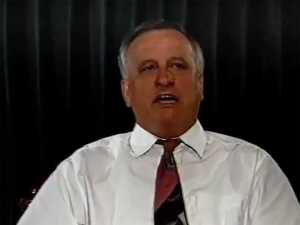
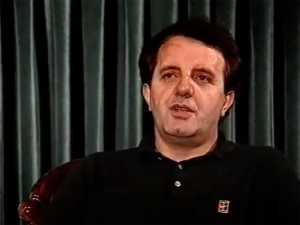
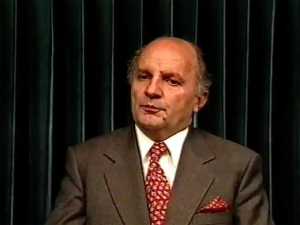
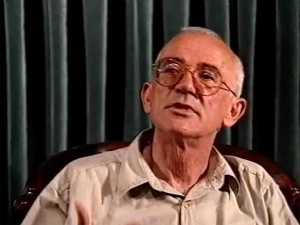
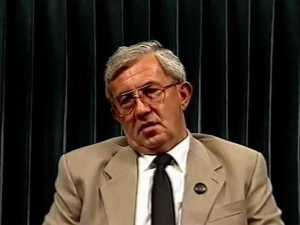
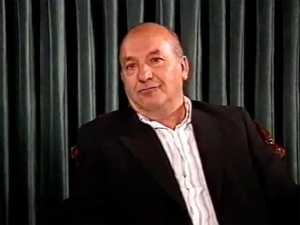
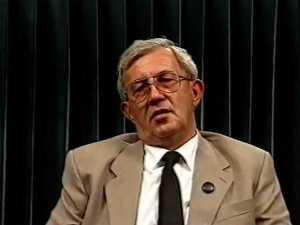
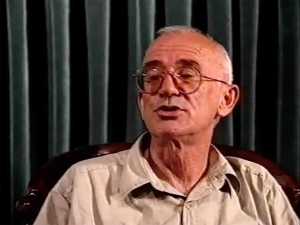
Video Oral History

Šemsa Mehmedović
ADVICE FOR SURVIVAL
FC-VOH-99-271 | Video
Hajrudin Šuman
TELEPHONE SERVICE DEPENDENT ON OIL SUPPLIES
FC-VOH-99-276 | Video
Borislav Kanlić
GOLF - CAR OF THE YEAR
FC-VOH-99-277 | Video
Amira Sadiković
NO INFORMATION ON THE QUALITY OF HUMANITARIAN AID
FC-VOH-99-280 | Video
Muhamed Kreševljaković
NO INFORMATION ON THE QUALITY OF HUMANITARIAN AID
FC-VOH-99-281 | Video
Una Bejtović
CYCLISTS CARRY PARCELS; CANISTERS…
FC-VOH-99-282 | Video
Stjepan Šiber
JUKA ON IGMAN
FC-VOH-99-286 | Video
Kemal Mešak
MILL AT THE CITY BAKERY IS HIT BY GUNFIRE
FC-VOH-99-287 | Video
Muhamed Zlatar
TRANSPORTING OF HUMANITARIAN AID
FC-VOH-99-288 | Video
Antun Leko
FINDING WATER WITH A PLUMB AND A TWIG
FC-VOH-99-289 | Video
Željko Varunek
CAR THEFT
FC-VOH-99-269 | Video
Muhamed Kreševljaković
SERBS CUT OFF THE GAS SUPPLY TO THE CITY
FC-VOH-99-272 | Video
Pero Butigan
RED CROSS EVACUATES THE ELDERLY AND SICK
FC-VOH-99-274 | Video
Jakob Finci
JEWISH CONVOY LEAVES SARAJEVO
FC-VOH-99-279 | Video
Zdravka Gutić
TREE SAVED FROM CUTTING
FC-VOH-99-283 | Video
Muhamed Poljo
ADVICE FOR SURVIVAL
FC-VOH-99-284 | Video
Smilja Gavrić
ADVICE FOR SURVIVAL
FC-VOH-99-285 | Video
Ivica-Bimbo Pinjuh
UNIVERSITY MUST STAY OPEN
FC-VOH-99-291 | Video
Stjepan Kljujić
20 DM A MONTH FOR PRESIDENCY MEMBERS
FC-VOH-99-273 | Video
Željko Varunek
GOLF - CAR OF THE YEAR
FC-VOH-99-278 | Video
Stjepan Šiber
MIXED GROUP MEETS AT THE AIRPORT
FC-VOH-99-290 | Video
Besim Avdagić
ADVICE FOR SURVIVAL
FC-VOH-99-270 | Video
Sefer Halilović
RED CROSS EVACUATES THE ELDERLY AND SICK
FC-VOH-99-275 | Video