
Bosnia language flag

Chronology → Video Oral History

The Siege of Sarajevo 1992–1996

This Interactive FAMA Project integrates the documented chronology of the Siege of Sarajevo with first-hand testimonies within a single interface.

The material can be explored month by month by selecting any point between March 1992 and March 1996. For each chosen month, the user can review the corresponding textual chronology alongside video oral history interviews from the same period. By aligning the chronology of events with personal experiences, the platform enables a more layered, contextual exploration of how the siege unfolded over time.

The Siege of Sarajevo: Chronology 1992-1996

Compiled shortly after the war, this comprehensive chronology of the Sarajevo siege covers the period from March 1992 to March 1996. Structured by month and year, it draws on articles from the "Oslobođenje" newspaper, UN archives, reports from foreign correspondents, and citizen testimonies to document key social, political, military, cultural, and personal events of that time. By recording major developments and everyday survival, the chronology remains a vital reference for understanding how the siege unfolded and transformed every aspect of city life.

Oral History: The Siege of Sarajevo 1992-1996, video

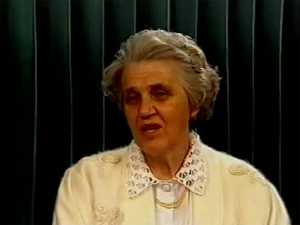
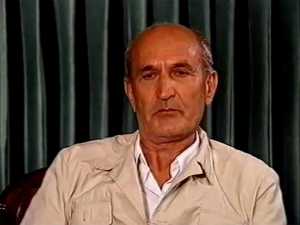
Structured chronologically and thematically, this is the first and largest video oral history of the Sarajevo siege in the world, featuring nearly 1,000 interviews with over 450 citizens from diverse backgrounds. Produced soon after the war, it presents personal testimonies covering all aspects of life in the besieged city. This 30-hour collection serves as both an educational resource and a historical record, offering future generations an unparalleled insight into first-hand accounts of the longest urban siege in modern history.

Chronology → Video Oral History

The Siege of Sarajevo 1992–1996

This Interactive FAMA Project integrates the documented chronology of the Siege of Sarajevo with first-hand testimonies within a single interface.

The material can be explored month by month by selecting any point between March 1992 and March 1996. For each chosen month, the user can review the corresponding textual chronology alongside video oral history interviews from the same period. By aligning the chronology of events with personal experiences, the platform enables a more layered, contextual exploration of how the siege unfolded over time.

The Siege of Sarajevo: Chronology 1992-1996

Compiled shortly after the war, this comprehensive chronology of the Sarajevo siege covers the period from March 1992 to March 1996. Structured by month and year, it draws on articles from the “Oslobođenje” newspaper, UN archives, reports from foreign correspondents, and citizen testimonies to document key social, political, military, cultural, and personal events of that time. By recording major developments and everyday survival, the chronology remains a vital reference for understanding how the siege unfolded and transformed every aspect of city life.

Oral History: The Siege of Sarajevo 1992-1996, video

Structured chronologically and thematically, this is the first and largest video oral history of the Sarajevo siege in the world, featuring nearly 1,000 interviews with over 450 citizens from diverse backgrounds. Produced soon after the war, it presents personal testimonies covering all aspects of life in the besieged city. This 30-hour collection serves as both an educational resource and a historical record, offering future generations an unparalleled insight into first-hand accounts of the longest urban siege in modern history.
Chronology

  • In Sarajevo, Akashi tries to negotiate a truce. The premier of the Federation of BiH, Haris Silajdzic, says of the attempts: “We cannot confuse peace talks with negotiations over a ceasefire. Insofar as they do not kill us, the Government will not actively engage members of the ARBiH. According to the Geneva Convention, starvation amounts to the illegal killing of our people and genocide.”
  • Mostar: Brian Eno and David Bowie decide to finance the construction of one of the most vanguard music schools in Europe, on the eastern side of Mostar.
  • In Sarajevo a center for music therapy is created.
  • The Krajina Serbs shell Zagreb, on the orders of the Croatian Serbs: 5 are killed and 120 wounded on the streets of Zagreb.
  • Richard Holbrooke: “No side is strong enough to deliver a decisive blow.”
  • Radovan Karadzic: “We have resolved to defend every Serb. I’m now free to ignore any resolution, particularly those from UNPROFOR.”
  • Donors do not deliver oil. Buses do not work. The tram runs a short line from Cengic Vila to Alipasino polje.
  • Massacre in Butmir. A commentator on the Serb television network, “Srna”: “The Bosnians staged the massacre, and dragged the bodies of Bosnian soldiers to the site of an accident.” UN: “We have concluded that this was in fact a tragedy, with no staging."
  • A new French president is elected, Jacques Chirac.
  • Akashi rejects a request for air strikes, which had been made by the UNPROFOR Commander, General Rupert Smith.
  • Sarajevo is slowly suffocating.
  • Bill Clinton travels to Moscow.
  • At the “Unis” building, a French soldier from the anti-sniper protection force is killed. The UN does not know where the shot came from, and does not respond with fire.
  • UN spokesman, Alexander Ivanko: “The UN has received a fax-request from the Bosnian Serbs on a new status for the airport, some of whose demands ‘are hard for the UN to swallow.' UNPROFOR is preparing a draft, and will re-negotiate."
  • After the liberation of occupied territory in Croatia, an exodus of Serbs ensues from the Croatian Krajina to areas of Bosnia held by Bosnian Serbs and to Serbia.
  • “Drina” cigarettes arrive at kiosks.
  • Humanitarian aid decreases by 50%.
  • Karlos Menhem elected the new president of Argentina.
  • General attack on Sarajevo.
  • The Civil Defense advises the citizens of Sarajevo: “Go to your basements, check your gas, electricity and water, and prepare blankets, food and water."
  • Sarajevo: no transportation, low gas pressure, and inadequate water.
  • Radovan Karadzic, in an interview with the German magazine “Der Spiegel”: “In the case of an intervention, we will take the 'blue-helmets' hostage.” He approves of the withdrawal of the UN, because then the Serbs could take the “safe areas”, including Sarajevo, to the extent that the Muslims in those cities were disarmed.
  • Throughout the city shipping-containers are sought for protection against snipers. UNPROFOR refuses to endanger the lives of its own soldiers when placing the containers. On the streets visual anti-sniper protection is put in place.
  • A commission is formed for pan-Serbian unification.
  • The Serbs steal two pieces of heavy artillery on Poljine. Alexander Ivanko, spokesman for the UN: “The safe areas are there, but they have eroded.”
  • Protection measures already implemented: setting up of written warnings for sniper fire: “CAUTION - SNIPER”; setting up of visual anti-sniper protection – blue tarps; issuing of orders on darkening apartments and living spaces; basement cleaning; and after three years, the introduction of a sniper alarm. Depression descends on the city.. People begin to quickly wither and deteriorate.
  • In Romania, fuel smuggling has flourished since the embargo on Serbia and Montenegro.
  • The Fifth Corps of the ABiH liberates 70 km of occupied territory.
  • Slobodan Milosevic again rejects proposals to recognize BiH in exchange for the lifting of sanctions.
  • Fuel stolen from a UN observers’ vehicle in an incident south of Lukavica.
  • Hellish day in Sarajevo. Rupert Smith gives an ultimatum to the Serbs and the ABiH to halt fighting, otherwise they will risk military strikes. Akashi: “We demand a ceasefire without delay.”
  • Survey of the magazine “Ratni Dani”, in Bosnia: 74.67% of respondents have a positive attitude towards the former Yugoslavia, while 4% have a negative attitude.
  • Massacre in the center of Tuzla: 63 dead, 200 wounded.
  • NATO fires at a depot near Pale. The Bosnian Serbs respond with an attack on Tuzla.
  • Another NATO strike has occured in order to compel the Serbs to return stolen weapons and withdraw their artillery from banned zones.
  • Battle on Vrbanja bridge in Sarajevo. The French UNPROFOR battalion take back an observation post which the Serbs had taken from them through deception. Two French soldiers are killed in the incident.
  • 231 UN personnel are taken hostage by the Bosnian Serbs, under threat of death if NATO attacks again. The Serbs use all of their weapons at the UN checkpoints. The Serbs first disarm the UN soldiers at the checkpoints, then capture and blockade them. Three UN soldiers bound to posts are used as a human shield against bombardment.
  • A guided missile hits a helicopter carrying BiH Foreign Minister, Irfan Ljubjankic.
  • At different locations, Bosnian Serbs surround 116 “blue-helmets.” The Bosnian Serbs give an ultimatum: “Withdraw or be attacked!” The Serbs seize UN equipment and a trailer from a soldier at Poljine.
  • The ABiH liberates new territory at Ozren. Radovan Karadzic: “UN resolutions, NATO ultimatums and UN agreements mean nothing!”
  • “Velepekara” lacks oil, electricity, water and yeast for producing bread.

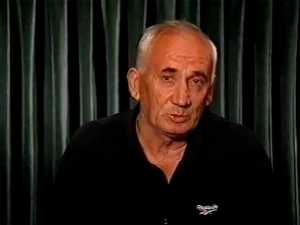
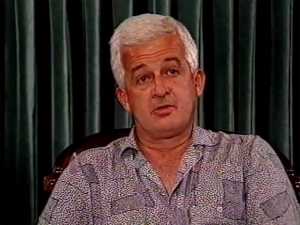
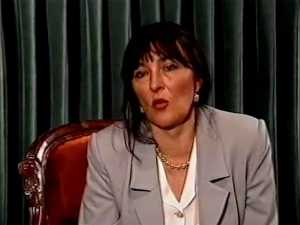
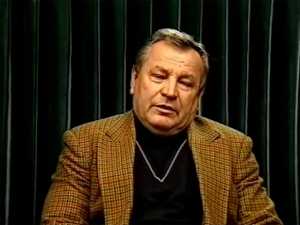
Video Oral History

Envera Karkin
ADVICE FOR SURVIVAL
FC-VOH-99-922 | Video
Rasema Olovčić
ADVICE FOR SURVIVAL
FC-VOH-99-923 | Video
Šerif Kulagić
HOW TO MOUNT CURTAINS UNDER SNIPER FIRE
FC-VOH-99-924 | Video
Dejan Savković
HOW TO MOUNT CURTAINS UNDER SNIPER FIRE
FC-VOH-99-925 | Video
Radmila Stojadinović
FRENCH BATTALION LIBERATES THE VRBANJA BRIDGE
FC-VOH-99-927 | Video
Šefik Lojo
DRINA IS IN THE SHOPS
FC-VOH-99-919 | Video
Nedžad Hadžijalić
CYCLISTS SPEED TO AVOID SNIPERS
FC-VOH-99-921 | Video
Salko Muratović
HOW TO MOUNT CURTAINS UNDER SNIPER FIRE
FC-VOH-99-926 | Video
Fuad Babić
ADVICE FOR SELF-PROTECTION
FC-VOH-99-920 | Video