
Bosnia language flag

Chronology → Video Oral History

The Siege of Sarajevo 1992–1996

This Interactive FAMA Project integrates the documented chronology of the Siege of Sarajevo with first-hand testimonies within a single interface.

The material can be explored month by month by selecting any point between March 1992 and March 1996. For each chosen month, the user can review the corresponding textual chronology alongside video oral history interviews from the same period. By aligning the chronology of events with personal experiences, the platform enables a more layered, contextual exploration of how the siege unfolded over time.

The Siege of Sarajevo: Chronology 1992-1996

Compiled shortly after the war, this comprehensive chronology of the Sarajevo siege covers the period from March 1992 to March 1996. Structured by month and year, it draws on articles from the "Oslobođenje" newspaper, UN archives, reports from foreign correspondents, and citizen testimonies to document key social, political, military, cultural, and personal events of that time. By recording major developments and everyday survival, the chronology remains a vital reference for understanding how the siege unfolded and transformed every aspect of city life.

Oral History: The Siege of Sarajevo 1992-1996, video

Structured chronologically and thematically, this is the first and largest video oral history of the Sarajevo siege in the world, featuring nearly 1,000 interviews with over 450 citizens from diverse backgrounds. Produced soon after the war, it presents personal testimonies covering all aspects of life in the besieged city. This 30-hour collection serves as both an educational resource and a historical record, offering future generations an unparalleled insight into first-hand accounts of the longest urban siege in modern history.
Chronology → Video Oral History

The Siege of Sarajevo 1992–1996

This Interactive FAMA Project integrates the documented chronology of the Siege of Sarajevo with first-hand testimonies within a single interface.

The material can be explored month by month by selecting any point between March 1992 and March 1996. For each chosen month, the user can review the corresponding textual chronology alongside video oral history interviews from the same period. By aligning the chronology of events with personal experiences, the platform enables a more layered, contextual exploration of how the siege unfolded over time.

The Siege of Sarajevo: Chronology 1992-1996

Compiled shortly after the war, this comprehensive chronology of the Sarajevo siege covers the period from March 1992 to March 1996. Structured by month and year, it draws on articles from the “Oslobođenje” newspaper, UN archives, reports from foreign correspondents, and citizen testimonies to document key social, political, military, cultural, and personal events of that time. By recording major developments and everyday survival, the chronology remains a vital reference for understanding how the siege unfolded and transformed every aspect of city life.

Oral History: The Siege of Sarajevo 1992-1996, video

Structured chronologically and thematically, this is the first and largest video oral history of the Sarajevo siege in the world, featuring nearly 1,000 interviews with over 450 citizens from diverse backgrounds. Produced soon after the war, it presents personal testimonies covering all aspects of life in the besieged city. This 30-hour collection serves as both an educational resource and a historical record, offering future generations an unparalleled insight into first-hand accounts of the longest urban siege in modern history.
Chronology

  • Willy Claes: “The council today approved a plan to repel any attacks in the areas of Bihac, Sarajevo and Tuzla.”
  • Slobodan Milosevic sends a letter to Izetbegovic and Mladic to cease hostilities and to work towards peace.
  • Iran supports cooperation between BiH and Croatia.
  • Russia sends out a call to halt hostilities and return to political methods to regulate the conflict.
  • The Bildt plan: limited easing of sanctions for the recognition of BiH and the closing of the border with Serbia. Kozyrev supports this plan.
  • A convoy with 630 tons of food is stopped at the Sarajevo airport. The Serbs refuse permission to the UNHCR and UNPROFOR for it to continue on to the city.
  • UNPROFOR leaves Zepa .
  • Massing of troops in Croatia: 100,000 Croats, 50,000 Serbs.
  • Karadzic sends out an appeal for help to halt Zagreb′s advances in Western Bosnia. “This is not a civil war, but aggression, the continuation of the Second World War.”
  • Resignation of Haris Silajdzic as Prime Minister of the Federation of BiH.
  • The Croatian Army launches its offensive. Implementation starts of the Split declaration.
  • Bicycles back in vogue in Sarajevo.
  • Forecast: Gas will return in 10 hours.
  • Fighters from the Fifth Corps of the ARBiH and the Croatian Army join forces in Croatian territory. In less than two days the army fulfills 80% of its planned objectives. Abdic and Martic flee. Knin is liberated. A column of Serb refugees heads into Bosnia. An HV Commander: “Bihac has been saved and the HV has done what we were convinced the world should have done.”
  • Margaret Thatcher: “The embargo is not only immoral, but quite possibly illegal, because it is preventing the Bosnians from defending themselves against genocide.”
  • Liberation of Velika Kladusa and territory along the border of Croatia and BiH.
  • August 7th end of Operation “Storm” by the Croatian Army.
  • The Pope’s stance: the aggressor should be resisted.
  • Franjo Tudjman, Croatian president, awards medals to Alija Izetbegovic and Muhamed Sacirbegovic. This contributes to friendly relations between the two countries.
  • Yeltsin calls Tudjman and Milosevic to Moscow. Tudjman refuses, saying the meeting must be carefully prepared, and because Izetbegovic is not invited. Shock in Moscow.
  • Clinton vetoes a decision by Congress to unilaterally lift the arms embargo in BiH. Clinton: “The Serbs will not defer their attacks while the Bosnian government receives and tests new weapons.”
  • The Russian Duma passes a resolution on lifting sanctions against Yugoslavia.
  • Frasure and Holbrooke on the way to a new peace plan.
  • A shell attack kills the young Sarajevan intellectual and journalist, Karim Zaimovic.
  • Humanitarian flights from Pisa redirected from Split to Belgrade because of the refugee crisis of Serbs fleeing liberated territory in Croatia.
  • The U.S. team arrives with a peace plan: The Muslim-Croat Federation on one side, the Republika Srpska on the other, with the possibilty of creating connections with Croatia and Serbia.
  • Sarajevans die hungry. Snipers pick off pedestrians scavenging for food. Gardens lack water and fertilizer. People sell anything for food. Refrigerator - 50 DM; automobile “Zastava 101” - 300 DM; bicycle - 350 DM; TV “Grunding” - 150-200 DM; medical encyclopedia - 150 DM.
  • Igman road: An UNPROFOR APC crashes. Several members of the American negotiating team are killed: Robert Frasure, Nelson Drew and Joseph Kruzel, and one French soldier.
  • Nicknamed “the most unsafe road in the world”, Igman road is the price of living in Sarajevo.
  • Hungary, at the request of the UN, closes its gas pipeline to Sarajevo – reports Hungarian radio. The UN requests stoppage of the gas pipeline because the gas does not reach Sarajevo. The Serbs are redirecting the gas for themselves because they hold the territory through which it passes.
  • Richard Holbrooke, after the horrible accident that took lives from its negotiating team: “The mission will continue under the auspices of President Clinton.”
  • Igman road has the status of a “blue route” used by the UNHCR, UNPROFOR, UNICEF and UNESCO.
  • The Serbs blockade the UN Ukrainian battalion, which sought to leave Gorazde.
  • Chirac invites Izetbegovic to Paris.
  • At the border of Macedonia and Yugoslavia, two UN soldiers strip naked and dance. One is from the American battalion, the other from the Norwegian battalion.
  • The UN leaves Gorazde.
  • Holbrooke begins a new mediation mission. He first travels to Paris. The decision is made to put pressure on the Bosnian Serbs using Milosevic.
  • The typical Sarajevan woman searches for twigs on the ground, picks ears of corn from “the greenhouse”, takes water from manholes, goes to tanks, to pumps, drags along a 10kg gas canister, waits for humanitarian rations of bread, weighs humanitarian aid, runs while a sniper fires at her, gives interviews in the streets, as shells fall …
  • Richard Holbrooke: “If there is no progress towards peace, NATO will be more involved and things will happen which the Bosnian Serbs will not like.”
  • Massacre at the “Markale” market, in Sarajevo: 35 killed, 90 wounded. The UN does not call on NATO. An investigation is underway.
  • Karadzic: “The Muslims staged the attack.”
  • Boutros Boutros-Ghali awaits the results of the investigation.
  • The direction from which the shell was fired is not enough for NATO intervention. The exact location is needed.
  • The Serbs block the last British convoy leaving Gorazde.
  • Izetbegovic in Paris.
  • Results of the UN investigation: The shells were fired by the Bosnian Serbs.
  • NATO launches a series of attacks on Serb positions.
  • The Bosnian Serbs fire shells at the burnt-out Olympic hall “Zetra”.
  • The aircraft carrier “Roosevelt” returns to the Adriatic.
  • The NATO operation “Night flight” underway.
  • ABiH soldiers in Mojmilo follow the NATO spectacle the entire night.
  • In Belgrade, an agreement is signed on the joint participation of Serbia and the RS in the peace negotiations, and which as a guarantee is also signed by the Serbian Orthodox Church.
  • The Serbs shoot down a NATO plane. Two French pilots are missing.

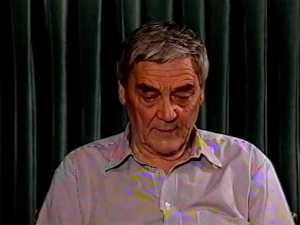
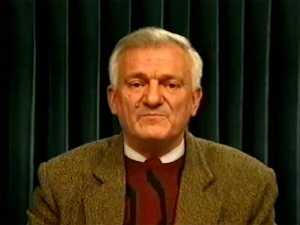
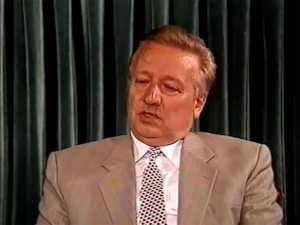
Video Oral History

Muhamed Filipović
BRITISH POLICY TOWARDS BH
FC-VOH-99-959 | Video
Vahida Tvico
MASSACRE IN FRONT OF THE INDOOR FOOD MARKET
FC-VOH-99-961 | Video
Edin Zametica
NATO AIR STRIKES
FC-VOH-99-963 | Video
Jovan Divjak
NATO AIR STRIKES
FC-VOH-99-965 | Video
Božo Kljajić
BOSANSKA VILA PUBLISHES AGAIN
FC-VOH-99-960 | Video
Šaćir Fazlić
NATO AIR STRIKES
FC-VOH-99-964 | Video