
Bosnia language flag

Chronology → Video Oral History

The Siege of Sarajevo 1992–1996

This Interactive FAMA Project integrates the documented chronology of the Siege of Sarajevo with first-hand testimonies within a single interface.

The material can be explored month by month by selecting any point between March 1992 and March 1996. For each chosen month, the user can review the corresponding textual chronology alongside video oral history interviews from the same period. By aligning the chronology of events with personal experiences, the platform enables a more layered, contextual exploration of how the siege unfolded over time.

The Siege of Sarajevo: Chronology 1992-1996

Compiled shortly after the war, this comprehensive chronology of the Sarajevo siege covers the period from March 1992 to March 1996. Structured by month and year, it draws on articles from the "Oslobođenje" newspaper, UN archives, reports from foreign correspondents, and citizen testimonies to document key social, political, military, cultural, and personal events of that time. By recording major developments and everyday survival, the chronology remains a vital reference for understanding how the siege unfolded and transformed every aspect of city life.

Oral History: The Siege of Sarajevo 1992-1996, video

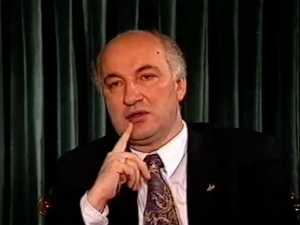
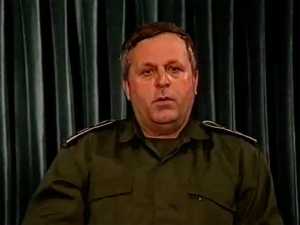
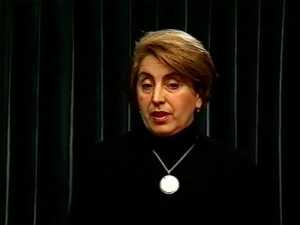
Structured chronologically and thematically, this is the first and largest video oral history of the Sarajevo siege in the world, featuring nearly 1,000 interviews with over 450 citizens from diverse backgrounds. Produced soon after the war, it presents personal testimonies covering all aspects of life in the besieged city. This 30-hour collection serves as both an educational resource and a historical record, offering future generations an unparalleled insight into first-hand accounts of the longest urban siege in modern history.

Chronology → Video Oral History

The Siege of Sarajevo 1992–1996

This Interactive FAMA Project integrates the documented chronology of the Siege of Sarajevo with first-hand testimonies within a single interface.

The material can be explored month by month by selecting any point between March 1992 and March 1996. For each chosen month, the user can review the corresponding textual chronology alongside video oral history interviews from the same period. By aligning the chronology of events with personal experiences, the platform enables a more layered, contextual exploration of how the siege unfolded over time.

The Siege of Sarajevo: Chronology 1992-1996

Compiled shortly after the war, this comprehensive chronology of the Sarajevo siege covers the period from March 1992 to March 1996. Structured by month and year, it draws on articles from the “Oslobođenje” newspaper, UN archives, reports from foreign correspondents, and citizen testimonies to document key social, political, military, cultural, and personal events of that time. By recording major developments and everyday survival, the chronology remains a vital reference for understanding how the siege unfolded and transformed every aspect of city life.

Oral History: The Siege of Sarajevo 1992-1996, video

Structured chronologically and thematically, this is the first and largest video oral history of the Sarajevo siege in the world, featuring nearly 1,000 interviews with over 450 citizens from diverse backgrounds. Produced soon after the war, it presents personal testimonies covering all aspects of life in the besieged city. This 30-hour collection serves as both an educational resource and a historical record, offering future generations an unparalleled insight into first-hand accounts of the longest urban siege in modern history.

Chronology

  • NATO operation following the violation of the prohibition of the no-fly zone in the airspace of Bosnia and Herzegovina. Four JNA planes are shot down.
  • Washington: The Muslims and Croats sign an agreement on the Federation BiH.
  • The Bosnian Serbs block the departure of a UN Canadian convoy from Srebrenica for 30 hours.
  • After signing the agreement on the Federation of BiH, the Chiefs of Staff of the ARBiH and HVO will hold a meeting as soon as possible, in which they will, with teams of experts, draw up plans for the dynamic transition of ARBiH and HVO into a common, then later single, armed component of the future Federation of BiH.
  • General Laprell succeeds Gen. Cote.
  • Four travel routes to and from Sarajevo are opened.
  • Fluctuations in the local markets caused by the announcement that roads are opening. Prices at the markets have dropped.
  • Washington, March 18, 1994. Peace agreement signed on the creation of the Muslim-Croatian Federation in BiH and the basis for the confederation of the Federation BiH with Croatia. The agreement is signed by: Haris Silajdzic, Kresimir Zubak, Alija Izetbegovic, Franjo Tudjman and Bill Clinton.
  • A football match is held at "Kosevo” stadium as a symbolic sign that Sarajevo is no longer a dangerous city. Entrance is free. The game is attended by 15,000 people. The game is played between Sarajevo and UNPROFOR. The result is 4-0 for Sarajevo.
  • Tuzla airport is opened. The first passenger is Yasushi Akashi.
  • A kilo of coffee on March 7th is 120 DM; on March 21st, 40 DM. Still at the markets goods can be bought for cigarettes and other bartered goods.
  • A Swiss clown visits Sarajevo.
  • Debate over where the center of Sarajevo is caused by the withdrawal of artillery. The Bosnian Serbs claim that the center is near the Cathedral, whereas NATO experts claim that the city center is 1 km west of the Cathedral. The Serbs need to withdraw their weapons 20 km from the city.
  • For the first time since the siege began, Sarajevans can cross from one bank to another. The first bus from the city arrives in Hrasnica, a suburb of Sarajevo, accompanied by UNPROFOR.
  • A Turkish UN battalion is coming to Bosnia. Turkish soldiers return to Bosnia after 116 years.
  • Due to the developments in Sarajevo, Yasushi Akashi says: "I see light at the end of the tunnel."
  • The Jewish holiday of Passover is celebrated.
  • In a show of solidarity with the citizens of Sarajevo the world's Olympic greats arrive in Sarajevo.
  • Madeleine Albright in Sarajevo: "The future of America and your future are inseparable. This ceremony must show that to everyone.”
  • The constitution of the Federation BiH is adopted.
  • William Eagleton appointed as the civilian administrator of the UN in Sarajevo. He will devise a plan for the restoration of basic public services.

Video Oral History

Irfan Durmić
BATTLE FOR ELECTRICITY
FC-VOH-99-711 | Video
Safet Jakupović
BRIDGE OF BROTHERHOOD AND UNITY IS NOT OPEN
FC-VOH-99-710 | Video
Safet Jakupović
WE WANT TO GO HOME!
FC-VOH-99-712 | Video
Sead Jasenković
SARAJEVO 4 : UNPROFOR 0
FC-VOH-99-718 | Video
Stjepan Kljujić
TUZLA AIRPORT IS OPEN
FC-VOH-99-719 | Video
Ajša Pašić
CIGARETTES PAYEMENT
FC-VOH-99-720 | Video
Nidžara Aljović
VISITING GRBAVICA; WITH GUARDS
FC-VOH-99-722 | Video
David Kamhi
CELEBRATION OF PASSOVER
FC-VOH-99-723 | Video
Zdravko Stojnić
OLYMPIC ACES IN SARAJEVO
FC-VOH-99-724 | Video
Muhamed Kreševljaković
TRAM RIDE WITH COLONEL SOUBIROU
FC-VOH-99-714 | Video
Ibrahim Jusufranić
SERBS SHOOT AT THE TRAM
FC-VOH-99-715 | Video
Ajša Pašić
ADVICE FOR SURVIVAL
FC-VOH-99-716 | Video
Hajrudin Alispahić
JUKA’S BODYGUARDS ARE ARRESTED
FC-VOH-99-717 | Video
Ibro Spahić
SWISS CLOWN IN SARAJEVO
FC-VOH-99-721 | Video
Vesna Frančić
EAGLETON’S PLAN FOR RECONSTRUCTION
FC-VOH-99-726 | Video
Radmila Stojadinović
VISIT TO THE EGYPTIAN UN BATTALION
FC-VOH-99-727 | Video