
| 1. | PROLOGUE |
| 2. | BACKGROUND |
| 3. | PERCEPTIONS - THEN & NOW |
| 3.1. | Enes Zlatar Bure |
| 3.2. | Nedžad Begović |
| 3.3. | Una Bejtović |
| 3.4. | Amina Begović |
| 3.5. | Adi Sarajlić |
| 3.6. | Sabrina Begović-Ćorić |
| 3.7. | Srđan Jevđević |
| 3.8. | Haris Pašović |
| 3.9. | Vesna Mišanović |
| 3.10. | Amra Zulfikarpašić |
| 3.11. | Amina Begović |
| 3.12. | Fuad Babić |
| 3.13. | Riad Ljutović |
| 3.14. | Prof. Rešad Arnautović |
| 3.15. | Arijana Saračević Helać |
| 3.16. | Selma Hodžić / Sanina Rizvanbegović |
| 3.17. | Prof. Ognjenka Finci |
| 3.18. | Ferida Duraković |
| 3.19. | Dr. Bakir Nakaš / Dr. Vesna Čengić |
| 3.20. | Mladen Jeličić Troko |
| 3.21. | Maja Tulić |
| 3.22. | Dragan Rokvić |
| 3.23. | Šemsa Mehmedović |
| 3.24. | Adnan Harambašić |
| 4. | INTERACTIVE SURVIVAL MAP |
| 5. | REFERENCES |
|
The Art of Survival #2
AHEAD OF FEAR |
|
The Art of Survival #1
MAPPING A BESIEGED CITY |
| 1. | PROLOGUE |
| 2. | BACKGROUND |
| 3. | PERCEPTIONS - THEN & NOW |
| 3.1. | Enes Zlatar Bure |
| 3.2. | Nedžad Begović |
| 3.3. | Una Bejtović |
| 3.4. | Amina Begović |
| 3.5. | Adi Sarajlić |
| 3.6. | Sabrina Begović-Ćorić |
| 3.7. | Srđan Jevđević |
| 3.8. | Haris Pašović |
| 3.9. | Vesna Mišanović |
| 3.10. | Amra Zulfikarpašić |
| 3.11. | Amina Begović |
| 3.12. | Fuad Babić |
| 3.13. | Riad Ljutović |
| 3.14. | Prof. Rešad Arnautović |
| 3.15. | Arijana Saračević Helać |
| 3.16. | Selma Hodžić / Sanina Rizvanbegović |
| 3.17. | Prof. Ognjenka Finci |
| 3.18. | Ferida Duraković |
| 3.19. | Dr. Bakir Nakaš / Dr. Vesna Čengić |
| 3.20. | Mladen Jeličić Troko |
| 3.21. | Maja Tulić |
| 3.22. | Dragan Rokvić |
| 3.23. | Šemsa Mehmedović |
| 3.24. | Adnan Harambašić |
| 4. | INTERACTIVE SURVIVAL MAP |
| 5. | REFERENCES |
|
The Art of Survival #2
AHEAD OF FEAR |
|
The Art of Survival #1
MAPPING A BESIEGED CITY |
3.9.
Vesna Mišanović
"I found my salvation in those chess pieces"
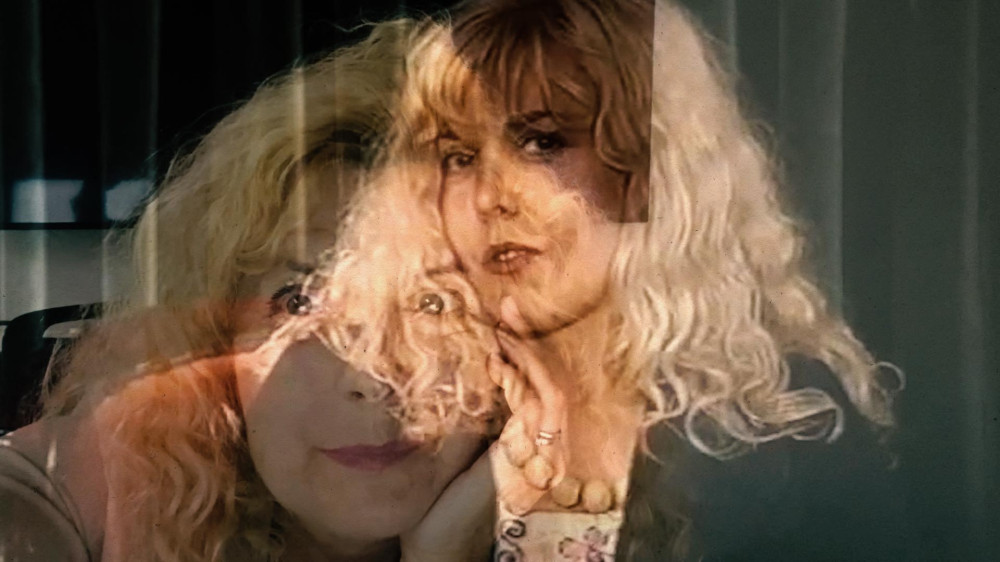
Before the siege, Sarajevo was an important regional sports center, not only because of the XIV Winter Olympic Games. At the very beginning of the siege, the city's sports infrastructure was destroyed. Professional athletes, however, realize that one form of resistance to terror is the continuation of training and dedication to elite sport. Some of them even had the opportunity to represent Bosnia and Herzegovina at international competitions. Among them is Vesna Mišanović, a chess grandmaster who, among other things, performed at the European Chess Championship in Debrecen in 1992. In her two video statements, then and now, she explains what sport meant to the city under siege and what it was like to go to a competition in the middle of the war.
Then...
"We had to prepare ourselves under tough conditions, without electricity, but at the same time, I found my salvation in those chess pieces."
Now...
"Unfortunately, we still have the same situation as then, that in principle the biggest part of what happens is individual support and parents who stand behind their children."
© FAMA Collection; Oral History: 'The Siege of Sarajevo 1992-1996'
Then...
“We got there, and our first disappointment was that they didn't have our flag. They didn't have ours, but they had the flags of the one hundred and some odd other countries - only the BH flag was missing. The people said that they didn't even know what it looked like, so then they took our passports, made a sketch of the flag. Then we were taken to the tailor's and we had to sew it together with those Filipino women. And so the official opening in June of 1992, was the first time in history that the flag of BH was blowing in the wind at a sports competition. And in November of 1992 we participated in the European championship in Debrecen. For a long time the three of us were trying to decide whether to even go or not. How to finance our trip. You can't ask anyone for money when people there don't have enough to eat, and still you're asking to go play in some competition. We decided that since the organizers were paying for the hotel rooms, that we just travel there at our own expense. Well, things started off on a pretty bad foot because the radiator in our room exploded, destroying everything that we were able to take out of the city. But it ended up magnificently - I won the silver medal on the first board at the European Championship. And based on that performance I was chosen as the best in women’s sports. Later it continued to be extremely difficult to get out of Sarajevo in order to go to tournaments, through the tunnel, over Igman. I remember, for example, the Chess Olympics in Moscow, when our men’s team took the silver medal. Just the trip out of Sarajevo was both wonderful and terrifying, because I started at midnight, through the tunnel. I had no idea where I was supposed to go. Not even through the trenches. I was lucky, though, because a young man, a soldier helped me. He pushed me through on one of those carts. You know, like a real queen, and not just a chess queen. Then over Igman at 20 degrees below zero, one part you have to go by foot, and then later on hitchhike. Later I tried to explain to reporters, foreign reporters of course, how that whole journey out of Sarajevo actually looked. I don’t think they were ever able to comprehend it. I repeated that story many times. I tried to re-create the atmosphere in the tunnel, with the tracks and those little cars that ran on them, and then those journalists would say, ‘You left Sarajevo by metro.’ And that’s the way it was during the war. We had to prepare ourselves under tough conditions, without electricity, but at the same time, I found my salvation in those chess pieces.” - Vesna Mišanović, Chess Player
© FAMA Collection; Macro Story: 'The Siege of Sarajevo - Then & Now'
Now...
“First, thank you very much for this conversation and for this question. So, what has changed from that long ago in 1992 to today, what has remained the same? I think it remains the same that we have wonderful athletes, we have young people who are incredible, who invest so much in themselves, to achieve top results, to represent this country in the best light. I will only mention a few and I apologize in advance if I forget someone. I will, of course, mention Lana Pudar, I will mention Lejla Njemčević, I will mention Alen Ramić, Amel Tuka or recently Ismail Barlov who really delighted the whole of Paris and all of us who watched it. So, we still have a generation of phenomenal athletes, we still have a generation of phenomenal coaches who are able to support these children. Unfortunately, we still have the same situation as then, that in principle the biggest part of what happens is individual support, parents who stand behind their children, who want these children to succeed, coaches who give their time and energy to that sport and very few individuals who really love the sport as it is.
What we had then, we believed then that, when the madness of 1992, 1993, 1994, and partly in 1995 is over, that we would have a country that would support sports much more, that would support young people much more so they can show what they are capable of. And I think, at least among us, the older ones, and I believe also among these children, that this hope is no longer there. And it is a great pity that there are still some people in sports who are not ready for the same sacrifice and hard work as some athletes.
Of course, what has also changed is ourselves, not only that some years are behind us, but what I see is that we have become different personalities through all that we have been through. I hope that, at least as far as I'm concerned, there have been a lot of positive changes in terms of empathy towards other people, in terms of a great desire to help those people who are currently in a difficult position, regardless of which part of the world they come from. And that is perhaps one positive experience that came out of many negative experiences during the war, that we became, in a way, better personalities. Thank you very much for this conversation." - Vesna Caselotti, Chess Player, Global Head of Corporate Software (automotive industry), author of children's books
More on this topic in our Macro Story.