
| 1. | PROLOGUE |
| 2. | BACKGROUND |
| 3. | PERCEPTIONS - THEN & NOW |
| 3.1. | Enes Zlatar Bure |
| 3.2. | Nedžad Begović |
| 3.3. | Una Bejtović |
| 3.4. | Amina Begović |
| 3.5. | Adi Sarajlić |
| 3.6. | Sabrina Begović-Ćorić |
| 3.7. | Srđan Jevđević |
| 3.8. | Haris Pašović |
| 3.9. | Vesna Mišanović |
| 3.10. | Amra Zulfikarpašić |
| 3.11. | Amina Begović |
| 3.12. | Fuad Babić |
| 3.13. | Riad Ljutović |
| 3.14. | Prof. Rešad Arnautović |
| 3.15. | Arijana Saračević Helać |
| 3.16. | Selma Hodžić / Sanina Rizvanbegović |
| 3.17. | Prof. Ognjenka Finci |
| 3.18. | Ferida Duraković |
| 3.19. | Dr. Bakir Nakaš / Dr. Vesna Čengić |
| 3.20. | Mladen Jeličić Troko |
| 3.21. | Maja Tulić |
| 3.22. | Dragan Rokvić |
| 3.23. | Šemsa Mehmedović |
| 3.24. | Adnan Harambašić |
| 4. | INTERACTIVE SURVIVAL MAP |
| 5. | REFERENCES |
|
The Art of Survival #2
AHEAD OF FEAR |
|
The Art of Survival #1
MAPPING A BESIEGED CITY |
| 1. | PROLOGUE |
| 2. | BACKGROUND |
| 3. | PERCEPTIONS - THEN & NOW |
| 3.1. | Enes Zlatar Bure |
| 3.2. | Nedžad Begović |
| 3.3. | Una Bejtović |
| 3.4. | Amina Begović |
| 3.5. | Adi Sarajlić |
| 3.6. | Sabrina Begović-Ćorić |
| 3.7. | Srđan Jevđević |
| 3.8. | Haris Pašović |
| 3.9. | Vesna Mišanović |
| 3.10. | Amra Zulfikarpašić |
| 3.11. | Amina Begović |
| 3.12. | Fuad Babić |
| 3.13. | Riad Ljutović |
| 3.14. | Prof. Rešad Arnautović |
| 3.15. | Arijana Saračević Helać |
| 3.16. | Selma Hodžić / Sanina Rizvanbegović |
| 3.17. | Prof. Ognjenka Finci |
| 3.18. | Ferida Duraković |
| 3.19. | Dr. Bakir Nakaš / Dr. Vesna Čengić |
| 3.20. | Mladen Jeličić Troko |
| 3.21. | Maja Tulić |
| 3.22. | Dragan Rokvić |
| 3.23. | Šemsa Mehmedović |
| 3.24. | Adnan Harambašić |
| 4. | INTERACTIVE SURVIVAL MAP |
| 5. | REFERENCES |
|
The Art of Survival #2
AHEAD OF FEAR |
|
The Art of Survival #1
MAPPING A BESIEGED CITY |
3.6.
Sabrina Begović-Ćorić
"Children's games were a passage between fears"
During the siege of Sarajevo, children faced daily severe traumas, fears and emotional states that were too much of a challenge even for adults. Staying in basements, schooling in apartments, going to fetch water with canisters - all this had become everyday reality for the small citizens of Sarajevo. In abnormal circumstances, adults tried to provide all kinds of support to children and young people, so that the consequences of war events could be reduced to a minimum.
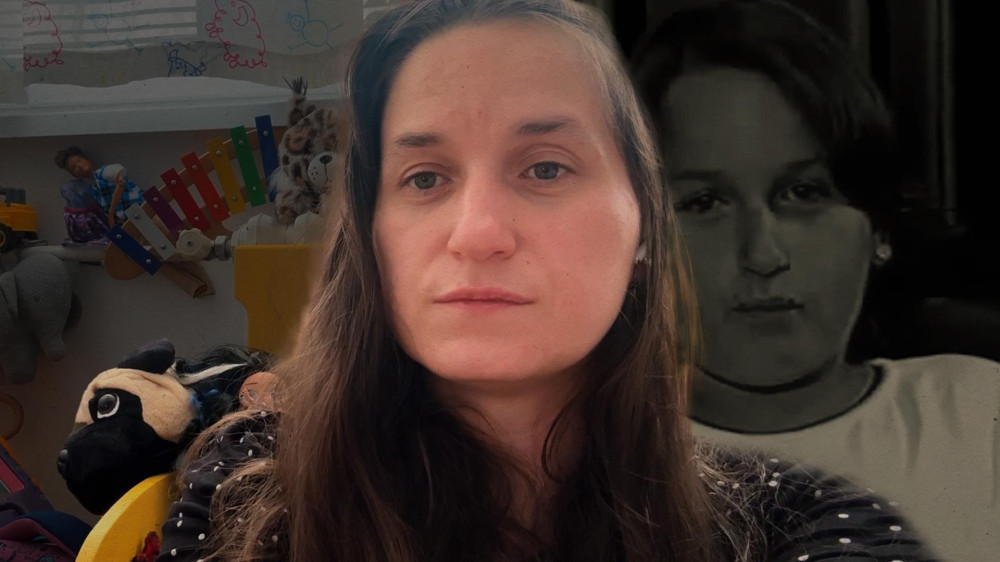
Sabrina Begović-Ćorić in two different times, as a child and as an adult woman and mother, tries to portray her growing up in the war, the games that were played and how children spent their free time. Thirty years after the siege of the city, she gives her perspective on parenting in war.
Then...
"My Daddy made some cards for us to learn the letters and numbers more easily."
Now...
"It wasn't until I became a parent that I realized what it must have meant for my parents to raise children in war. Not only to preserve our lives, but also to preserve the semblance of normality, to preserve children's playfulness, gaiety, and imagination."
© FAMA Collection; Oral History: 'The Siege of Sarajevo 1992-1996'
Then...
“Thirty years later I am a mother myself. I have three children on whose toys we stumble on. They have an abundance of toys. It wasn't until I became a parent that I realized what it must have meant for my parents to raise children in war. Not only to preserve our lives, but also to preserve the semblance of normality, to preserve children's playfulness, gaiety, and imagination. These were exactly the toys that Dad used to make. Not only to fill the time, but to grow with it, to learn and to focus our eyes on some more beautiful things. Those toys were more than toys. Those games were more than a game. They meant to preserve sanity. To keep one's sanity and find some passage between fears and still have a childhood.” - Sabrina Begović-Ćorić, Film director and producer
© FAMA Collection; Macro Story: 'The Siege of Sarajevo - Then & Now'
Now...
“My Daddy made some cards for us to learn the letters and numbers more easily. It’s game. You can play it with other children. You deal five cards then everyone throws a number. So, we learned the letter more easily. And for numbers if it was a 1 then you could take one ball and so we learned the numbers. That’s how we played and some of my relations came and we played it with other children. We played it a lot to pass the time or when we were bored. When we got to school it was much easier for us.” - Sabrina Begović, Student
More on this topic in our Macro Story.