
| 1. | PROLOGUE |
| 2. | BACKGROUND |
| 3. | PERCEPTIONS - THEN & NOW |
| 3.1. | Enes Zlatar Bure |
| 3.2. | Nedžad Begović |
| 3.3. | Una Bejtović |
| 3.4. | Amina Begović |
| 3.5. | Adi Sarajlić |
| 3.6. | Sabrina Begović-Ćorić |
| 3.7. | Srđan Jevđević |
| 3.8. | Haris Pašović |
| 3.9. | Vesna Mišanović |
| 3.10. | Amra Zulfikarpašić |
| 3.11. | Amina Begović |
| 3.12. | Fuad Babić |
| 3.13. | Riad Ljutović |
| 3.14. | Prof. Rešad Arnautović |
| 3.15. | Arijana Saračević Helać |
| 3.16. | Selma Hodžić / Sanina Rizvanbegović |
| 3.17. | Prof. Ognjenka Finci |
| 3.18. | Ferida Duraković |
| 3.19. | Dr. Bakir Nakaš / Dr. Vesna Čengić |
| 3.20. | Mladen Jeličić Troko |
| 3.21. | Maja Tulić |
| 3.22. | Dragan Rokvić |
| 3.23. | Šemsa Mehmedović |
| 3.24. | Adnan Harambašić |
| 4. | INTERACTIVE SURVIVAL MAP |
| 5. | REFERENCES |
|
The Art of Survival #2
AHEAD OF FEAR |
|
The Art of Survival #1
MAPPING A BESIEGED CITY |
| 1. | PROLOGUE |
| 2. | BACKGROUND |
| 3. | PERCEPTIONS - THEN & NOW |
| 3.1. | Enes Zlatar Bure |
| 3.2. | Nedžad Begović |
| 3.3. | Una Bejtović |
| 3.4. | Amina Begović |
| 3.5. | Adi Sarajlić |
| 3.6. | Sabrina Begović-Ćorić |
| 3.7. | Srđan Jevđević |
| 3.8. | Haris Pašović |
| 3.9. | Vesna Mišanović |
| 3.10. | Amra Zulfikarpašić |
| 3.11. | Amina Begović |
| 3.12. | Fuad Babić |
| 3.13. | Riad Ljutović |
| 3.14. | Prof. Rešad Arnautović |
| 3.15. | Arijana Saračević Helać |
| 3.16. | Selma Hodžić / Sanina Rizvanbegović |
| 3.17. | Prof. Ognjenka Finci |
| 3.18. | Ferida Duraković |
| 3.19. | Dr. Bakir Nakaš / Dr. Vesna Čengić |
| 3.20. | Mladen Jeličić Troko |
| 3.21. | Maja Tulić |
| 3.22. | Dragan Rokvić |
| 3.23. | Šemsa Mehmedović |
| 3.24. | Adnan Harambašić |
| 4. | INTERACTIVE SURVIVAL MAP |
| 5. | REFERENCES |
|
The Art of Survival #2
AHEAD OF FEAR |
|
The Art of Survival #1
MAPPING A BESIEGED CITY |
3.22.
Dragan Rokvić
"At the same time, you have the senselessness of drawing comics and the desire to draw"
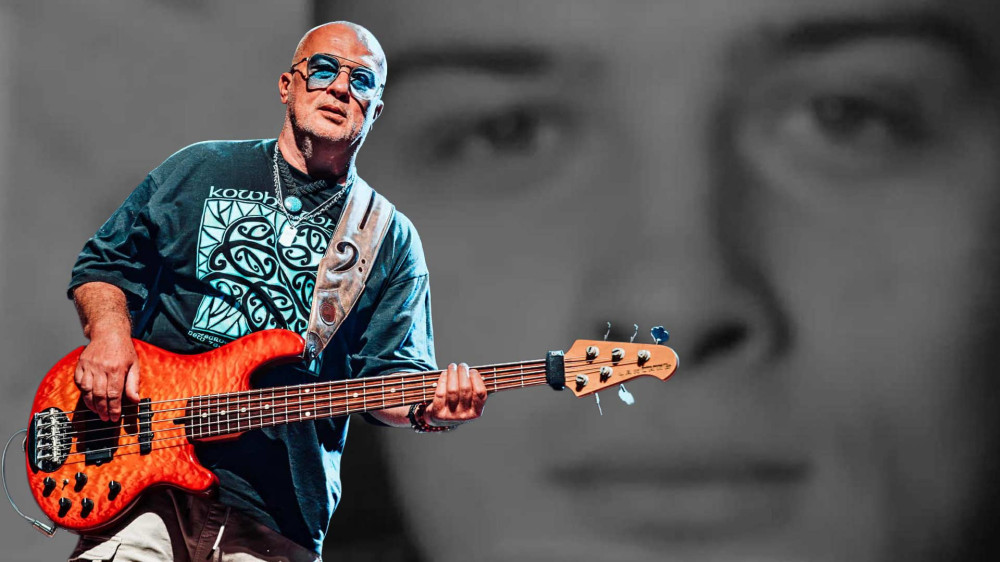
Dragan Rokvić - Now (personal archives) and then (personal archives, 1993)
In the FAMA Collection, in "Sarajevo LIFE Magazine", a comic was published that was created in 1994. The title of the comic is "Hamsun's Baedeker", and its basis is an essay of the same name by Bora Ćosić, who wrote it in 1993 during his exile in Rome. Dragan Rokvić writes about the process of creating this comic, but also about the importance of creative work in conditions of siege.
"The idea for the comic book came from Suada Kapić, who invited me for a conversation, presented the idea, and left me the freedom to create a script or concept based on which the comic book would be made. I had this story from Bora Ćosić, which at the time, at 24 years old and half-crazy from the war events, I understood very little, but I felt it more. (...) The daily process then was according to the work system as it would look like in peacetime conditions, except that stress and adrenaline were extreme."
The comic book you finished in 1994 was published in the FAMA Collection, in SARAJEVO LIFE Magazine. The title of the comic is "Hamsun's Baedeker", and its basis is an essay of the same name by Bora Ćosić, who wrote it in 1993 during his exile in Rome. Can you remember when and how the idea for this comic book came about?
Dragan Rokvić: The idea for the comic book came from Suada Kapić, who invited me for a conversation, presented the idea, and left me the freedom to create a script or concept based on which the comic book would be made. I had this story from Bora Ćosić, which at the time, at 24 years old and half-crazy from the war events, I understood very little, but I felt it more, so I was guided by feeling and intuition, or rather the inspiration that guided me.
In your comic book, scenes from Ćosić's essay and scenes from Sarajevo under siege are intertwined. Ćosić uses the name of Karl Baedeker, the publisher of famous German tourist guides, as a metaphor for the title of the essay, and in Sarajevo, under siege, work is being done on the guide "The Art of Survival" (FAMA production). You took that concept for your comic book? How long did you work on it - from concept to final work? What did the everyday process of drawing comic books look like in wartime conditions?
Dragan Rokvić: I had no idea who Baedeker was, I had FAMA's "Survival Guide" and that story by Bora Ćosić, as inspiration, that is, an instruction on what the comic book should be about. The story mentioned a girl who, as a character, was my guide through the Sarajevo part of the story. Now I remember, when you mentioned the Guide, and when I saw the comic book again after 30 years, that I used the photos from the FAMA survival guide, for example, when those people are sawing the trunk on the grave. I think I drew the comic book very quickly, in a few days, I'm usually a very fast draftsman, and especially then in my twenties, I delivered drawings in an incredibly short time. Of course, that has pros and cons, the quality suffers, but the customers are satisfied. It's not a joke, I'm aware of the shortcomings that arise from such speed, but on the other hand, energy is retained with such a way of working and if you have charm and style, it comes to the fore, so a lot can be forgiven. The daily process then was according to the work system as it would look like in peacetime conditions, except that stress and adrenaline were extreme. At the same time, you have the senselessness of drawing comics and the desire to draw, not only to make money, but also to express yourself and not go crazy. From this distance of time, it seems almost appealing.
What else did you do during the siege of Sarajevo? We know that you are a musician, illustrator, comic artist... Can you remember other creative projects that you realized during the siege? Did you do any other comic books during that period? Did you play music during the siege of the city?
Dragan Rokvić: I did all that, a lot. I listened to music whenever I could and played, wrote songs, wrote stories. Professionally, or for money, I mostly drew comics. My friend Karim Zaimović, who unfortunately died right before the end of the war, acquired comic magazines and albums through all possible channels, so we looked at all these works at his place or at my place and discussed, agreed and disagreed, to put it mildly. Karim was such a source of knowledge, not only from the world of comic books, but also music, literature, and film. There are a huge number of comic artists, writers and musicians that I learned about and loved, thanks to him. Together, we made 30 comic panels "Season without the Devil", a comic book based on his script, which was inspired by "The Master and Margarita" by Bulgakov, as well as the comic series "Sandman" by Neil Gaiman. Unfortunately, we didn't finish it, but what we had was published in instalments in the magazine "Fantom Slobode" (Engl. "The Phantom of Freedom") which was published during 1995. There were a lot of comic strips that I drew, which were printed by magazines and newspapers in Sarajevo at the time. Now that I remember, publications were read and published more during the war than later, and especially today. I haven't considered myself a comic artist for a long time, I no longer have the desire or time. To be a comic artist requires love and time, and other projects and things I do, primarily music, don't leave me much. In the last twenty years or so, I've drawn many comic books, mostly commissioned for projects and only a few because I imagined and wanted to. If I draw, then I draw storyboards that are similar to comics, visually, but without the prison that drawing comics entails, as well as illustrations for books, which I really enjoy.
More on this topic in our Macro Story.