
| 1. | PROLOGUE |
| 2. | BACKGROUND |
| 3. | PERCEPTIONS - THEN & NOW |
| 3.1. | Enes Zlatar Bure |
| 3.2. | Nedžad Begović |
| 3.3. | Una Bejtović |
| 3.4. | Amina Begović |
| 3.5. | Adi Sarajlić |
| 3.6. | Sabrina Begović-Ćorić |
| 3.7. | Srđan Jevđević |
| 3.8. | Haris Pašović |
| 3.9. | Vesna Mišanović |
| 3.10. | Amra Zulfikarpašić |
| 3.11. | Amina Begović |
| 3.12. | Fuad Babić |
| 3.13. | Riad Ljutović |
| 3.14. | Prof. Rešad Arnautović |
| 3.15. | Arijana Saračević Helać |
| 3.16. | Selma Hodžić / Sanina Rizvanbegović |
| 3.17. | Prof. Ognjenka Finci |
| 3.18. | Ferida Duraković |
| 3.19. | Dr. Bakir Nakaš / Dr. Vesna Čengić |
| 3.20. | Mladen Jeličić Troko |
| 3.21. | Maja Tulić |
| 3.22. | Dragan Rokvić |
| 3.23. | Šemsa Mehmedović |
| 3.24. | Adnan Harambašić |
| 4. | INTERACTIVE SURVIVAL MAP |
| 5. | REFERENCES |
|
The Art of Survival #2
AHEAD OF FEAR |
|
The Art of Survival #1
MAPPING A BESIEGED CITY |
| 1. | PROLOGUE |
| 2. | BACKGROUND |
| 3. | PERCEPTIONS - THEN & NOW |
| 3.1. | Enes Zlatar Bure |
| 3.2. | Nedžad Begović |
| 3.3. | Una Bejtović |
| 3.4. | Amina Begović |
| 3.5. | Adi Sarajlić |
| 3.6. | Sabrina Begović-Ćorić |
| 3.7. | Srđan Jevđević |
| 3.8. | Haris Pašović |
| 3.9. | Vesna Mišanović |
| 3.10. | Amra Zulfikarpašić |
| 3.11. | Amina Begović |
| 3.12. | Fuad Babić |
| 3.13. | Riad Ljutović |
| 3.14. | Prof. Rešad Arnautović |
| 3.15. | Arijana Saračević Helać |
| 3.16. | Selma Hodžić / Sanina Rizvanbegović |
| 3.17. | Prof. Ognjenka Finci |
| 3.18. | Ferida Duraković |
| 3.19. | Dr. Bakir Nakaš / Dr. Vesna Čengić |
| 3.20. | Mladen Jeličić Troko |
| 3.21. | Maja Tulić |
| 3.22. | Dragan Rokvić |
| 3.23. | Šemsa Mehmedović |
| 3.24. | Adnan Harambašić |
| 4. | INTERACTIVE SURVIVAL MAP |
| 5. | REFERENCES |
|
The Art of Survival #2
AHEAD OF FEAR |
|
The Art of Survival #1
MAPPING A BESIEGED CITY |

3.11.
Amina Begović
"The reward was mainly spiritual"
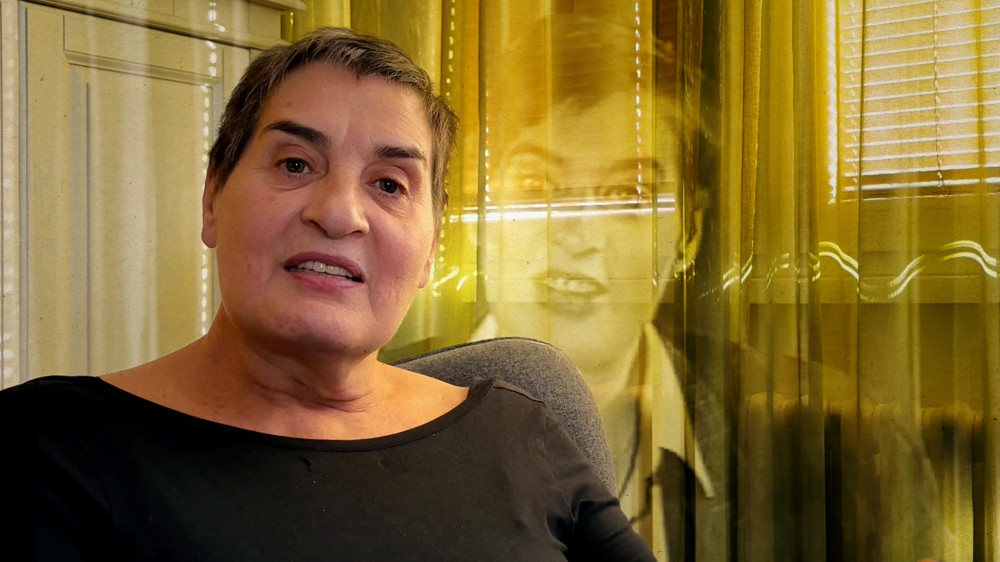
Theatre professionals, directors, actors, scenographers and costume designers without basic resources for work create a cultural miracle during the four years of the siege of Sarajevo. The theatre scene gave birth to its unique and unrepeatable expression, created in hopeless and abnormal conditions. Regardless of the constant danger of snipers and grenades,
theatre plays were held and filled the cold halls that had not been heated for years. In her video statements, from two different times - then and now - Amina Begović talks about theatre performances that were played during the siege.
Then...
"All of us were sacrificing ourselves for somebody. So it was one feeling which was familiar to us. Death was not some far-away notion anymore."
Now...
"We played theatre, we enjoyed it, and in the end, no one had to sacrifice himself for anyone. And that's the bottom line."
© FAMA Collection; Oral History: 'The Siege of Sarajevo 1992-1996'
Then...
„It is hard to figure out what classical tragedy is. And what tragedy is, in general. But tragedy was all around us; we were a part of tragedy. So it was easy to figure out the meaning of life and death and 'Alcestis' is exactly about that, to figure out what death is and how. I played one of the Alcestis, because it was a version where there were a lot of those women. She is a woman who sacrifices herself. Who agrees to die instead of her husband? All of us had been in those situations. Would I agree this time to go and fetch water and would my husband stay at home, or would my children, it is not important. All of us were sacrificing ourselves for somebody. So it was one feeling which was familiar to us. Death was not some far-away notion any more.“ - Amina Begović, Actress
© FAMA Collection; Macro Story: 'The Siege of Sarajevo - Then & Now'
Now...
„Exactly 30 years have passed since the play 'Alcestis'. It's the year 1994, summer. Haris Pašović staged the play 'Alcestis' in the Youth Theatre. Back then I talked about that play. What did it mean to us to even go to the theatre and do a play? The only reward was that we worked and played. So, there was no material reward.The reward was maily spiritual. Back then I said that the play 'Alcestis' is a question of sacrifice. Who is willing to take that sacrifice to go to death for whom? It was Alcestis who decided that she would do it for her husband. And then it occurred to me, actually now, at this time, when I reached that age, it occurred to me that my father-in-law, whom we all call grandfather Suljo, who at the beginning of the war put his son and his son-in-law in front of him, because we all lived in the same apartment, ten of us, four of them small children. He placed them before him and said, 'I have already lived my life.' At the same time, I must emphasize that he was then as old as I am now. 'And I will go for water, I will get wood and I will go in search of food. If something happens to me, you take care of your wives, my wife and your children. Because it is more important that the mothers are the ones who stay to take care of the children until the end.' At that time, of course, it was not as clear to me as it is today, the fact that a man was ready to sacrifice himself in order to leave his offspring safe. Thank God, we played theater, we enjoyed it, and in the end no one had to sacrifice himself for anyone. And that's the bottom line." - Amina Begović, glumica
More on this topic in our Macro Story.