
| 1. | PROLOGUE |
| 2. | BACKGROUND |
| 3. | PERCEPTIONS - THEN & NOW |
| 3.1. | Enes Zlatar Bure |
| 3.2. | Nedžad Begović |
| 3.3. | Una Bejtović |
| 3.4. | Amina Begović |
| 3.5. | Adi Sarajlić |
| 3.6. | Sabrina Begović-Ćorić |
| 3.7. | Srđan Jevđević |
| 3.8. | Haris Pašović |
| 3.9. | Vesna Mišanović |
| 3.10. | Amra Zulfikarpašić |
| 3.11. | Amina Begović |
| 3.12. | Fuad Babić |
| 3.13. | Riad Ljutović |
| 3.14. | Prof. Rešad Arnautović |
| 3.15. | Arijana Saračević Helać |
| 3.16. | Selma Hodžić / Sanina Rizvanbegović |
| 3.17. | Prof. Ognjenka Finci |
| 3.18. | Ferida Duraković |
| 3.19. | Dr. Bakir Nakaš / Dr. Vesna Čengić |
| 3.20. | Mladen Jeličić Troko |
| 3.21. | Maja Tulić |
| 3.22. | Dragan Rokvić |
| 3.23. | Šemsa Mehmedović |
| 3.24. | Adnan Harambašić |
| 4. | INTERACTIVE SURVIVAL MAP |
| 5. | REFERENCES |
|
The Art of Survival #2
AHEAD OF FEAR |
|
The Art of Survival #1
MAPPING A BESIEGED CITY |
| 1. | PROLOGUE |
| 2. | BACKGROUND |
| 3. | PERCEPTIONS - THEN & NOW |
| 3.1. | Enes Zlatar Bure |
| 3.2. | Nedžad Begović |
| 3.3. | Una Bejtović |
| 3.4. | Amina Begović |
| 3.5. | Adi Sarajlić |
| 3.6. | Sabrina Begović-Ćorić |
| 3.7. | Srđan Jevđević |
| 3.8. | Haris Pašović |
| 3.9. | Vesna Mišanović |
| 3.10. | Amra Zulfikarpašić |
| 3.11. | Amina Begović |
| 3.12. | Fuad Babić |
| 3.13. | Riad Ljutović |
| 3.14. | Prof. Rešad Arnautović |
| 3.15. | Arijana Saračević Helać |
| 3.16. | Selma Hodžić / Sanina Rizvanbegović |
| 3.17. | Prof. Ognjenka Finci |
| 3.18. | Ferida Duraković |
| 3.19. | Dr. Bakir Nakaš / Dr. Vesna Čengić |
| 3.20. | Mladen Jeličić Troko |
| 3.21. | Maja Tulić |
| 3.22. | Dragan Rokvić |
| 3.23. | Šemsa Mehmedović |
| 3.24. | Adnan Harambašić |
| 4. | INTERACTIVE SURVIVAL MAP |
| 5. | REFERENCES |
|
The Art of Survival #2
AHEAD OF FEAR |
|
The Art of Survival #1
MAPPING A BESIEGED CITY |
3.2.
Nedžad Begović
"Water could save us, but there is no water..."
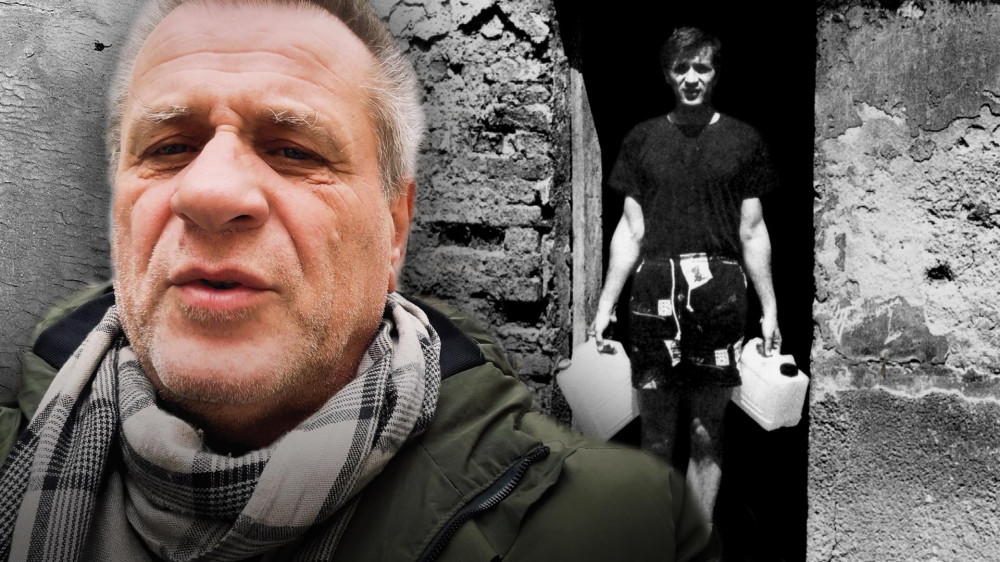
The siege of Sarajevo showed all the ways in which it is possible to terrorize a city, among other things by cutting off the water supply. The citizens of Sarajevo were forced to search for different sources of water. Water was poured from the Sarajevo brewery, from rare cisterns, and households used rainwater, snow or water from improvised wells. Going to get water under the impact of grenades and snipers, carrying canisters of different sizes and finding new ways to transport as many canisters as possible became part of the daily routine.
Nedžad Begović testified about what going to get water meant for his family, knowing that every time someone left the house, there was a risk of being hit by a grenade or a sniper. From the archives of the FAMA Collection, we showed him an old black-and-white photograph from the period of the siege, in which he stands with water canisters. So he remembered the daily search for water and living with minimal amounts of this vital resource.
Now...
"One of my biggest wartime projects was this well I dug with my neighbours. We had been using it for over two years."
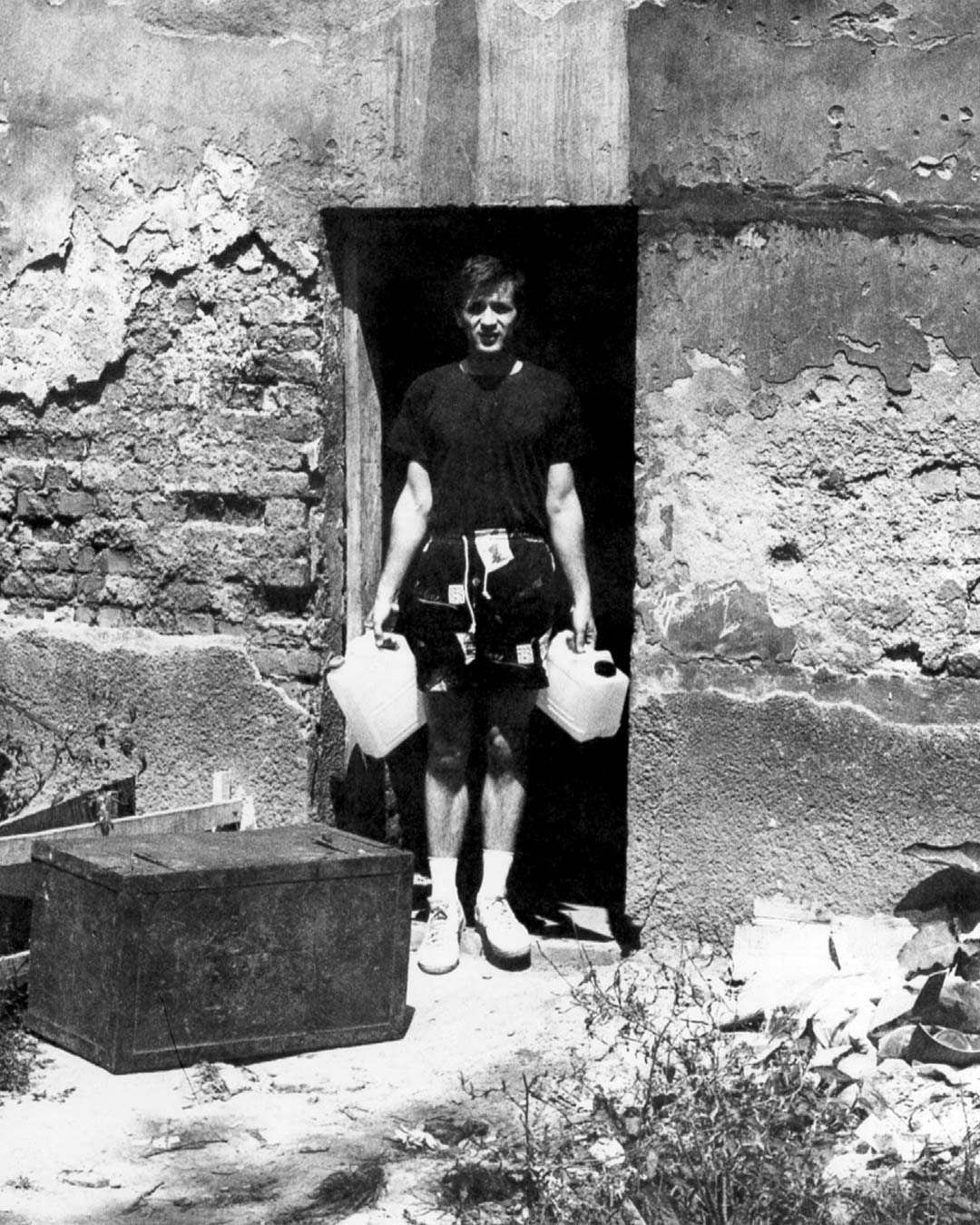
© FAMA Collection; Encyclopaedia: 'The Siege of Sarajevo 1992-1996'
Then...
© FAMA Collection; Macro Story: 'The Siege of Sarajevo - Then & Now'
Now...
"I know that you have a photo in your archives of this door where I am standing with the canisters. This door looks like this today. I used to pass through that door when I was going to a cistern or somewhere in search of water. Here is the gutter of my building where we collected rainwater or when the snow melts and it was the so-called technical water. This means that we bathed with it in a way that is already known, more or less to everyone, which is to put a basin in the bathtub, then you get into the basin and then my wife sprinkles me with water and I bathe. That water is used to flush the toilet. Since the water is warm, the tiles in the bathroom get wet and then my wife wipes them clean. One of my biggest wartime projects was this well I dug with my neighbours. We had been using it for over two years. It was 7.5 meters deep. We came across clay and that's when we knew we had to dig deeper. So, it didn't matter to us, however straight and deep, that was the code, until we found water. Today, as far as water is concerned, everything is ordinary, regular, normal. We have water. The only reflex I have left from the war is that when I brush my teeth or when I shave, I don't let the water run, so while I'm brushing my teeth, I turn off the water, then open it again, thus somehow contributing to global water protection. I hope that this well that I showed you will never be used in that way again. But times are complicated, you never know." - Nedžad Begović, film director (February 2024)
More on this topic in our Macro Story.