
| 1. | PROLOGUE |
| 2. | BACKGROUND |
| 3. | PERCEPTIONS - THEN & NOW |
| 3.1. | Enes Zlatar Bure |
| 3.2. | Nedžad Begović |
| 3.3. | Una Bejtović |
| 3.4. | Amina Begović |
| 3.5. | Adi Sarajlić |
| 3.6. | Sabrina Begović-Ćorić |
| 3.7. | Srđan Jevđević |
| 3.8. | Haris Pašović |
| 3.9. | Vesna Mišanović |
| 3.10. | Amra Zulfikarpašić |
| 3.11. | Amina Begović |
| 3.12. | Fuad Babić |
| 3.13. | Riad Ljutović |
| 3.14. | Prof. Rešad Arnautović |
| 3.15. | Arijana Saračević Helać |
| 3.16. | Selma Hodžić / Sanina Rizvanbegović |
| 3.17. | Prof. Ognjenka Finci |
| 3.18. | Ferida Duraković |
| 3.19. | Dr. Bakir Nakaš / Dr. Vesna Čengić |
| 3.20. | Mladen Jeličić Troko |
| 3.21. | Maja Tulić |
| 3.22. | Dragan Rokvić |
| 3.23. | Šemsa Mehmedović |
| 3.24. | Adnan Harambašić |
| 4. | INTERACTIVE SURVIVAL MAP |
| 5. | REFERENCES |
|
The Art of Survival #2
AHEAD OF FEAR |
|
The Art of Survival #1
MAPPING A BESIEGED CITY |
| 1. | PROLOGUE |
| 2. | BACKGROUND |
| 3. | PERCEPTIONS - THEN & NOW |
| 3.1. | Enes Zlatar Bure |
| 3.2. | Nedžad Begović |
| 3.3. | Una Bejtović |
| 3.4. | Amina Begović |
| 3.5. | Adi Sarajlić |
| 3.6. | Sabrina Begović-Ćorić |
| 3.7. | Srđan Jevđević |
| 3.8. | Haris Pašović |
| 3.9. | Vesna Mišanović |
| 3.10. | Amra Zulfikarpašić |
| 3.11. | Amina Begović |
| 3.12. | Fuad Babić |
| 3.13. | Riad Ljutović |
| 3.14. | Prof. Rešad Arnautović |
| 3.15. | Arijana Saračević Helać |
| 3.16. | Selma Hodžić / Sanina Rizvanbegović |
| 3.17. | Prof. Ognjenka Finci |
| 3.18. | Ferida Duraković |
| 3.19. | Dr. Bakir Nakaš / Dr. Vesna Čengić |
| 3.20. | Mladen Jeličić Troko |
| 3.21. | Maja Tulić |
| 3.22. | Dragan Rokvić |
| 3.23. | Šemsa Mehmedović |
| 3.24. | Adnan Harambašić |
| 4. | INTERACTIVE SURVIVAL MAP |
| 5. | REFERENCES |
|
The Art of Survival #2
AHEAD OF FEAR |
|
The Art of Survival #1
MAPPING A BESIEGED CITY |
3.10.
Amra Zulfikarpašić
"I worked a lot during the war, and that pretty much saved my life"
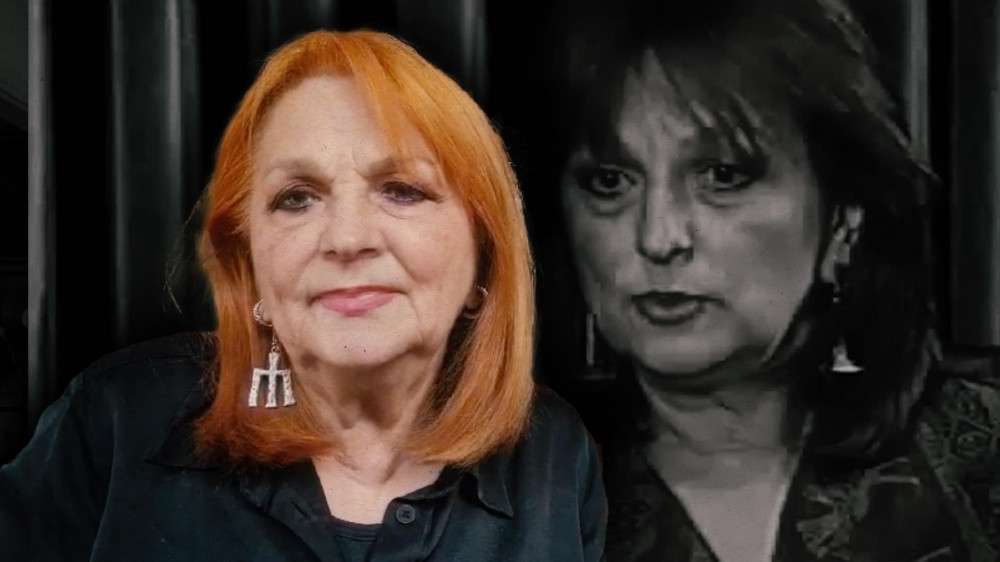
Artists created in the impossible conditions of the siege. Their mental and existential need to create overcame fear and a sense of powerlessness. Creating “something from nothing” became a great challenge, but it is precisely these impossible conditions, in a city that is collapsing, that awakened and strengthened the creative power of resistance. The works of art created during the siege were created amidst the ruins of the city and save it from complete oblivion. These works become a kind of memory for the future. In two video statements, then and now, Amra Zulfikarpašić describes the creative work and power of art during the siege of Sarajevo.
Then...
"Literally every month I had to move with my machines, my computers from basements, to cafe booths, to headquarters, and everywhere I had to plead to people to let me sit down somewhere and work."
Now...
"Basically, the art scene in Sarajevo, as well as the theatre and music scene, was very lively. We were working every day. Our base was the Academy of Fine Arts and the Collegium Artisticum."
© FAMA Collection; Oral History: 'The Siege of Sarajevo 1992-1996'
Then...
“Work was a kind of mental exercise for all of us or perhaps a means of mentally resisting. And it was interesting how during the war, if you ran into five people and asked them what they were doing, you would find that each of those five people was working on some kind of project of their own. This was because no one was able to give you or find you a job. You had to think up some kind of job for yourself. I worked a lot during the war, and that pretty much saved my life. Jobs that are perhaps less important now, when looking at them from a different point of view. At that time during the war, they seemed to me as if they were the most important thing in the world, even more important than my own life. And so I was going out to make trademarks for people, to design their projects, because that was terribly important to me. And I never thought about the possibility of something happening to me because of someone else’s project, like the possibility of my getting killed, for example. And this was at a time when there wasn’t any electricity at all, there wasn’t anything. There was no water, there wasn’t anything. This made work difficult for designers, because every one of my jobs depended on electricity in order to be realized in the end. And that was always the most difficult phase during the war. During ‘92 and ‘93 I became a regular nomad trying to find places where I could plug in my computer. Literally every month I had to move with my machines, my computers from basements, to cafe booths, to headquarters, and everywhere I had to plead to people to let me sit down somewhere and work. To give me just a little bit of electricity so that I could hook up my computer.” - Amra Zulfikarpašić, Designer
© FAMA Collection; Macro Story: 'The Siege of Sarajevo - Then & Now'
Now...
“Before the war, Sarajevo had a very strong art scene. Before the war, Sarajevo had the Collegium Artisticum, which was the largest gallery in the territory of the former Yugoslavia, and thank God it still exists today. Sarajevo had the largest exhibition that took place on the territory of Yugoslavia, and that was the ‘Yugoslavian documents’. So we entered this war with a fantastic background. Many artists left Sarajevo, some stayed, but even those who left were tied to Sarajevo, almost like with an umbilical cord. They held exhibitions abroad that were about Sarajevo, some held exhibitions in Sarajevo as well, some came, some sent their works. Basically, the art scene in Sarajevo, as well as the theatre and music scene, was very lively. We were working every day. Our base was the Academy of Fine Arts and the Collegium Artisticum. During the war, I had a couple of joint exhibitions, but I also had one solo exhibition that I did on the topic ‘Design, Way of Survival’. Because before the war, I did the exhibition ‘Design, Way of Life’. It was held in Skenderija. One of my friends helped me and the two of us found a small space in the Skenderija building, in the Youth Centre building. There was nothing there, everything was bare. And all the windows were broken. There were none. There was a small room in the middle and the director of Skenderija gave us permission to work there. I was lying on the floor without clothes, only in my underwear, and my friend Sanela outlined my body on the foil that was usually placed on windows. At that moment, the door opened and one French soldier entered, followed by another and a third, because they were working to secure Skenderija. We chased them out, they left completely shocked, since they did not expect that when they opened a door, they would find such a scene behind that door. Basically, the exhibition was successful like all exhibitions in Sarajevo at that time. It was extremely well attended, regardless of the fact that there was no electricity and that my son held the wire plugged into the outlet all night.“ - Amra Zulfikarpašić, Designer
More on this topic in our Macro Story.