
| 1. | PROLOGUE |
| 2. | BACKGROUND |
| 3. | PERCEPTIONS - THEN & NOW |
| 3.1. | Enes Zlatar Bure |
| 3.2. | Nedžad Begović |
| 3.3. | Una Bejtović |
| 3.4. | Amina Begović |
| 3.5. | Adi Sarajlić |
| 3.6. | Sabrina Begović-Ćorić |
| 3.7. | Srđan Jevđević |
| 3.8. | Haris Pašović |
| 3.9. | Vesna Mišanović |
| 3.10. | Amra Zulfikarpašić |
| 3.11. | Amina Begović |
| 3.12. | Fuad Babić |
| 3.13. | Riad Ljutović |
| 3.14. | Prof. Rešad Arnautović |
| 3.15. | Arijana Saračević Helać |
| 3.16. | Selma Hodžić / Sanina Rizvanbegović |
| 3.17. | Prof. Ognjenka Finci |
| 3.18. | Ferida Duraković |
| 3.19. | Dr. Bakir Nakaš / Dr. Vesna Čengić |
| 3.20. | Mladen Jeličić Troko |
| 3.21. | Maja Tulić |
| 3.22. | Dragan Rokvić |
| 3.23. | Šemsa Mehmedović |
| 3.24. | Adnan Harambašić |
| 4. | INTERACTIVE SURVIVAL MAP |
| 5. | REFERENCES |
|
The Art of Survival #2
AHEAD OF FEAR |
|
The Art of Survival #1
MAPPING A BESIEGED CITY |
| 1. | PROLOGUE |
| 2. | BACKGROUND |
| 3. | PERCEPTIONS - THEN & NOW |
| 3.1. | Enes Zlatar Bure |
| 3.2. | Nedžad Begović |
| 3.3. | Una Bejtović |
| 3.4. | Amina Begović |
| 3.5. | Adi Sarajlić |
| 3.6. | Sabrina Begović-Ćorić |
| 3.7. | Srđan Jevđević |
| 3.8. | Haris Pašović |
| 3.9. | Vesna Mišanović |
| 3.10. | Amra Zulfikarpašić |
| 3.11. | Amina Begović |
| 3.12. | Fuad Babić |
| 3.13. | Riad Ljutović |
| 3.14. | Prof. Rešad Arnautović |
| 3.15. | Arijana Saračević Helać |
| 3.16. | Selma Hodžić / Sanina Rizvanbegović |
| 3.17. | Prof. Ognjenka Finci |
| 3.18. | Ferida Duraković |
| 3.19. | Dr. Bakir Nakaš / Dr. Vesna Čengić |
| 3.20. | Mladen Jeličić Troko |
| 3.21. | Maja Tulić |
| 3.22. | Dragan Rokvić |
| 3.23. | Šemsa Mehmedović |
| 3.24. | Adnan Harambašić |
| 4. | INTERACTIVE SURVIVAL MAP |
| 5. | REFERENCES |
|
The Art of Survival #2
AHEAD OF FEAR |
|
The Art of Survival #1
MAPPING A BESIEGED CITY |
3.7.
Srđan Jevđević
"People risked their lives to go to concerts"
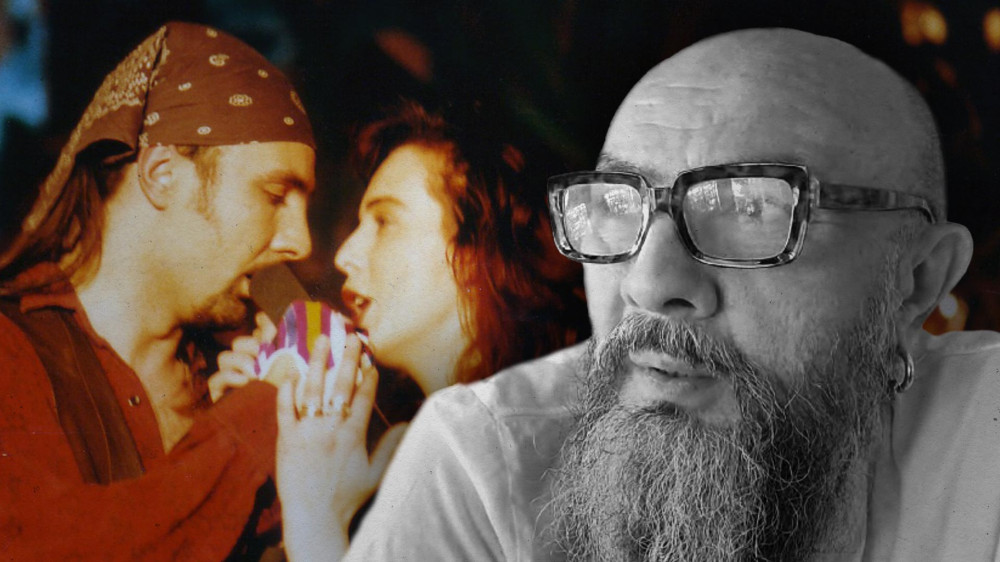
To continue a normal life, to create even in limited circumstances, for all citizens of Sarajevo under siege was as important as water, bread or medicine. In abnormal conditions, rock bands were formed, concerts and gigs were held in hidden, somewhat protected locations, classical music works were performed, and ballet performances were organized. Citizens risked their lives to participate in the collective act of giving and receiving music.
Srđan Jevđević talks about the power of music during the siege of Sarajevo. What did the concerts mean for the citizens of Sarajevo, and what for the musicians?
Now...
"We witnessed this in Sarajevo during the war, when all the things that were expendable were absolutely scarce, and the things that were upgrades were available. Not only available, but desirable."
© FAMA Collection; Encyclopaedia: 'The Siege of Sarajevo 1992-1996'
Then...
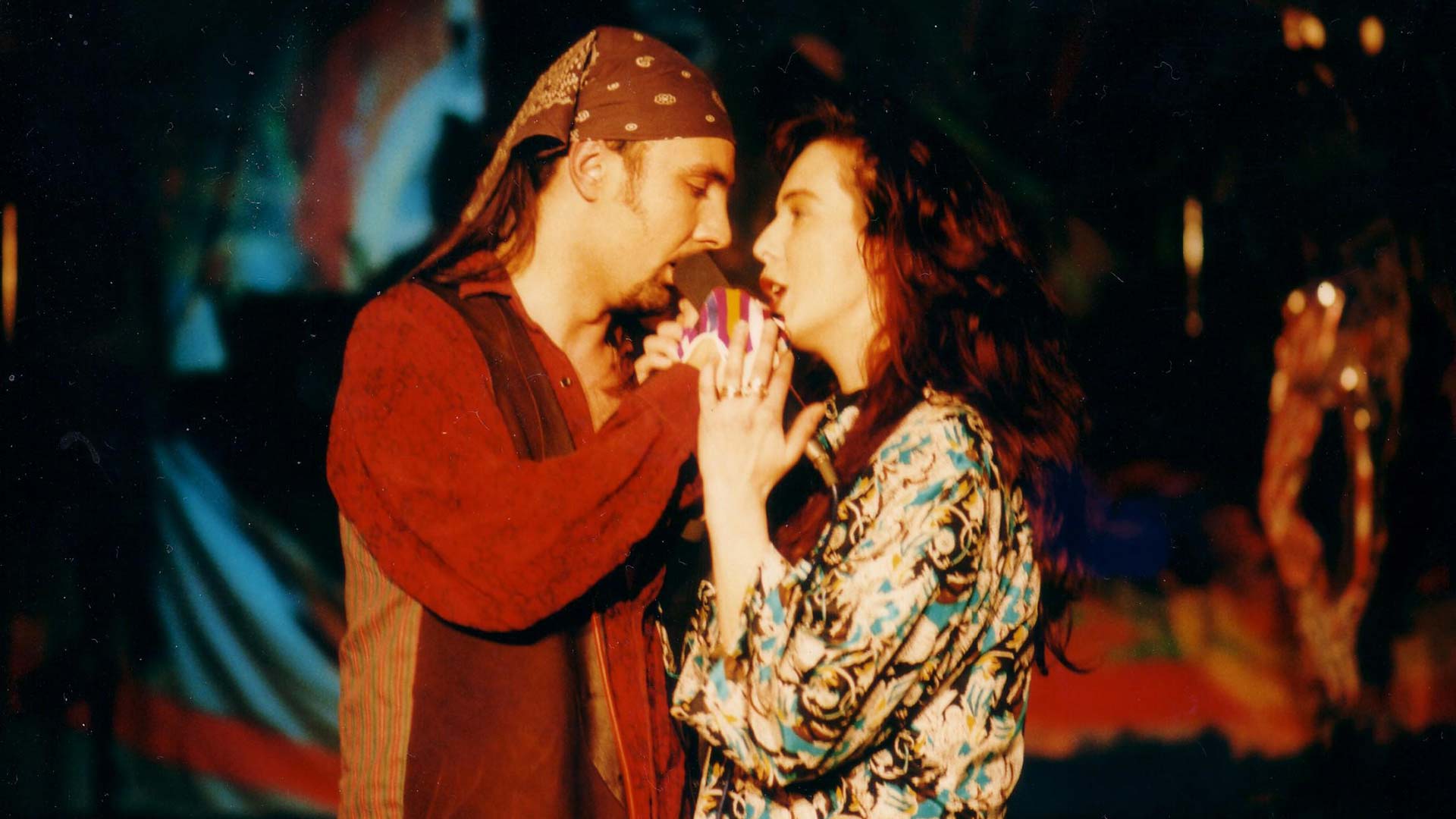
Photo of Srđan Jevđević and Amila Glamočak from 1992, during the performance of the musical "Hair" in besieged Sarajevo.
© FAMA Collection; Macro Story: 'The Siege of Sarajevo - Then & Now'
Now...
"The man first painted in the cave. So, then it occurred to him to go outside. When the man first came out of the cave and saw his neighbour in that other cave how he had a bigger cave, how he had a younger wife, how he was doing a little better, he hit him on the head with a club and took his cave and everything he had. That's when civilization came into being. Then civilization followed its order of slavery, feudalism, capitalism, socialism, capitalism again, socialism, capitalism again, then slavery again, then capitalism and so on. In that war, we witnessed the disappearance of that civilization. The disappearance of civilization as such. And it was very logical to conclude that when the civilization would disappear, it would disappear in inversely proportional order, because it was logical and normal. We witnessed this in Sarajevo during the war, when all the things that were expendable were absolutely scarce, and the things that were upgrades were available. Not only available, but desirable. People wanted it, loved it. Before the war, you could not force people into the theatre with a rifle. And during the war, you couldn't force them out of the theatre. People definitely risked their lives to go to the theatre, to go to concerts, to participate not only in the public, but art life. That is gone now. We're part of the world now. In the worst possible sense. Competition Who has the bigger one? How much better am I than you? Look how big I am, look how small you are! This all together, in my eyes, is a very unnatural way of thinking and an unnatural state. When you put things in an unnatural state, they have to end. Maybe not today, maybe not tomorrow, but all of this has to eat itself. I am still optimistic and I think we will go back to the cave. And that we would paint in that cave the way we painted before we went out and hit our neighbour on the head with a club. Because there is salvation in the cave. There is salvation in painting. There is salvation in art. Yeah, Yeah, well, well, it is a utopia, but nice to me. What can I tell you?" - Srđan Jevđević, Musician (July 2024)
More on this topic in our Macro Story.