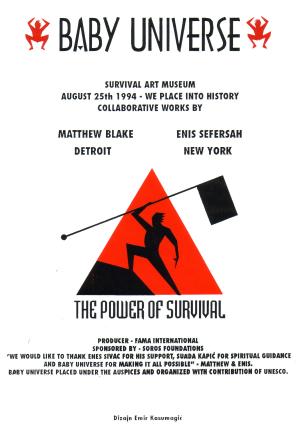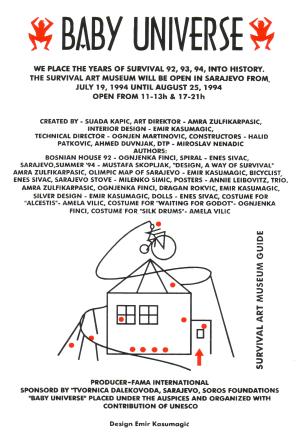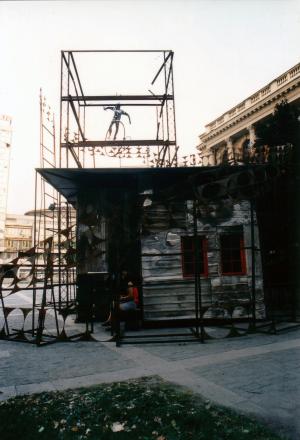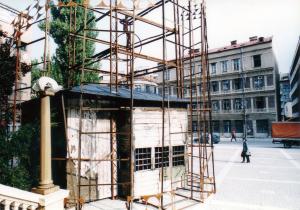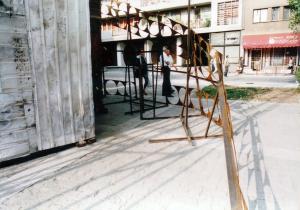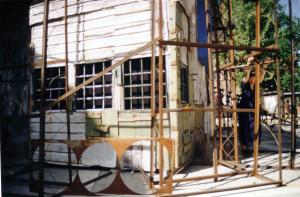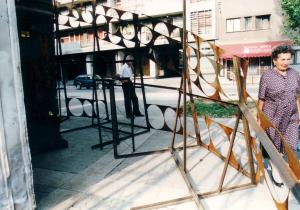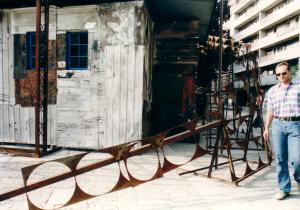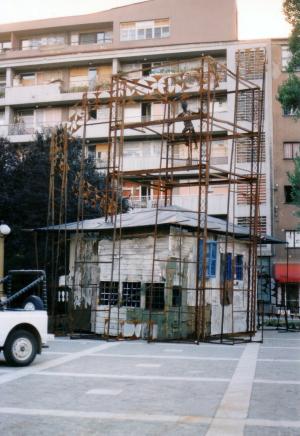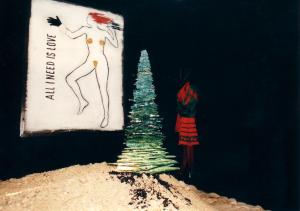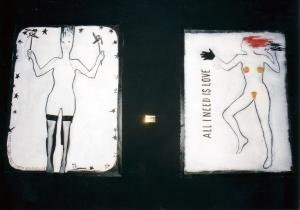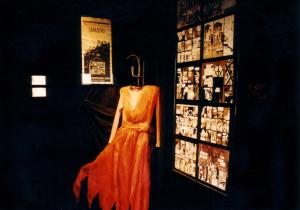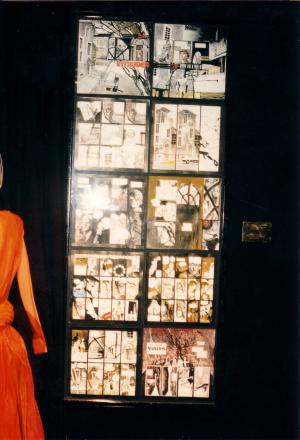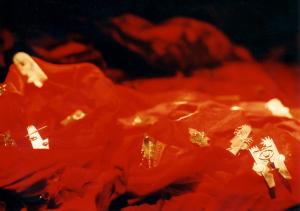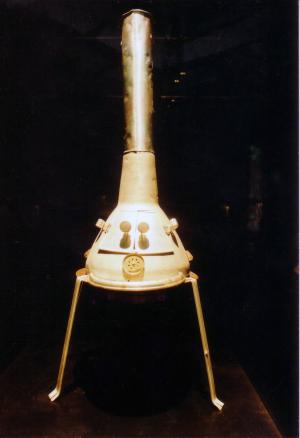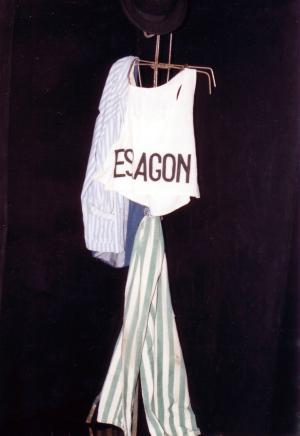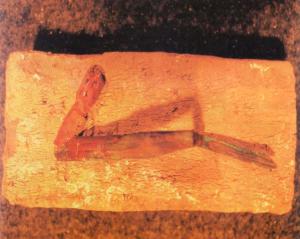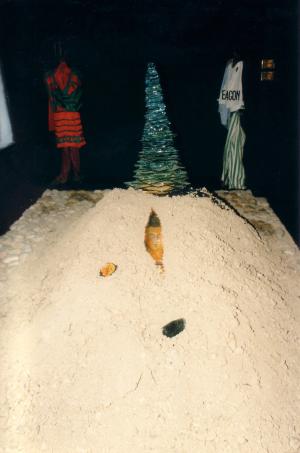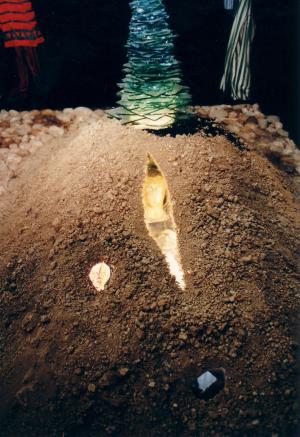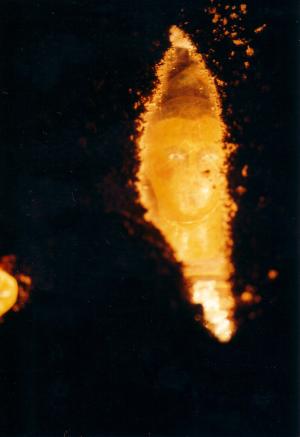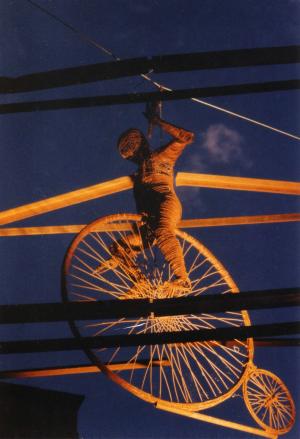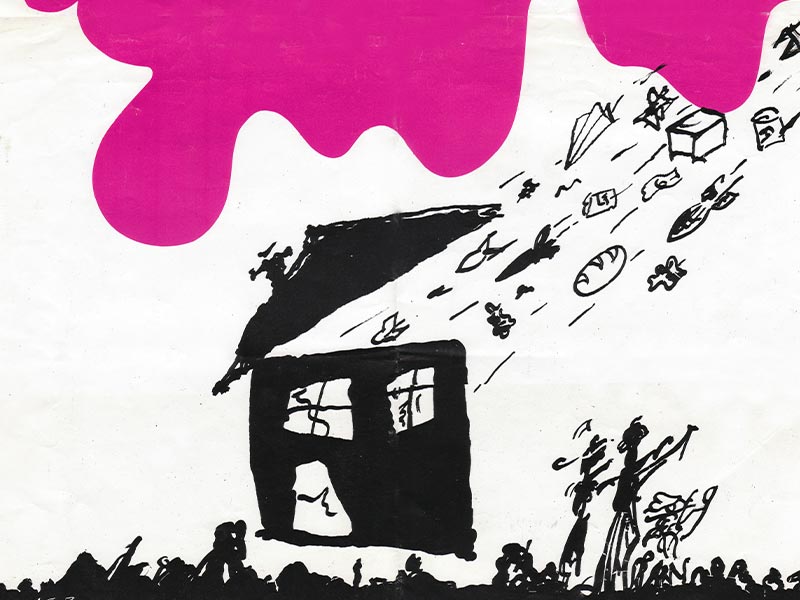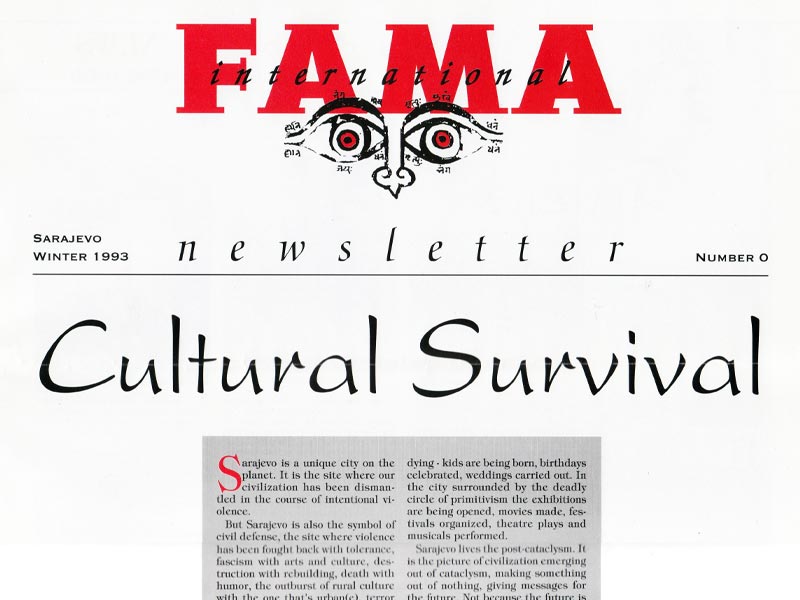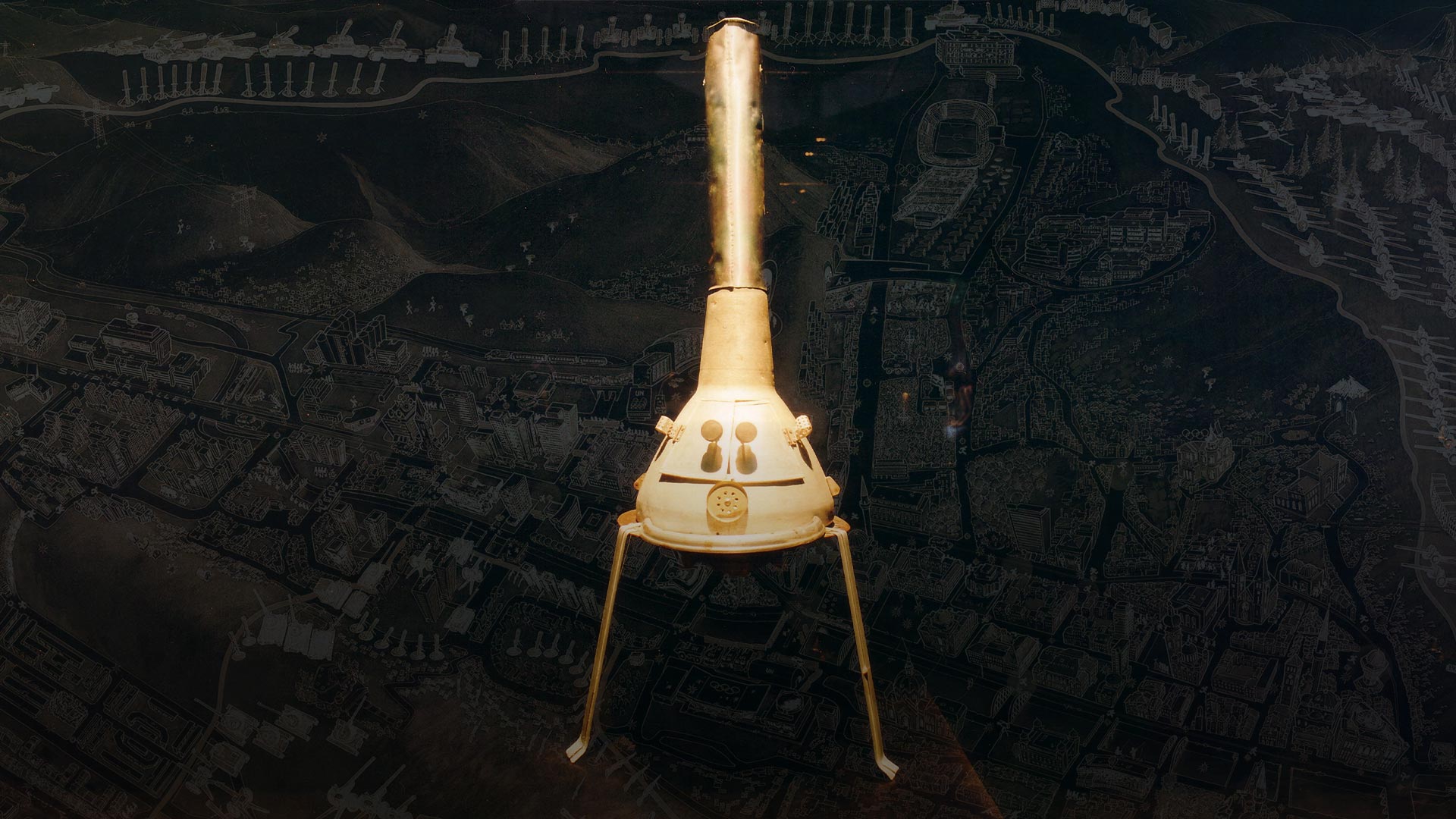

Installed in front of the National Theatre during the 1994 ceasefire, the pavilion/museum “Bosnian House” (originally built in 1992 as a multimedia exhibition) provided the public with a cultural reflection on life under siege. On display were artefacts created during the blockade - from theatre costumes, installations, jewellery, and sculptures to purpose-made objects for basic survival. As part of the “Baby Universe” festival, this museum stood as a monument to everyday creativity and human ingenuity in the face of destruction.
Two months after the city was completely sealed off, it became clear that the new reality of destruction, shelling, sniper fire, displacement, the breakdown of communication, and the inability to leave the city had to be accepted as a permanent condition. Accepting this inverted normality as the new normal meant changing the way we think and letting go of all former habits that once defined a lost civilisation. In our search for balance, we realised that if they destroy, we must build. And so began the process of establishing equilibrium between destruction and construction, fear and freedom, hunger and creativity, cold and work, as the law of survival.
Two years after the beginning of the siege, thanks to a brief ceasefire, we installed the Bosnian House in the square in front of the National Theatre. It was the only structure built between 1992 and 1996. Although a basic recycled construction, it was proof that we could still develop the theme we had discovered during the siege as a kind of “gold vein.” It was important to take another step toward creating a monument to human nature and resilience. Inside the Museum, the only independent structure built during the war, jewellery, sculptures, posters, fashion creations, stoves, and comic books were exhibited, all representing examples of survival skills developed during the siege, amidst shelling and sniper fire.
Additional context
The Museum was part of a broader initiative organised that summer by FAMA and MESS - the ‘Baby Universe’ festival. The Museum of Survival Art was a small structure, roughly built from materials found at the Marshal Tito barracks. It was strange to see that museum standing in front of the National Theatre, a neoclassical building from the early 20th century, which shielded the little house from sniper fire coming from the surrounding hills.
Inside the Museum: an assortment of creative oddities, mostly without any obvious link to the war that, from time to time, raged just a few metres away, demonstrating that the art of survival has an attitude, in the years to come, many would share the fate of this city, but the people of Sarajevo showed exceptional survival skills. The city was home to those who nurtured hope despite everything, those who, faced with aggression and destruction, learned to recognise the fundamentals of human existence. In spirit and hope, Sarajevo shone brighter than ever.
The focus of our research is the historical period 1992–94 in Sarajevo, a time of spiritual resistance and physical and cultural survival. The Survival Art Museum exhibits the most inventive handmade objects, such as stoves, lamps, and anything that served as a means of heating, as well as carts used for fleeing from snipers. The second part of the Museum consists of testimonies to achievements in sculpture, theatre, publishing, painting, and design. The Survival Art Museum was installed beneath an iron structure, the framework for the Bosnian House, which was erected in August 1992. The Museum’s catalogue is the book Survival Guide Sarajevo, a manual for surviving in a post-catastrophic era.
Note:
All of these projects have since demonstrated that this method is key to documenting events if we want our efforts to serve as a meaningful contribution to the interpretation and understanding of the 1991–1999 period in the former Yugoslavia, for both local and global education. This project has already proven and continues to prove its value as a contribution to the process of truth and reconciliation, as well as to the democratisation of post-war society.
| Theme | The Siege of Sarajevo 1992-1996 |
|---|---|
| Research period | 1992-1994 |
| Original Format | “Bosnian House” – a purpose-built structure designed to reconstruct everyday life under siege and to showcase artefacts. |
| Language | Bosnian / Croatian / Serbian |
| Project content | A multimedia installation and exhibition of artefacts created during the siege, ranging from theatre costumes, installations, jewellery, and sculptures to objects designed for basic survival. |
| Production | Sarajevo (1992 / 1994) |
| Note | The museum was initially built in 1992 and installed inside the “Dom Izviđača” (Scout Hall) in besieged Sarajevo – this is its continuation. The installation and its contents were not preserved. |