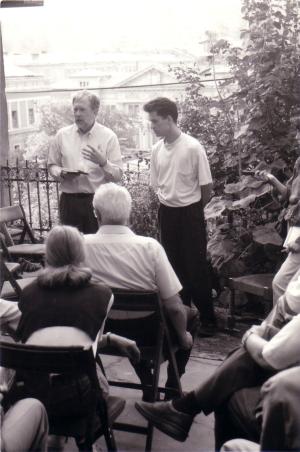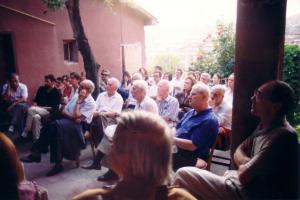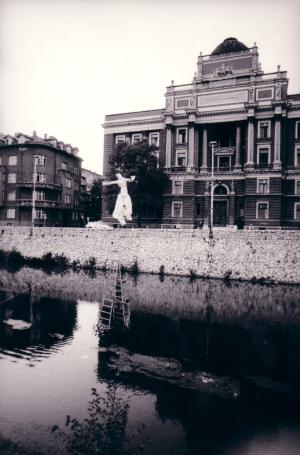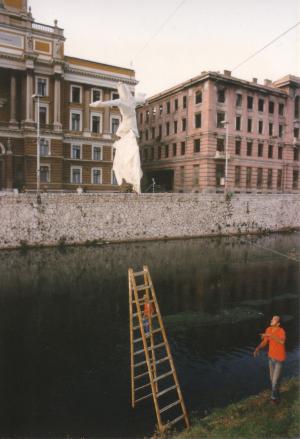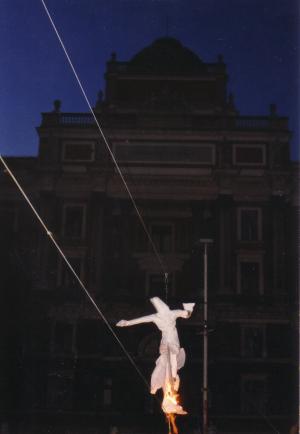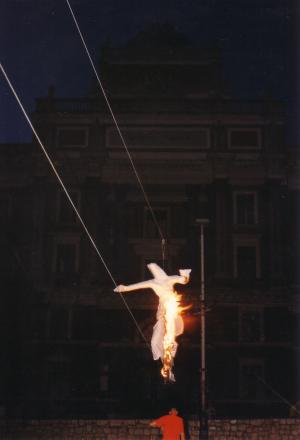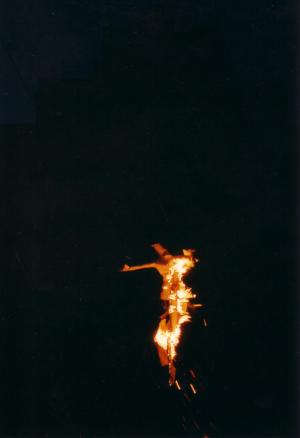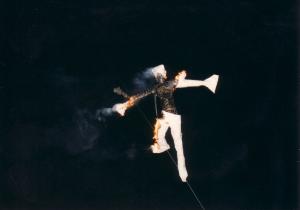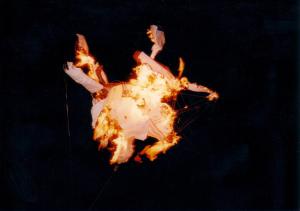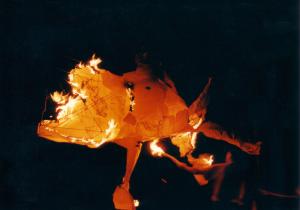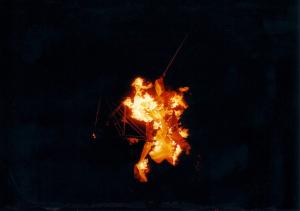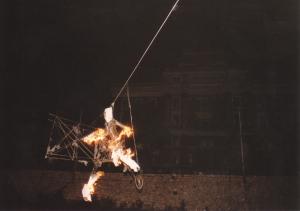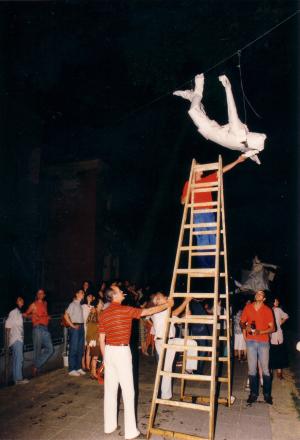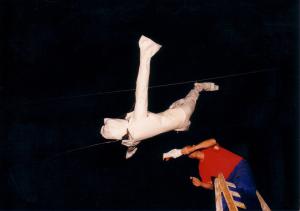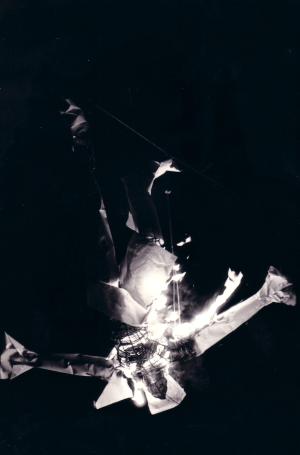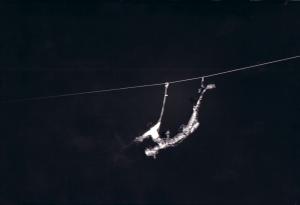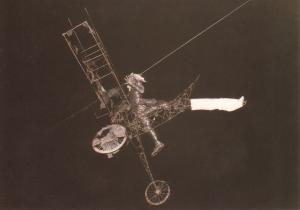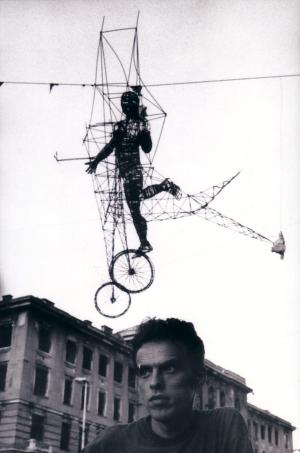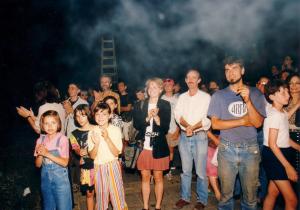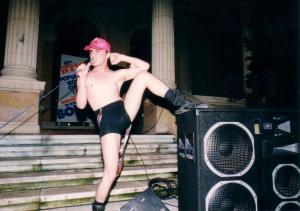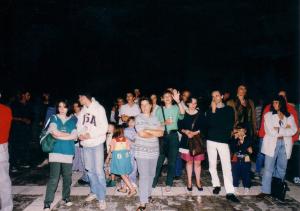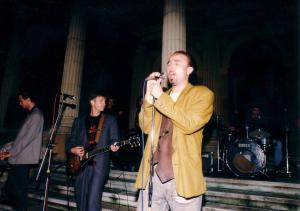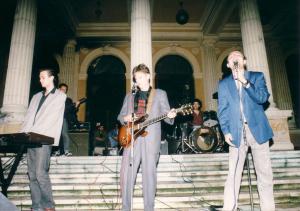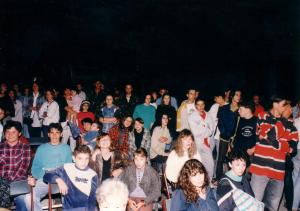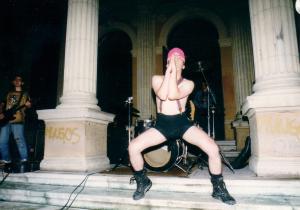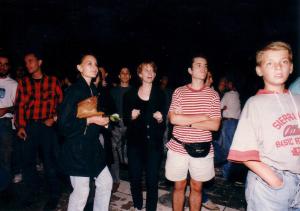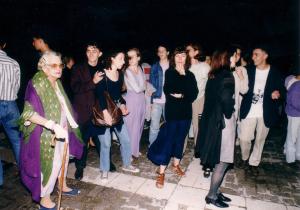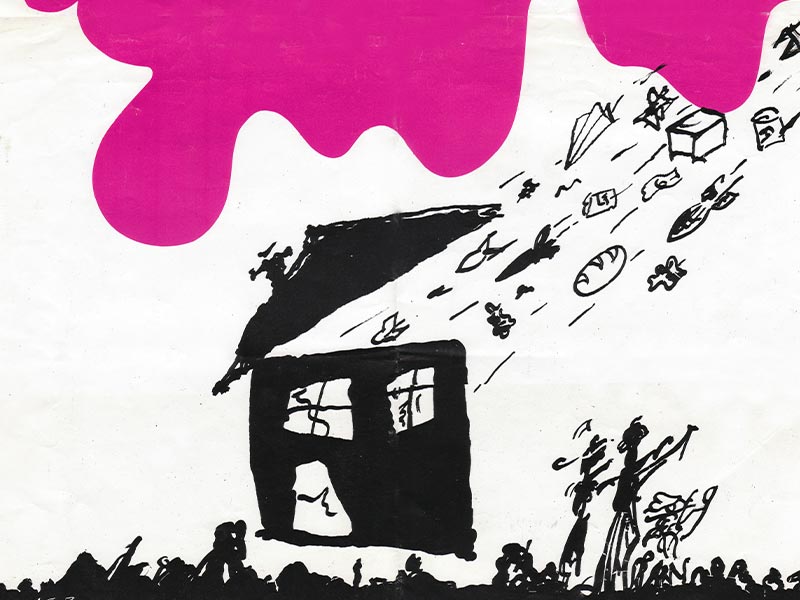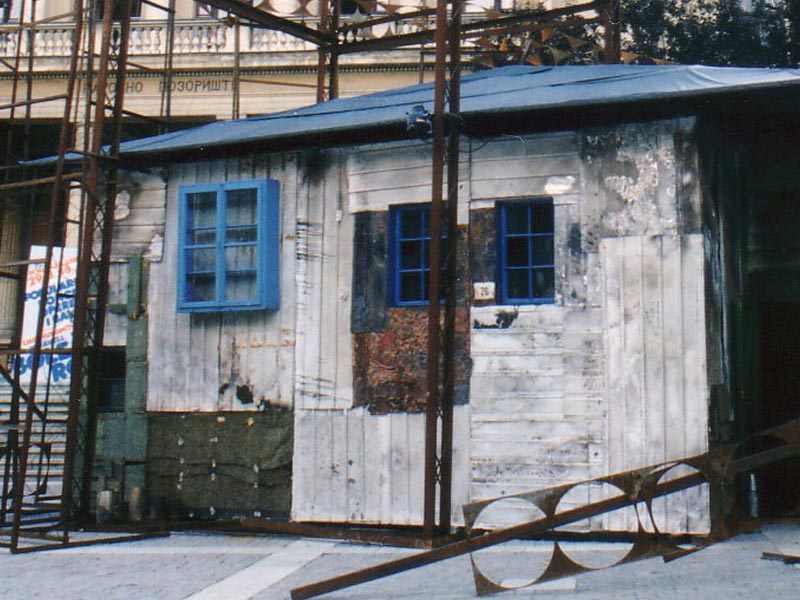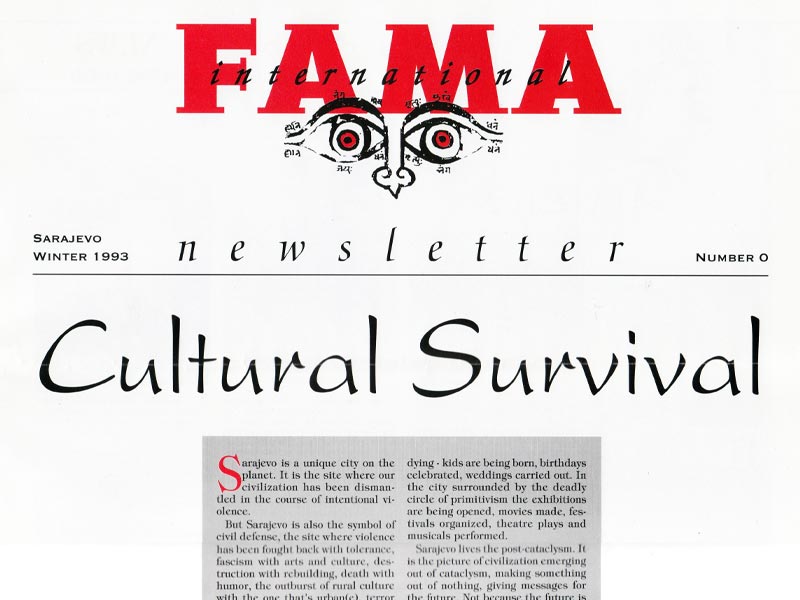

Organised during a brief ceasefire in the summer of 1994, the festival was the first major open-air gathering in besieged Sarajevo. Organised by FAMA and MESS, the festival brought historic city sites back to life through exhibitions, performances, concerts, and “Mobile University” lectures. Local and international participants offered visitors rare moments of normalcy, dignity, and emotional renewal. Celebrating resilience, creativity, and ingenuity, the festival became a living model of cultural survival amid destruction.
For a short period, the city was accessible via the so-called Blue Road. Of course, special permits were required to leave or enter the city. As part of our cultural survival strategy, in collaboration with Haris Pašović and MESS, we decided to transform that brief summer window into a celebration of culture and intellect. Using the life matrix of the outside world, we organised these events as a festival. The festival began in front of the National Theatre (now called Susan Sontag Square, in honour of her immense support for the city under siege).
For the first time, citizens of Sarajevo had the chance to sit outdoors, exposed to sniper nests that held their fire due to a ceasefire and listen to “O Sole Mio” performed by Srđan Jevđević. His powerful voice, combined with the fragile sense of freedom, stirred intense emotions. People cried from the beauty. For two years, they had stoically endured tragedy and horror, and Srđan’s voice, along with a summer breeze that seemed to come from the sea, broke through their emotional defences. That is why we gave them this festival: so that, if only for a moment, we could feel like normal human beings again.
During the siege, art in Sarajevo demonstrated that the power of creativity could significantly strengthen the human spirit, even under unimaginably harsh conditions. FAMA International and the International Film and Theatre Festival MESS organised the summer arts festival BABY UNIVERSE in Sarajevo, which took place between 5 July and 25 August 1994.
BABY UNIVERSE FESTIVAL (SUMMER '94) – LIST OF EVENTS:
Elements for the Construction of Landscapes
(16 July, 1994)
Hamdija Kreševljaković Library
(18 July, 1994)
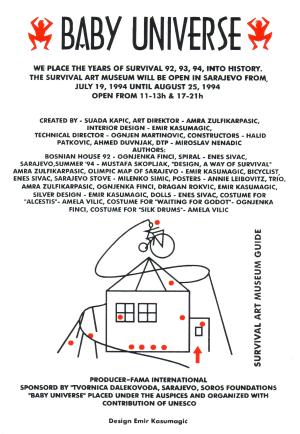
Survival Art Museum
(22 July, 1994)
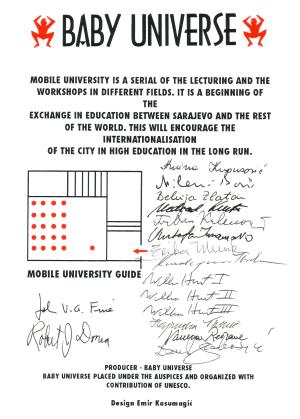
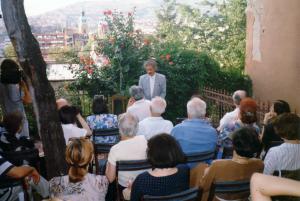
Mobile University
(29 July – 22 August, 1994)
Hamdija Kreševljaković's House, The Jewish Museum
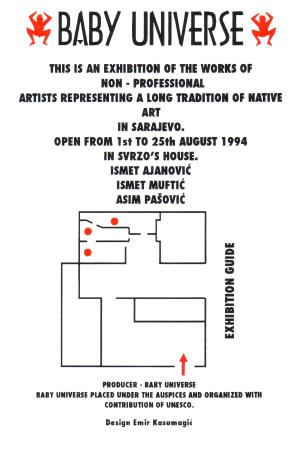
Sarajevo's Naive Painting
(1 August, 1994)
Baby Universe Gallery
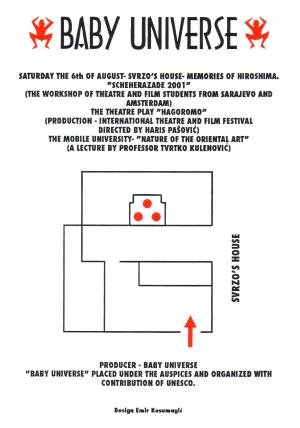
Scheherzade 2001 (Book II)
(6 August, 1994)
Svrzo's House
Silk Drums III
(6 August, 1994)
Svrzo's House
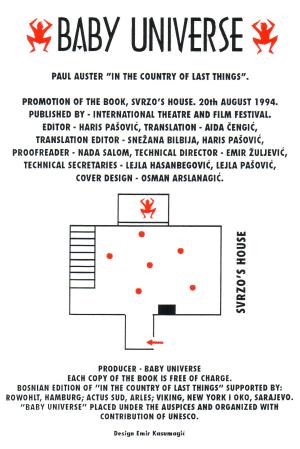
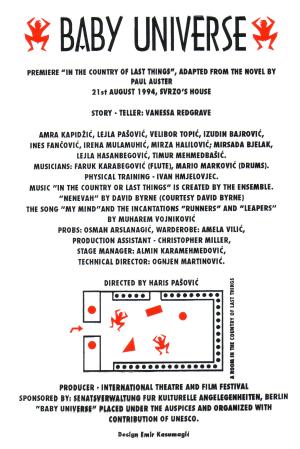
Paul Auster: In the country of last things
(20 August, 1994)
Svrzo's House
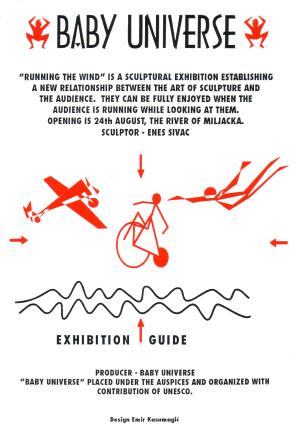
Outrunning the Wind
(24 August, 1994)
The Miljacka River
Baby Universe Music
(25 August, 1994)
The Jewish Museum, Svrzo's House, Hamdija Kreševljaković's House.
Survival show
(25 August, 1994)
Svrzo's House, the Miljacka River
Sarajevo: Art and Philosophy of Survival…
Additional context
After two and a half years of war, our city stabilised. We created a new city, a new way of living, and a new philosophy of life in a post-cataclysmic environment. The 2,000 shells that fell on the city each day brought destruction, theft, a black market, and death. The war destroyed the infrastructure of civilisation, buildings, water, electricity, and gas lines. And yet, Sarajevo did not die. Beneath all this destruction, there remained a thin line of purity. Despite terror and shortages, people worked to preserve the basic elements of society and community.
We survived by integrating humour and innovation into every part of our lives. Humanity became as vital and visible as food and water, and on a more subtle level, as essential as community and art. Art significantly strengthened our spiritual resilience, even in unimaginable conditions. All artistic forms, models, and techniques - new and old - played a role in survival, even at its most fundamental level. Creativity gave us mental freedom, which in turn nurtured a spirit of tolerance and multiculturalism. With this renewed ethical approach to life, our minds became clearer, and we once again felt like human beings capable of emotion. Sarajevo is a symbol of liberation.
Our ability to create something out of nothing mirrors Stephen Hawking’s theory of physics: the disintegration of stars creates a void, but black holes allow the escape of information caught within them. The siege that Sarajevo experienced will inevitably occur elsewhere in the 21st century. Sarajevo is a symbol of hope for the future - a sustainable model of an urban environment that survived a modern cataclysm. The knowledge and skills developed during the siege have the potential to inspire and prepare the world for the 21st century. Everything is possible. By surviving on bare necessities, Sarajevo no longer uses pesticides or produces pollution.
We are already achieving New Age goals: health, ecology, organic food, recycling, and self-sustainability. But a perfect survival model can only be realised with the support of the international community. Sarajevo needs technology, education, and cultural information from the rest of the world. And the world needs Sarajevo’s experience and knowledge. We are ready to end this isolation and begin an exchange.
Note:
All of these projects have since demonstrated that this method is essential for documenting events if we want our efforts to serve as a meaningful contribution to the interpretation and understanding of the 1991–1999 period in the former Yugoslavia, for both local and global education. This project has already proven and continues to prove its value as a contribution to the process of truth and reconciliation, as well as to the democratisation of post-war society.
| Theme | The Siege of Sarajevo 1992-1996 |
|---|---|
| Research period | 1992-1994 |
| Original Format | An arts festival featuring 15 different events staged across multiple locations and venues in the besieged city. The aim was to celebrate the ‘Cultural Survival’ phenomenon and advance new educational models. |
| Language | Bosnian / Croatian / Serbian and English. |
| Project content | The events included public gatherings, exhibitions, the Mobile University (featuring academic lectures), performances, concerts, book readings, library events, and theatre productions, with local and international artists, musicians, actors, academics, intellectuals, and journalists. |
| Production | Sarajevo (5 July – 25 August 1994) |
| Note | The festival was organised in partnership with MESS. |