
Launched in 2000, this initiative introduced the FAMA video oral history as a new educational model for studying the siege of Sarajevo. At its core was a handcrafted wooden “memory box,” designed to preserve nearly 1,000 interviews for future generations. More than 500 bilingual packs were distributed to schools, universities, museums, and libraries across Bosnia and Herzegovina, the Western Balkans, and beyond. Lectures, seminars, and public events further extended the project’s reach, transforming education into active public discourse.
Ongoing initiative to promote and integrate the Oral History project as a new educational model at the national, regional, and international levels. As part of this effort, over 500 educational packages have been donated to schools, museums, research institutes, and libraries. The initiative includes public events, lectures, seminars, workshops, and interviews, and is supported by a media campaign.
Oral history is a methodology for preserving the truth about the subject of our research by documenting the experiences of direct participants in these events. The approach involved creating a platform of events in the besieged city, one day at a time, from 1992 to 1996. Events from the outside world were included only if they had a direct impact on the lives of Sarajevo’s citizens. This platform, the Chronology of the Siege, contains data on humanitarian aid, handmade stoves, hospitals, theatre performances, shell explosions, UNPROFOR activities, transportation, recipes, holidays, the search for water, and dangerous zones, from the beginning to the end of the siege. Establishing this event-based platform allowed us to identify participants whose memories of those experiences were then recorded. The oral history was later adapted for educational purposes through various formats.
Based on the Chronology of the Siege (March 1992 – March 1996), the oral history project represents the most complex account of the longest siege in modern human history. It is a collection of moving, inspirational testimonies about the human struggle for survival under a four-year campaign of strategically planned terror.
The phenomenon of the siege is examined day by day, from multiple perspectives: historical, anthropological, political, military, existential, cultural, sociological, educational, legal, philosophical, media-related, medical, psychological, economic, mental, humanitarian, religious, spiritual, and through the lens of human rights and war crimes. This provides a comprehensive portrayal of events through a vivid rendering of the past, something rarely achievable through history books and official documents alone.
Additional context
During this process, numerous survival-related themes were explored through the experiences of Sarajevo’s citizens from diverse socio-economic, professional, and ethnic backgrounds - from ordinary people, former and then-current politicians, housewives, doctors, children, bakers, police officers, generals, lawyers, artists, gravediggers, soldiers, the elderly, journalists, refugees, translators, actors, diplomats, musicians, drivers, directors, writers...
They survived the siege and shared their memories and experiences of massacres, ceasefires, hunger, the lack of water, electricity, and heating; of artistic and cultural events, banks, survival gardens, political negotiations, schools, funerals, convoys, hospitals, snipers, shelling, and the tunnel that served as the only entrance and exit from the city...
Through this archiving project, the Siege of Sarajevo introduced a new and credible method of researching history. We began archiving testimonies from the 1992–1996 period, a year and a half after the siege ended, crucial timing for preserving authentic memories, as people tend to revise their views when political positions shift, and memories fade with time.
The original project-document consisted of 50 hours of video testimony (30 hours of which were edited), along with specially formatted texts stored in individual files and a searchable database on CD. This format enabled interactive and practical access for education and research. It remains a unique opportunity for a broad audience to integrate the project’s content into the education and study of a historical phenomenon that marked the world on the threshold of the 21st century.
Note:
All of these projects have since demonstrated that this method is key to documenting events if we want our efforts to serve as a meaningful contribution to the interpretation and understanding of the 1991–1999 period in the former Yugoslavia, for both local and global education. This project has already proven and continues to prove its value as a contribution to the process of truth and reconciliation, as well as to the democratisation of post-war society.
| Theme | The Siege of Sarajevo 1992-1996 |
|---|---|
| Research period | 1992-1996 |
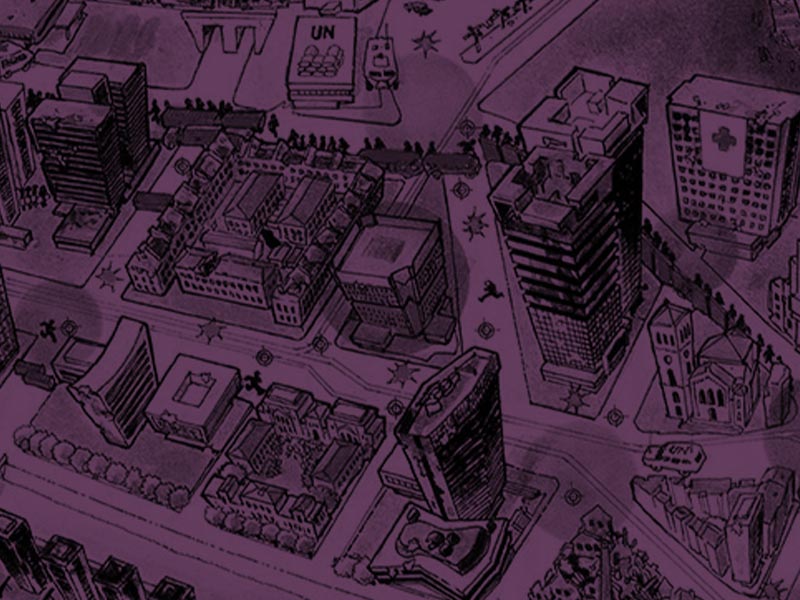
| Original Format | A specially designed, hand-crafted wooden box containing 10 VHS tapes (30 hours of video oral history interviews), the official project poster (a guide to the collection), a CD with textual transcripts, and a copy of the Survival Map 1992-1996. |
| Language | Bosnian / Croatian / Serbian (English translation available) |
| Project content | Integration of the Oral History project through educational initiatives, study pack donations, and public outreach. Lectures, seminars, workshops, interviews, essays, and media coverage supported the initiative. |
| Production | Sarajevo (1997-2000) |
| Note | Over 500 study packs were donated to numerous educational institutions, museums, research institutes and libraries. |