


The Siege of Sarajevo 1992-1996
“In the city of death, we learned about life”
Macro Story #29: Life

Macro story #29 is searching for an answer to the question of which aspects of life the citizens of Sarajevo paid special attention to during the siege, aware of the unprecedented risk to their lives and the lives of the people around them. What did life mean in circumstances where everyone is aware that at any moment they can be killed or wounded? In what way did the fear for the lives of loved ones affect decision-making, daily work, but also the dynamics between family members, neighbours in the same building, during work assignments and between friends.
During the siege of Sarajevo, life took place in a narrow circle of family and friends. That circle was the central cell of survival. The Macro story provides an overview of the statements of Sarajevo citizens who talk about what life in a family meant, how the family made an economic chain of survival, and what life meant to them then.
From two original studies produced by FAMA Methodology "Survival Questionnaire" and "Sarajevo LIFE Magazine", we selected a part of the statements of Sarajevo citizens about how people supported each other. Among the responses, we also found testimonies from those who were alone and who were forced to compensate for the lack of loved ones in various ways.
Different parts of the city survived under different conditions. In 1996, we realized that it was time to establish a methodological course by conducting a survey in ten different parts of the city. All survey questions related to the experience of being under siege at all levels of survival. But that was not enough to create a complete picture. Therefore, we digitized 4,637 surveys and received an instant answer to each of the questions from all participants. And we came to great discoveries. 4,637 responses can be considered a sufficiently significant sample for the frequent answers to be accepted as a rule. Thus, based on the responses in the surveys, we concluded how the citizens of Sarajevo established a "family economic chain", how they provided support to each other, how they obtained goods that they could sell or exchange for food, how they shared roles and tasks within their "chain", and whether everyone was in a situation of helping or being helped.
Although we lived under siege, we were also observers of the phenomenon of the end of an urban civilization (which Sarajevo was at the end of the 20th century) and the establishment of a new civilization that resembled science fiction movies and the contemporary documentary TV series "Life After People". Observing people who create from very limited resources, exposed to constant terror, reduced to moving targets - is an important experience about human nature. We wanted to learn as much as possible about the possibilities of human nature and the mind, which operate freely despite all the limitations of the given situation. From our former life, we knew the American magazine "LIFE" and the statement of Henri Luca, its founder and owner, who in the twentieth century revealed hidden and unknown things to readers. This motivated us to present LIFE in our edition, placing it in the middle of the siege of Sarajevo, a city so isolated and distant from the rest of the world. Today it is an anthropological document about a difficult time and the human struggle to overcome the situation in which they found themselves instead of becoming its victims.
FAMA Methodology presents part of the statements of Sarajevo citizens from the study "Survival Questionnaire" and "Sarajevo LIFE Magazine".
This Survival Questionnaire study, produced shortly after the war, was the first and so far only large-scale public opinion survey to document daily life during the siege of Sarajevo. The testimonies of 4,637 citizens from all city municipalities revealed a matrix of the difficulty of survival, ingenuity, and resilience. Encompassing responses to 31 questions about daily routines, innovation, and mental toughness, the digitized surveys offer a rare insight into basic survival. This study deepens our understanding of life under siege by correlating responses by age, gender, profession, and urban location. In this chapter, we highlight the statements of Sarajevo citizens about whether they managed to establish a "family economic chain" with family members, friends and neighbours and how this chain worked.
Micro-District
number of respondents: 250 (5.4% of the total sample of 4,637)

© FAMA Collection; 'Survival Map (The Siege of Sarajevo 1992-1996)'
My brother and I received cigarettes in the army and exchanged them for food, we received humanitarian aid, and my mother, with her skill, created miracles from those few food items.
My economic chain didn't exist. I suffered throughout the war. I lived on humanitarian aid and my pension (and whatever else anyone gave me).
My husband received cigarettes in his army unit, we received food assistance from Caritas, and twice some clothing, I would receive packages from relatives abroad and spend it all rationally, sometimes I would exchange something at the market for another product.
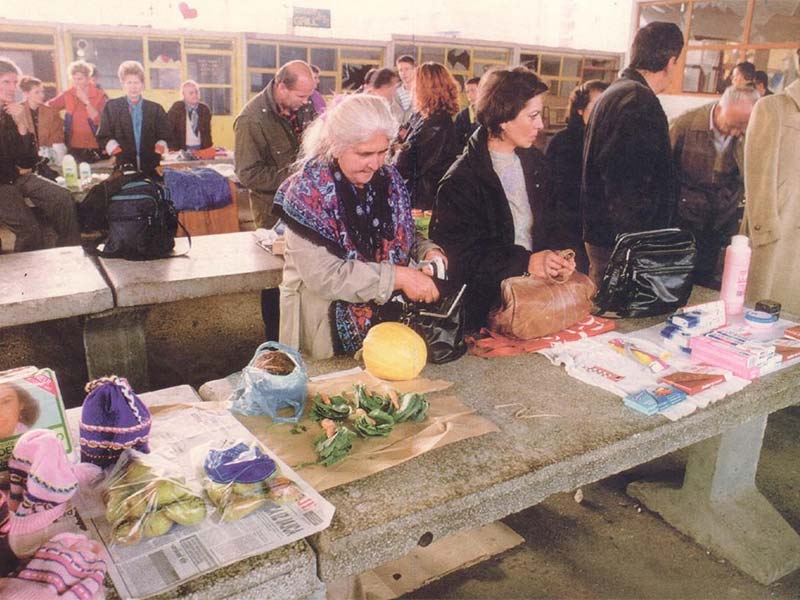
Market place, Sarajevo 1992-1996 © FAMA Collection - Visual Archives 1992-1996 (Željko Puljić)
My wife grew vegetables in pots, we had some supplies from the store, I was bringing cigars, so we were managing.
We had a carpentry shop from which we mainly lived, and in addition, I brought something from the army, humanitarian aid...
I brought cigars from the army, as did my father, my mother worked and received vouchers, we received humanitarian aid.
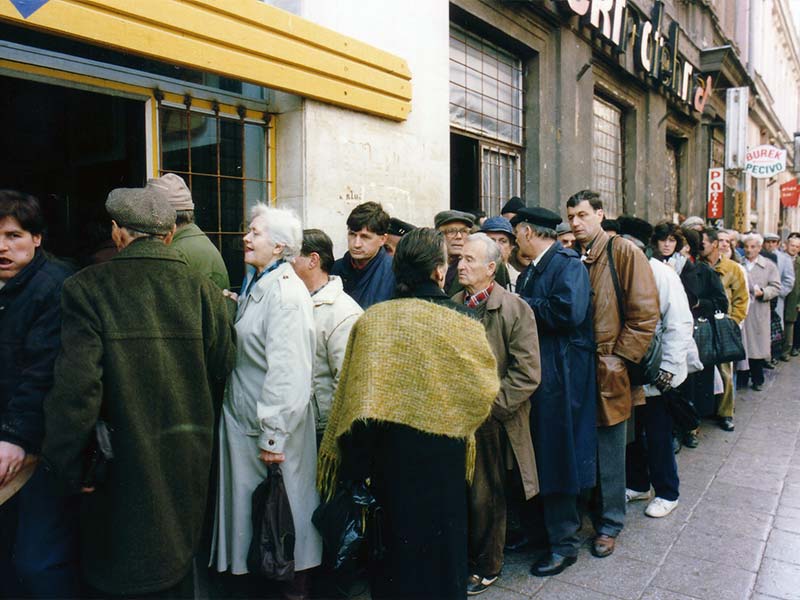
Humanitarian aid, Sarajevo 1992-1996 © FAMA Collection - Visual Archives 1992-1996 (Željko Puljić)
I lived on humanitarian aid and on what I planted myself in the garden (carrots, cabbage, onions).
I survived thanks to my neighbors who helped me a lot.
I live alone and I was alone throughout the war. I lived on humanitarian aid and the help of my neighbors. In 1993, I was eating in the soup kitchen.
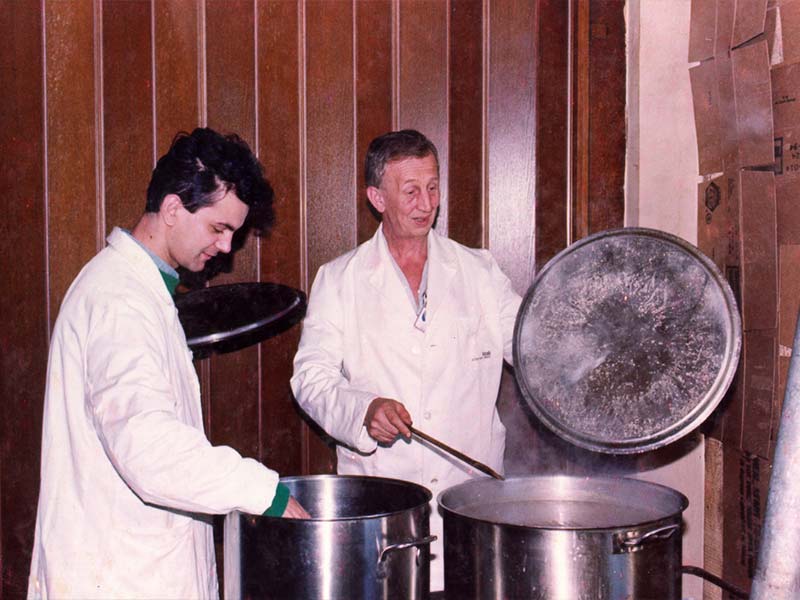
Soup kitchen, Sarajevo 1992-1996 © FAMA Collection - Visual Archives 1992-1996
We survived by eating a little less than usual, and I brought food from work, we received packages from relatives, and humanitarian aid.
I lived alone, I mainly lived on humanitarian aid and products from my parents' garden.
In my work organization I had no monetary income, but I received food packages a couple of times, I sowed vegetables in the garden, I changed tins for cigars.
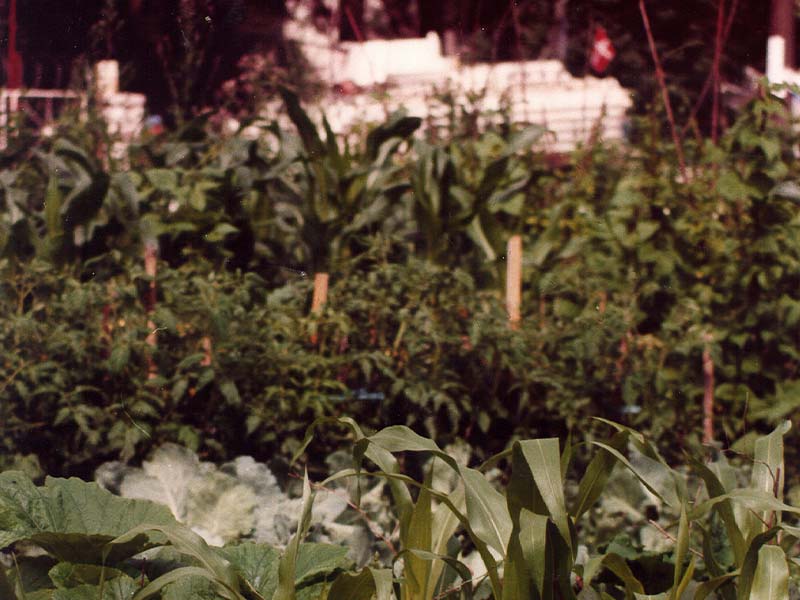
Survival garden, Sarajevo 1992-1996 © FAMA Collection - Visual Archives 1992-1996
The husband was in the Army. I didn't work. Her husband's relatives from abroad helped. Bartered or paid for food with cigarettes.
Mom worked and brought packages and salary, dad brought cigarettes from the army, we received humanitarian aid, we had a garden in front of the building...
My husband and I both worked and brought cigars, my sister from Holland sent me packages and money, we received humanitarian aid.
This anthropological study Resilience in the form of surveys, a redesign of the famous American magazine "LIFE" (which dealt with research and documentation of the new, unknown and, above all, sociologically important for the world as a whole), was made during 1995, during the siege of Sarajevo. Intellectuals and artists of the city under siege answered the eternal questions of good and evil, hope and death, love and survival in difficult times. Their answers represent hope for humanity and a special study on the mental health of individuals exposed to years of terror. Redesigned in the spirit of the original American magazine "LIFE", "Sarajevo LIFE Magazine" presents an anthropological and cultural study of individual resistance and survival under siege. 87 Sarajevo artists, academics, musicians, architects, writers and actors responded through fashion, theatre, art, design and literature to universal humanist questions about life under siege. The magazine is at the same time a study of how creativity and innovation have become tools for building resistance under impossible circumstances, in which the abnormal has become normal.
Everyday life in Sarajevo under siege was not dedicated exclusively to survival, but the citizens tried to find an activity to which they could devote themselves to such an extent that it became a balance to constant stress and fear. For everyone, the time of the siege and the "new normal" represented something different. In this chapter, we present some of the answers of public intellectuals from "Sarajevo LIFE Magazine" to the question of what they would call this period of their lives and what they think life is.
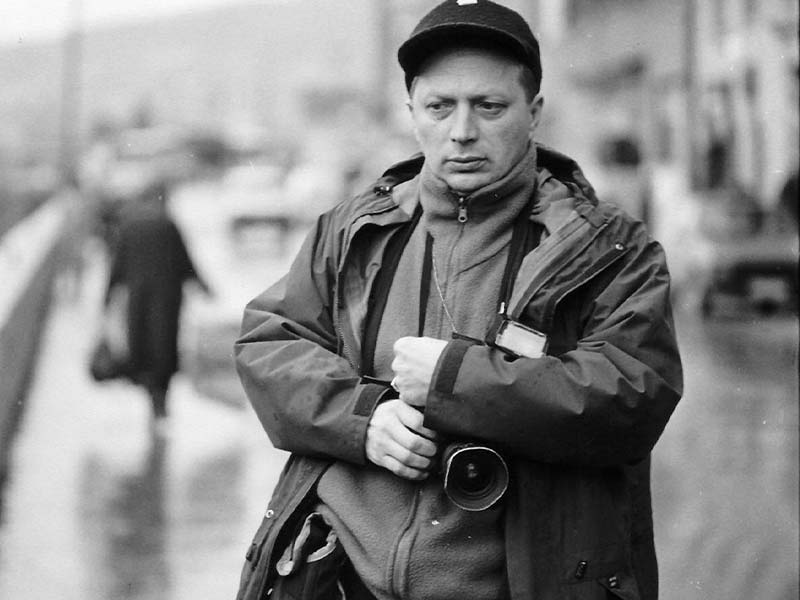
FAMA Collection, Sarajevo “LIFE” Magazine © FAMA Collection - Visual Archives 1992-1996 (Milomir Kovačević)
Life is both a short-term happening and eternity.
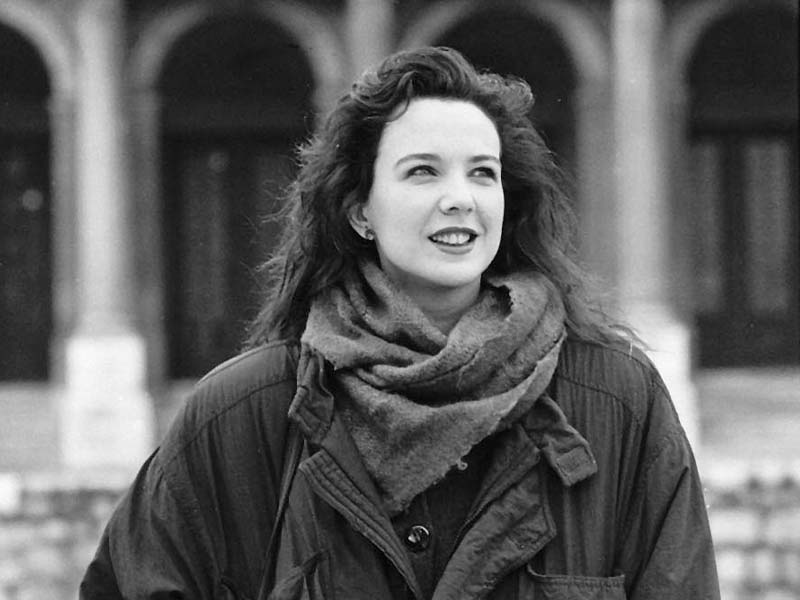
FAMA Collection, Sarajevo “LIFE” Magazine © FAMA Collection - Visual Archives 1992-1996 (Milomir Kovačević)
I do! Life is freedom, success, love, work, happiness and...
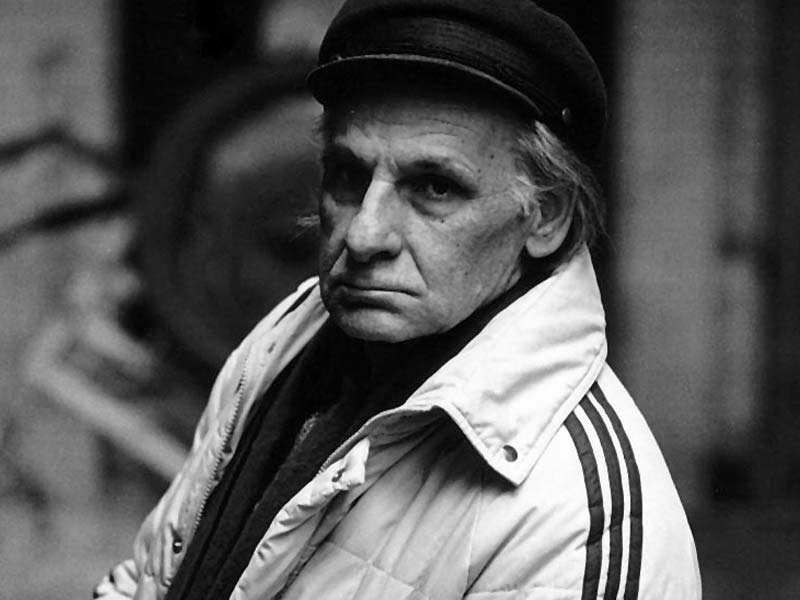
FAMA Collection, Sarajevo “LIFE” Magazine © FAMA Collection - Visual Archives 1992-1996 (Milomir Kovačević)
Yes! Life is a dream!
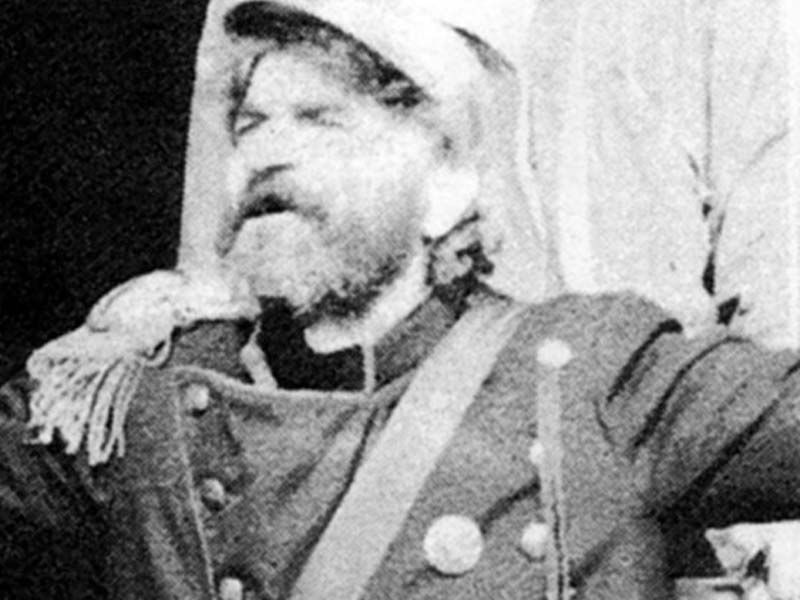
FAMA Collection, Sarajevo “LIFE” Magazine © FAMA Collection - Visual Archives 1992-1996 (Milomir Kovačević)
Death was so close to me that I felt its breath, I carried it on my back. Sometimes I think that life is like cargo, filled up with everything and anything, and people are like suitcases, thrown here and there, thrown away, unloaded, lost and found, empty or very stuffed-up, made of leather or cardboard, all until the last carrier throws them into the last train. I love life, regardless of everything.
Yes. It's a foreplay to death.
I like nice living, mutual understanding, and respect for oneself and others. Peace and love.
Yes. It's a wonderful game of nature.
I don’t know, it is a nature’s bad joke.
I love life very much. “I threw away this very small thing I call 'myself', and became an endless world.” (Soseki, Japan) It is difficult, but possible, say the ones who know.
I am temporarily really satisfied to be present.
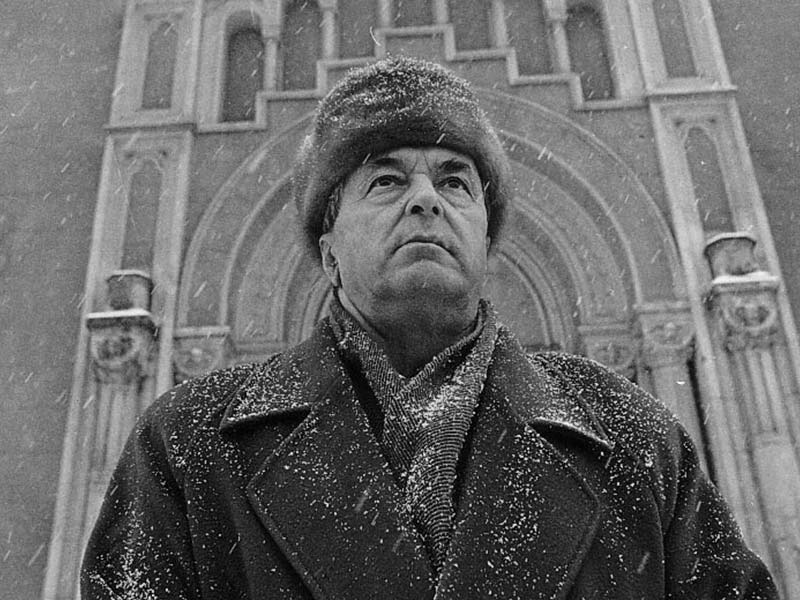
FAMA Collection, Sarajevo “LIFE” Magazine © FAMA Collection - Visual Archives 1992-1996 (Milomir Kovačević)
Through dancing of light and shadow, and through foggy truths.
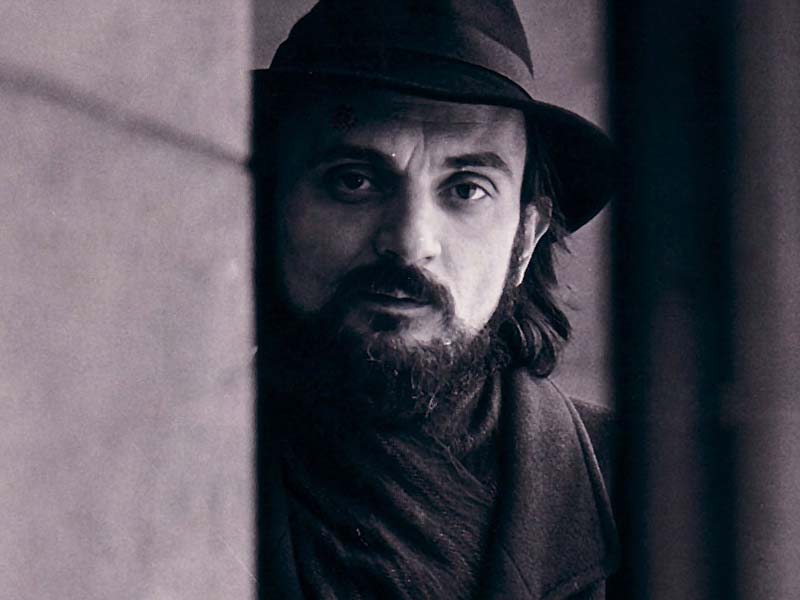
FAMA Collection, Sarajevo “LIFE” Magazine © FAMA Collection - Visual Archives 1992-1996 (Milomir Kovačević)
Does it like me?
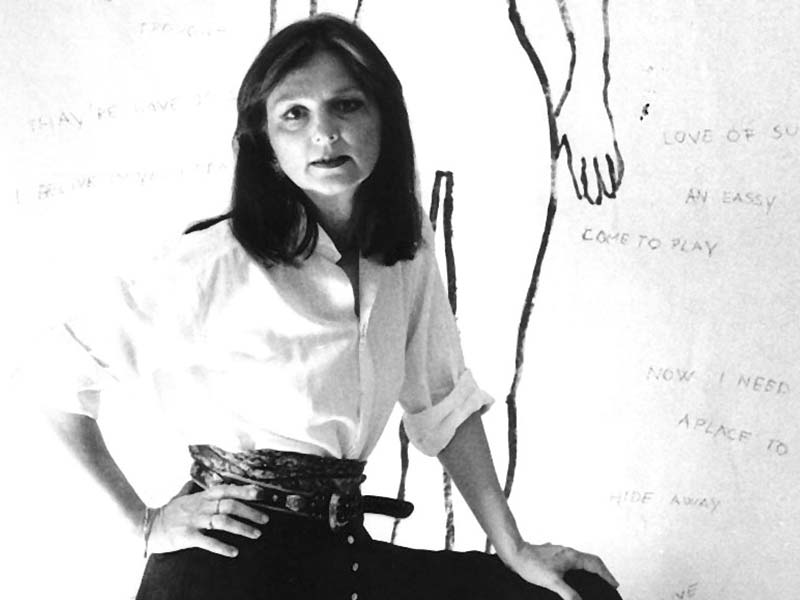
FAMA Collection, Sarajevo “LIFE” Magazine © FAMA Collection - Visual Archives 1992-1996 (Milomir Kovačević)
I am happy that I am alive, even though my chances for survival are minimal.
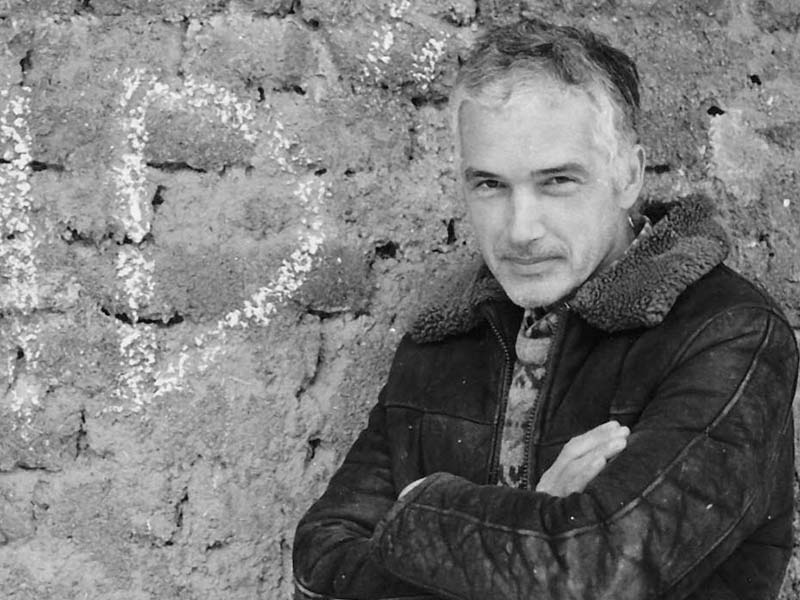
FAMA Collection, Sarajevo “LIFE” Magazine © FAMA Collection - Visual Archives 1992-1996 (Milomir Kovačević)
Yes. That is when one organism functions without bothering others.
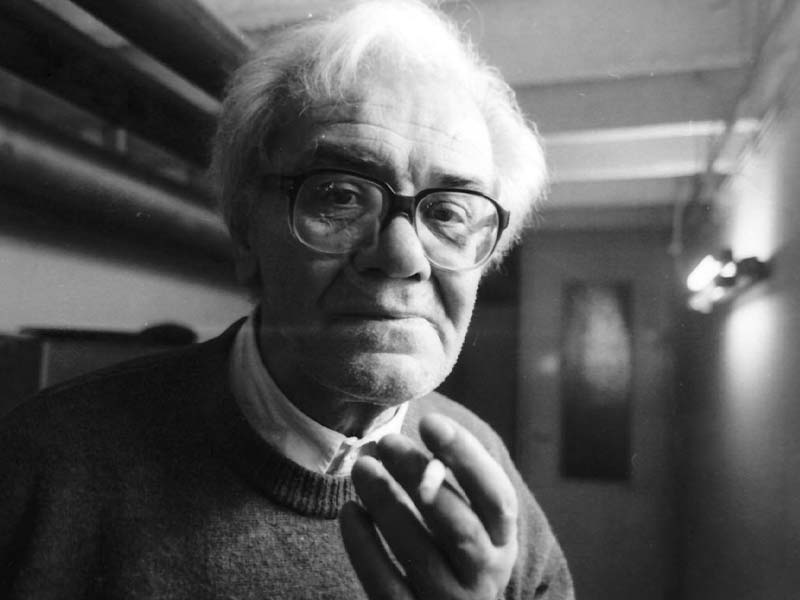
FAMA Collection, Sarajevo “LIFE” Magazine © FAMA Collection - Visual Archives 1992-1996 (Milomir Kovačević)
People have been coming to this city of death for the past three years to gather lectures on living.
Svako je smišljao svoj način mentalnog preživljavanja da ne misli o onom što se dešava. Jer bi razmišljanje o onom što se zbiva i pokušaj da se nađe ikakav smisao u tome demotivisalo i tako dovelo do odustajanja od života.
I knitted, crocheted and sometimes embroidered, because it calmed me down.