


The Siege of Sarajevo 1992-1996
“Listen to the sounds from the end of the world, you will hear your future”
Macro Story #26: Communications

Macro story #26 is dedicated to the SURVIVAL AND RESILIENCE of the citizens of Sarajevo during the four-year siege. The focus of this edition of Macro Story is COMMUNICATION and the resourcefulness of the citizens of Sarajevo to send letters and messages from the siege to the world, to their families, friends, unknown interlocutors, and even decision makers. From two original studies produced by FAMA Methodology "Survival Questionnaire" and "Sarajevo LIFE Magazine", we have selected a part of the statements of the citizens of Sarajevo about which channels they used to send letters or make phone calls with the outside world, and about what constant, sometimes only one-way communication meant for preserving the mental and physical health of individuals.
Different parts of the city survived under different conditions. In 1996, we realized that it was time to establish a methodological course by conducting a survey in ten different parts of the city. All survey questions related to the experience of being under siege at all levels of survival. But that was not enough to create a complete picture. Therefore, we digitized 4,637 surveys and received an instant answer to each of the questions. And we came to great discoveries. 4,637 responses can be considered a sufficiently significant sample for the frequent answers to be accepted as a rule. For example, based on the answers in the surveys, we concluded that the citizens of Sarajevo continuously found ways to communicate with family and friends outside the city under siege. Every message and every call meant that life in Sarajevo did not stop.
Although we lived under siege, we were also observers of the phenomenon of the end of an urban civilization (which Sarajevo was at the end of the 20th century) and the establishment of a new civilization that resembled science fiction movies and the contemporary documentary TV series "Life After People". Observing people who create from very limited resources, exposed to constant terror, reduced to moving targets - is an important experience about human nature. We wanted to learn as much as possible about the possibilities of human nature and the mind, which operate freely despite all the limitations of the given situation. From our former life, we knew the American magazine "LIFE", which in the twentieth century conquered the whole world by revealing hidden, unknown and distant things to readers. The manifesto of the founder and owner of LIFE, Henry Luce, motivated us to make our thematic edition, setting it in the middle of the siege of Sarajevo. Today it is an anthropological document about a difficult time and the human struggle to overcome the situation in which they found themselves instead of becoming its victims.
FAMA Methodology presents part of the statements of Sarajevo citizens from the study "Survival Questionnaire" and "Sarajevo LIFE Magazine".
This Survival Questionnaire study, produced shortly after the war, was the first and so far only large-scale public opinion survey to document daily life during the siege of Sarajevo. The testimonies of 4,637 citizens from all city municipalities revealed a matrix of the difficulty of survival, ingenuity, and resilience. Encompassing responses to 31 questions about daily routines, innovation, and mental toughness, the digitized surveys offer a rare insight into basic survival. This study deepens our understanding of life under siege by correlating responses by age, gender, profession, and urban location. In this chapter, we highlight the statements of Sarajevo citizens about their communication with the outside world, with friends and family. Messages and calls from the besieged city meant life. As long as they have someone to write to, send a message to, or make a call, the citizens of Sarajevo have hope. They hope that the messages will arrive, that someone will hear and read them. That the world will find out what is happening in wartime Sarajevo.
Micro-District
number of respondents: 69 (1.49% of the total sample of 4,637)

© FAMA Collection; 'Survival Map (The Siege of Sarajevo 1992-1996)'
I didn't send or receive anything, because my friends and family were all in Sarajevo.
My daughter sent letters via Italian forces, and we received packages through Adra and Caritas.
I received messages via ham radio operators, but I didn't receive any packages.
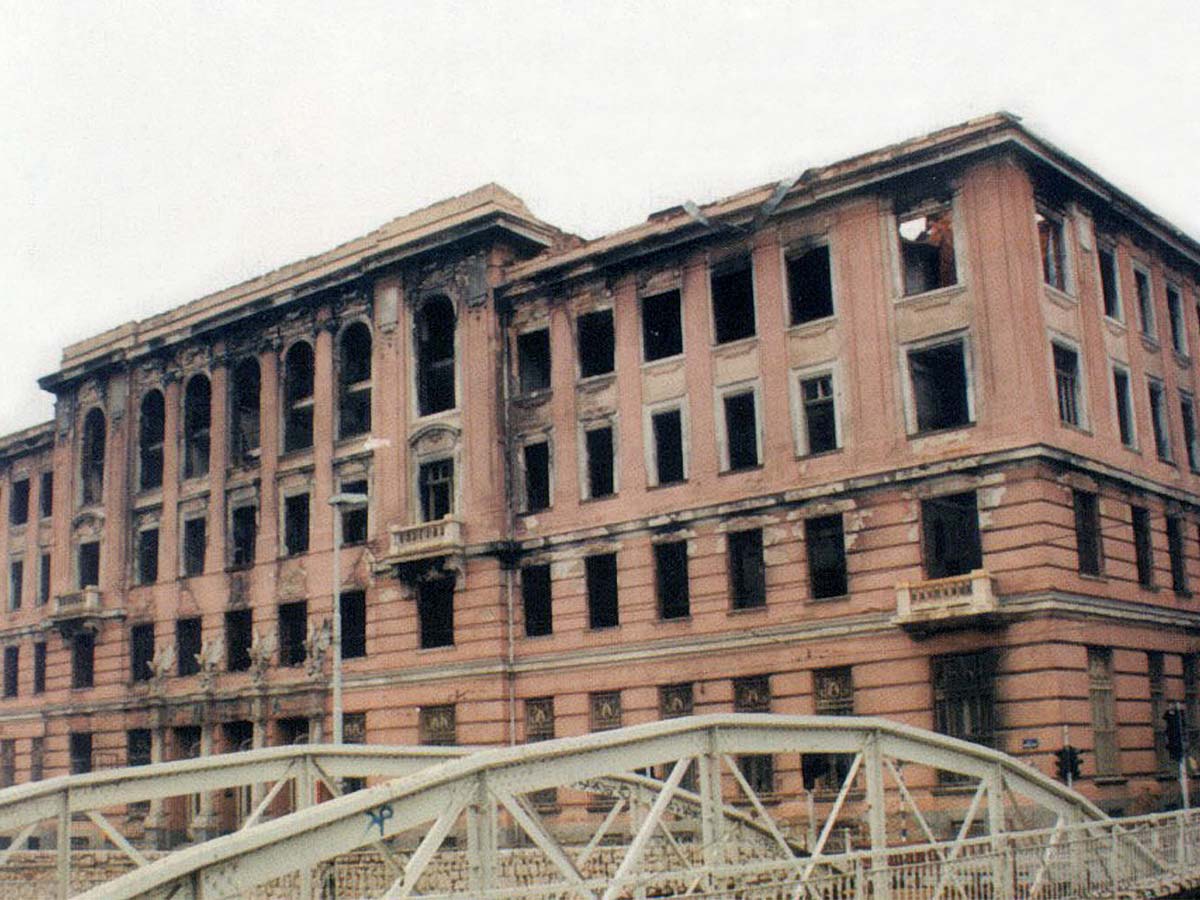
Main post buiulding, Sarajevo 1992-1996 © FAMA Collection - Visual Archives 1992-1996
I sent letters through a friend who worked at UNHCR, and received packages through Adra.
I received messages through ADRA, and I started receiving money from my wife through the UNION Bank in 1994.
I received packages irregularly, since there was no one to send them to me.
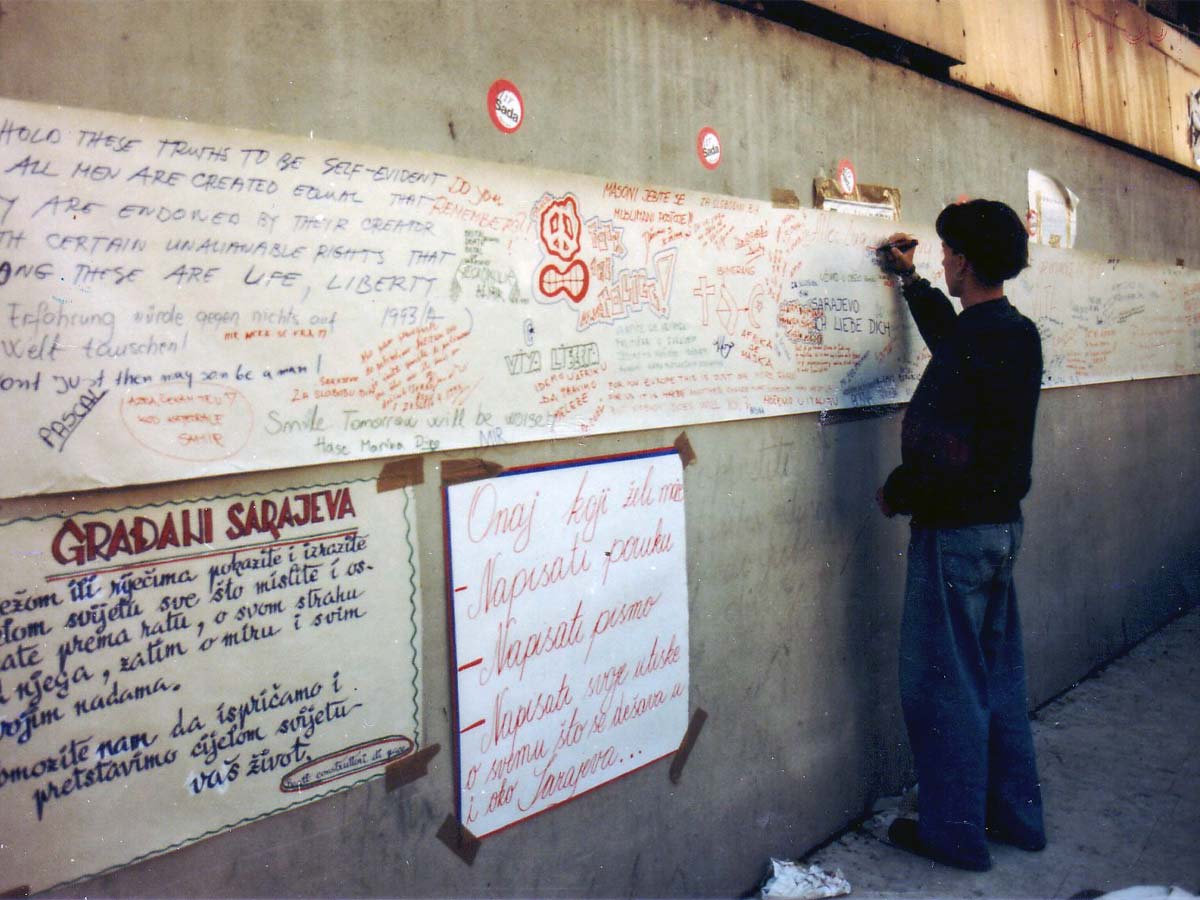
Citizens writing messages on a wall, Sarajevo 1992-1996 © FAMA Collection - Visual Archives 1992-1996 (Drago Resner)
I received letters and packages through Adra, sent messages via the Red Cross.
I mostly made calls from my phone while it was working, and when it wasn't working anymore, I went to my neighbour's. We received packages from people who came from Zenica, because my daughter lived there and paid people to bring me packages.
With the help of ham radio operators.
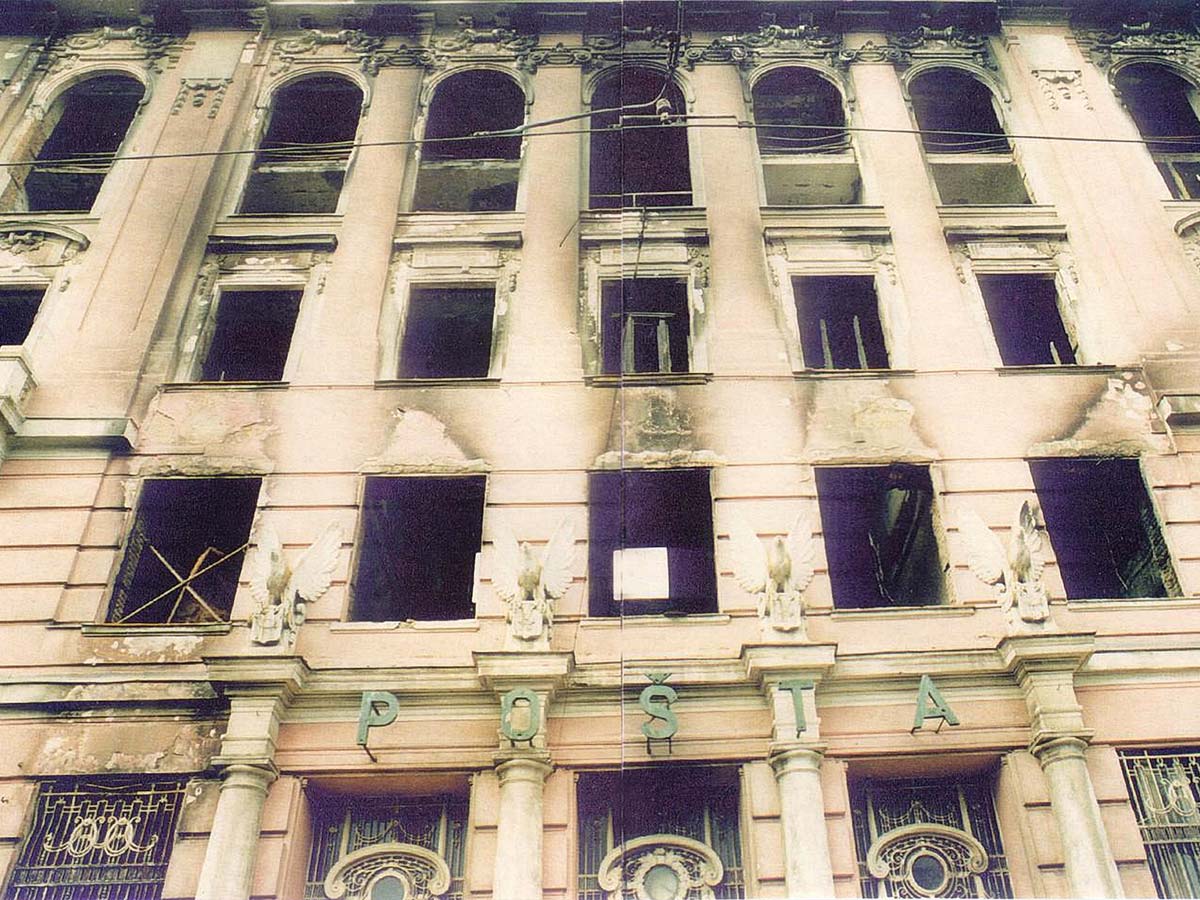
Main post building, Sarajevo 1992-1996 © FAMA Collection - Visual Archives 1992-1996 (Željko Puljić)
I received letters and packages through the Jewish Community, as I sent them. My phone has not been working since May 2, 1992.
I sent messages via the "Blessed Builders of Peace", acquaintances and friends who were leaving town. That's how I received them, as well as packages. Except that I didn't send packages to anyone. And I didn't make any phone calls.
My parents sent letters through the Red Cross, and I received packages via ADRA and private channels.
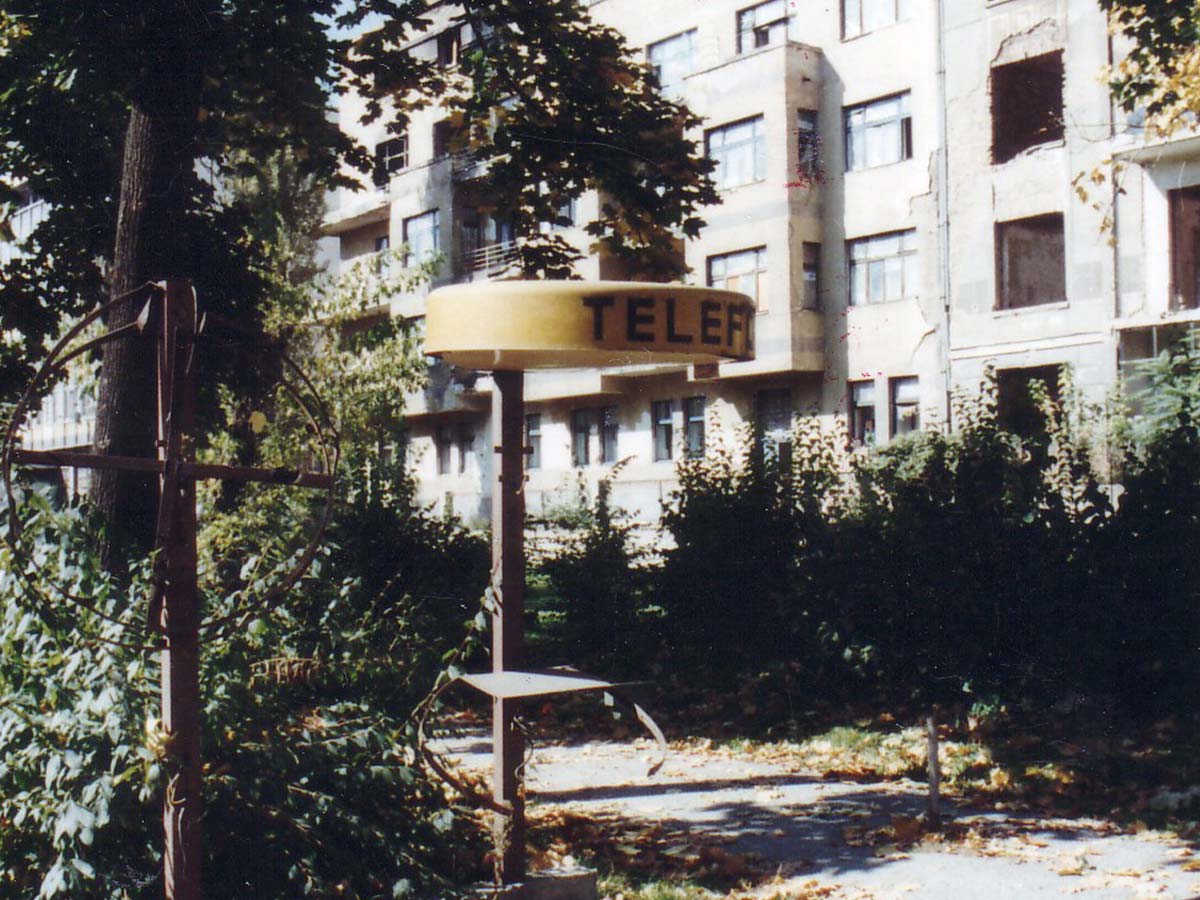
Destroyed telephone booth, Sarajevo 1992-1996 © FAMA Collection - Visual Archives 1992-1996 (Drago Resner)
I sent messages through the Red Cross and through acquaintances who were leaving town, and I received packages through Adra.
Via "Adra" and neighbours who worked for UNPROFOR.
We received messages and packages via the Red Cross, ADRA, and friends who were leaving town and coming back.
This anthropological study Resilience in the form of surveys, a redesign of the famous American magazine "LIFE" (which dealt with research and documentation of the new, unknown and, above all, sociologically important for the world as a whole), was made during 1995, during the siege of Sarajevo. Intellectuals and artists of the city under siege answered the eternal questions of good and evil, hope and death, love and survival in difficult times. Their answers represent hope for humanity and a special study on the mental health of individuals exposed to years of terror. Redesigned in the spirit of the original American magazine "LIFE", "Sarajevo LIFE Magazine" presents an anthropological and cultural study of individual resistance and survival under siege. 87 Sarajevo artists, academics, musicians, architects, writers and actors responded through fashion, theatre, art, design and literature to universal humanist questions about life under siege. The magazine is at the same time a study of how creativity and innovation have become tools for building resistance under impossible circumstances, in which the abnormal has become normal. In this chapter, we present some of the statements about everyday life and the working day of respondents from "Sarajevo LIFE Magazine".
This is the perfect circle, the end is where the beginning was, and vice versa.
It's terrible here, but unfortunately, it's going to get worse.
A man does not die of death, but of insults.
Listen to the sounds from the end of the world, you will hear your future.
Stay away from hate.
Sell everything you have for a lot of money before you leave.
"My strong need to appeal to the world and seek help resulted in my writing a letter to President Clinton, who had been elected for the president of America. Since it was the beginning of the war, I was somehow convinced that the letter would provoke a reaction in the world. In America. That there would be some reaction from the United States after the letter, which of course didn’t happen. In the letter I said, exaggerating a bit, that as he was a good American and a democrat and I voted for him and I expected Bosnia and Herzegovina to get his help, which I really thought at the time. I was convinced that the help would consist of the reaction, which America exhibited much later." - Ferida Duraković, Secretary general of the BH PEN Centre
© FAMA Collection; Oral History: 'The Siege of Sarajevo 1992-1996'
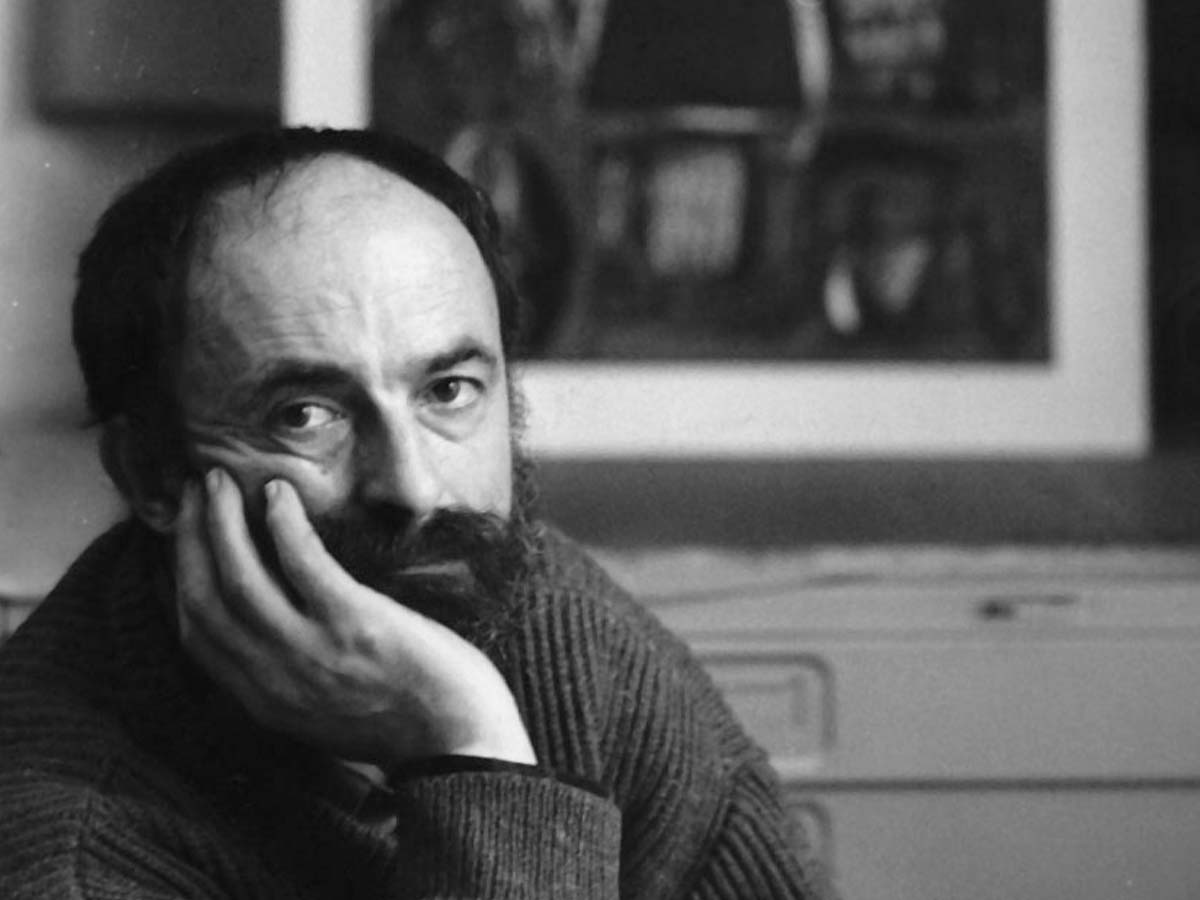
FAMA Collection, Sarajevo “LIFE” Magazine © FAMA Collection - Visual Archives 1992-1996 (Milomir Kovačević)
People can understand and love each other.
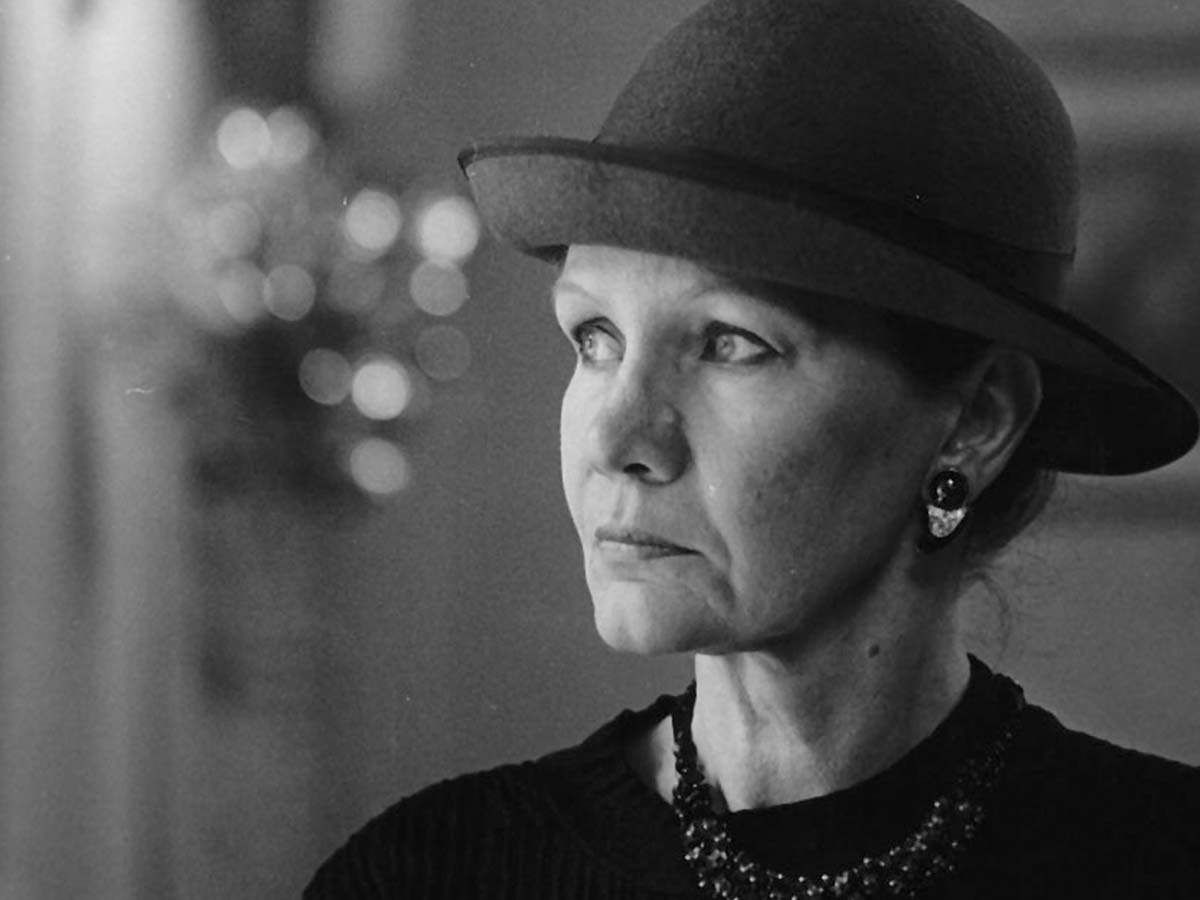
FAMA Collection, Sarajevo “LIFE” Magazine © FAMA Collection - Visual Archives 1992-1996 (Milomir Kovačević)
Isn't it time to wake up?
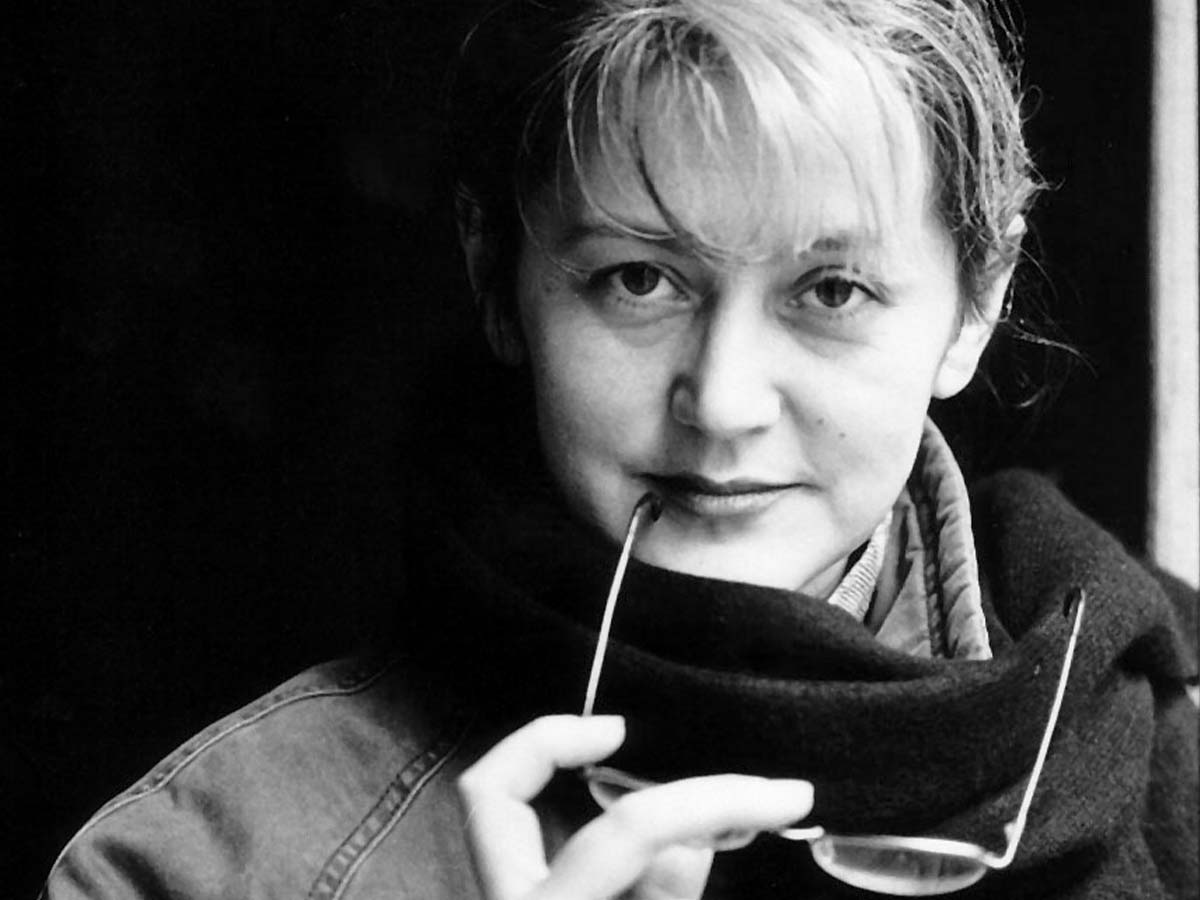
FAMA Collection, Sarajevo “LIFE” Magazine © FAMA Collection - Visual Archives 1992-1996 (Milomir Kovačević)
Hold on tight with your hands so the wind doesn't blow you away.
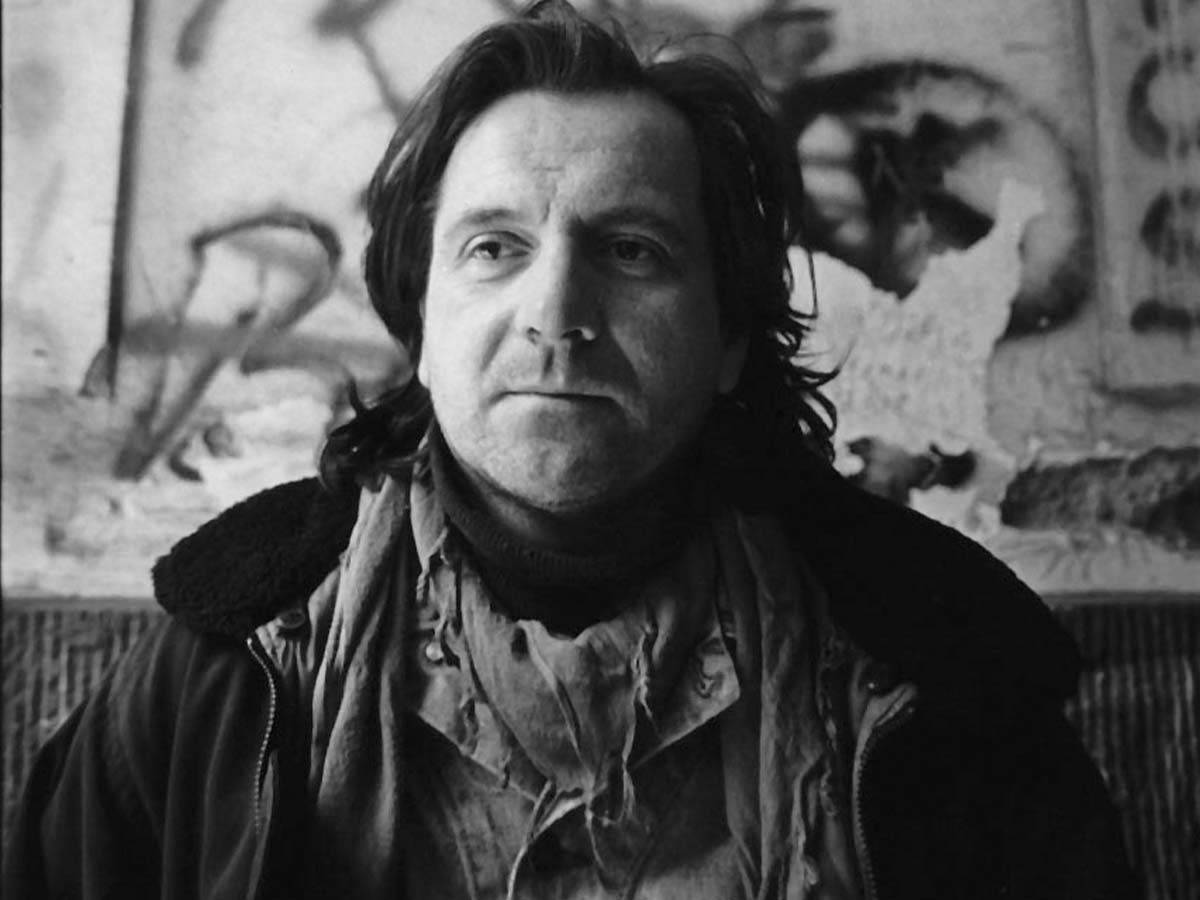
FAMA Collection, Sarajevo “LIFE” Magazine © FAMA Collection - Visual Archives 1992-1996 (Milomir Kovačević)
Gentlemen, use your energy to love and be loved.
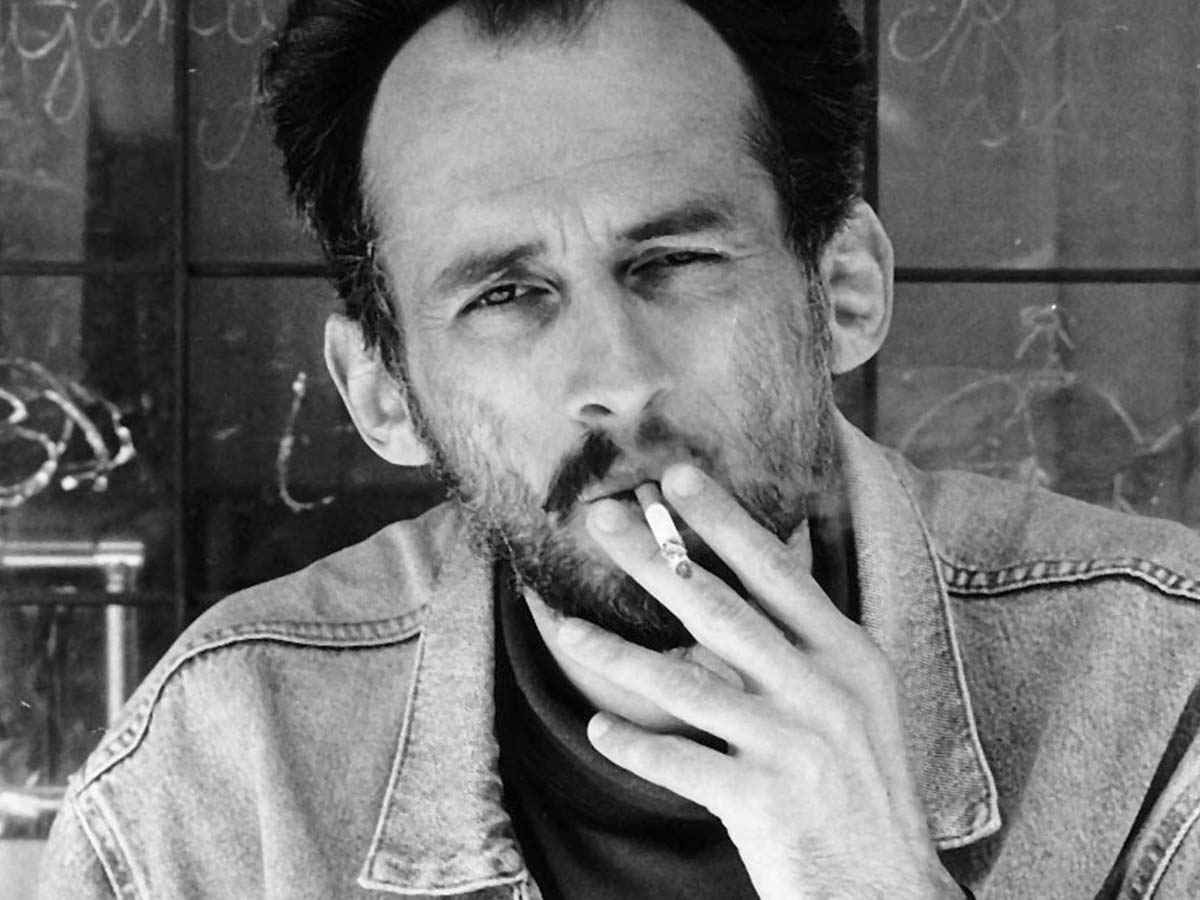
FAMA Collection, Sarajevo “LIFE” Magazine © FAMA Collection - Visual Archives 1992-1996 (Milomir Kovačević)
When I get there, I'll call you.
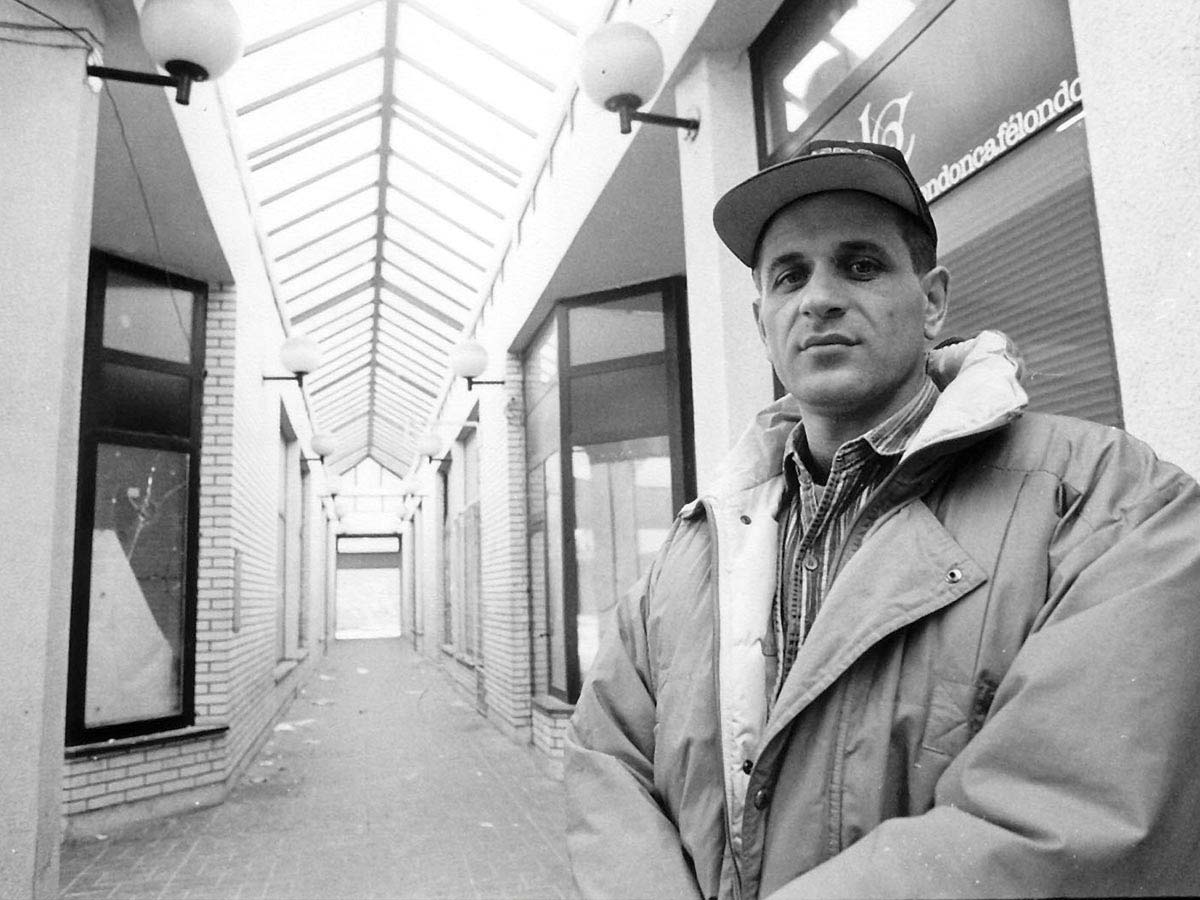
FAMA Collection, Sarajevo “LIFE” Magazine © FAMA Collection - Visual Archives 1992-1996 (Milomir Kovačević)
I wish politicians could finally disappear into a black hole.
We didn’t have any other way to communicate except by fax. We send something and they call us by satellite phone and tell us what the exhibition looks like. It was very important for me because then I was creating my fantasies.They tell us, now we’re in a park, lots of people round us, there’s light. Everything in complete contrast to Sarajevo. No trees, no lights, no parks and there they have everything. That exhibition affected me deeply, as if I’d been there where it’s completely different. And it had a great effect on my imagination, what was the place like. I think it’s rare for an artist to communicate in that way with a foreign location and with his exhibition and with other people. Especially it was important that there were people, artists on another planet from a different ambience who wanted to give us some kind of support what we called a movement for spiritual support. - Nedžad Begović, reditelj
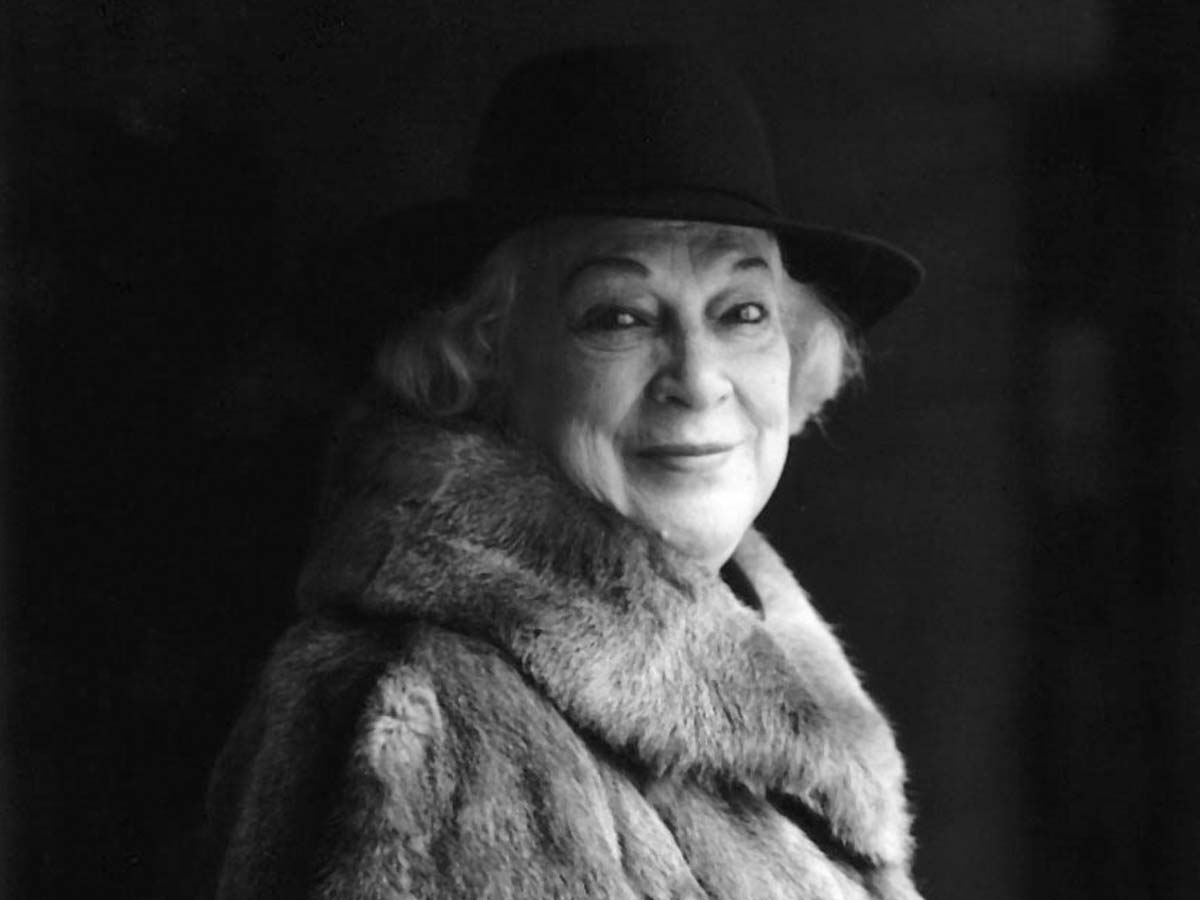
FAMA Collection, Sarajevo “LIFE” Magazine © FAMA Collection - Visual Archives 1992-1996 (Milomir Kovačević)
Preserve your dignity.
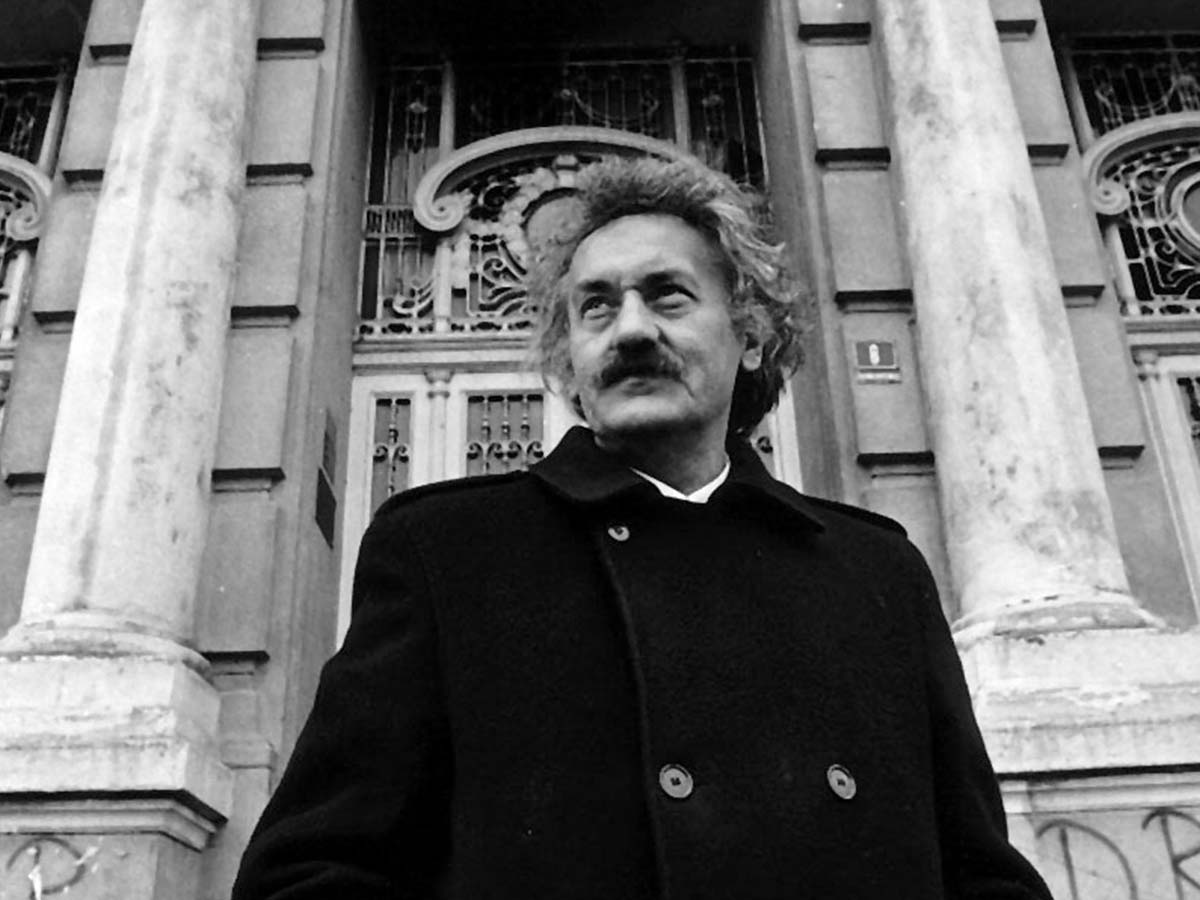
FAMA Collection, Sarajevo “LIFE” Magazine © FAMA Collection - Visual Archives 1992-1996 (Milomir Kovačević)
Everyone must see the end of the world to know where its centre is.
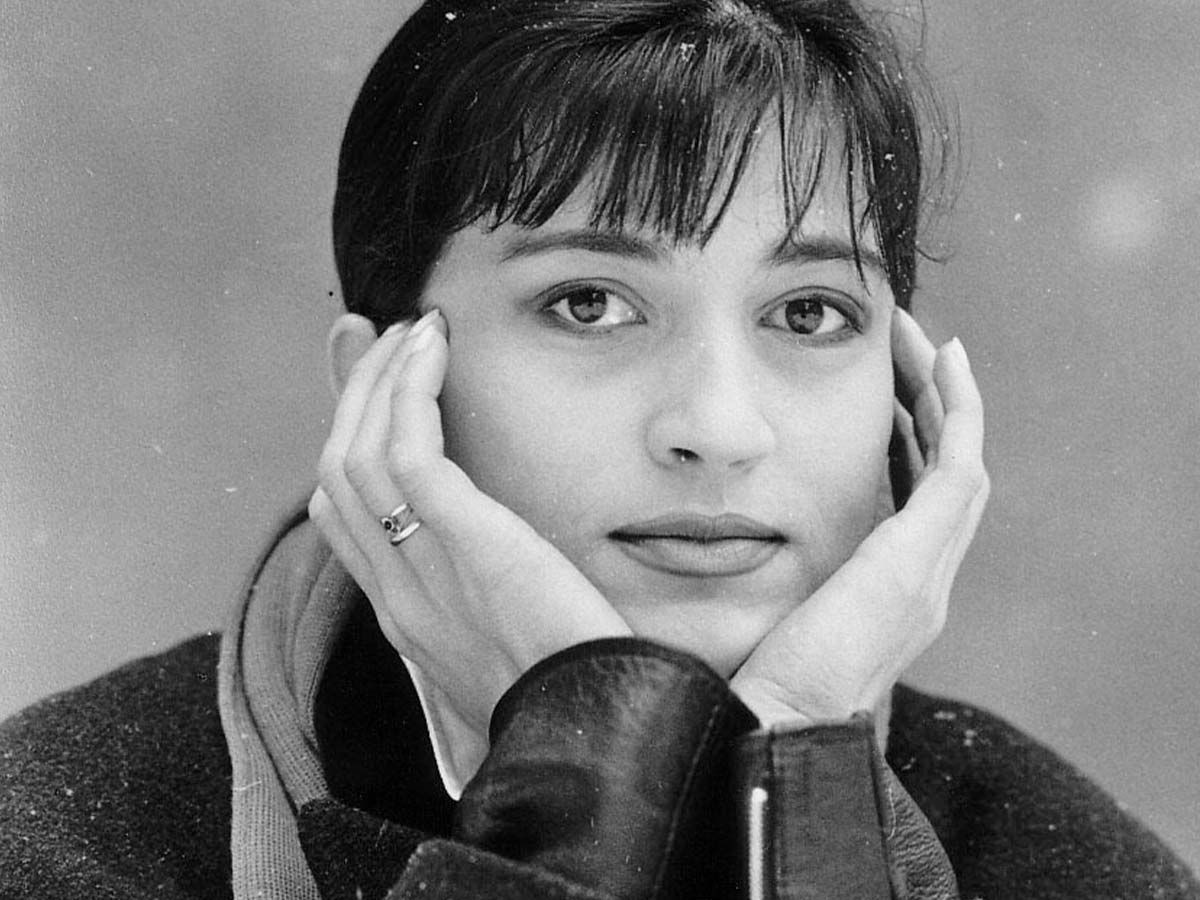
FAMA Collection, Sarajevo “LIFE” Magazine © FAMA Collection - Visual Archives 1992-1996 (Milomir Kovačević)
Love each other!
Everyone had to take their lives into their own hands (“take the bull by the horns”): the total destruction deprived the city’s inhabitants of everything familiar, they had nothing left but themselves and the ability of their minds to face the situation. Thanks to this, they gradually built new tools of resilience.
I adapted to the situation I lived in.