


The Siege of Sarajevo 1992-1996
“Something out of nothing”
Macro Story #23: Advices for Survival

During the siege of Sarajevo, the citizens of Sarajevo, living under constant terror, became valuable sources of advice for survival in everyday life. In different parts of the city, innovations for basic survival were created: improvised stoves for heating and cooking, intelligent devices for generating electricity, carts for transporting goods and canisters, lamps, vegetable gardens... Tips on how to cross dangerous intersections and navigate the streets spread very quickly. Citizens learned from experts in horticulture and vegetable growing how to make their own small gardens and plant vegetables. Unusual recipes for preparing meals are created. Survival became a daily task, both for individuals and for entire families.
© FAMA Collection - Visual Archives 1992-1996 (Ozren Pavlović)
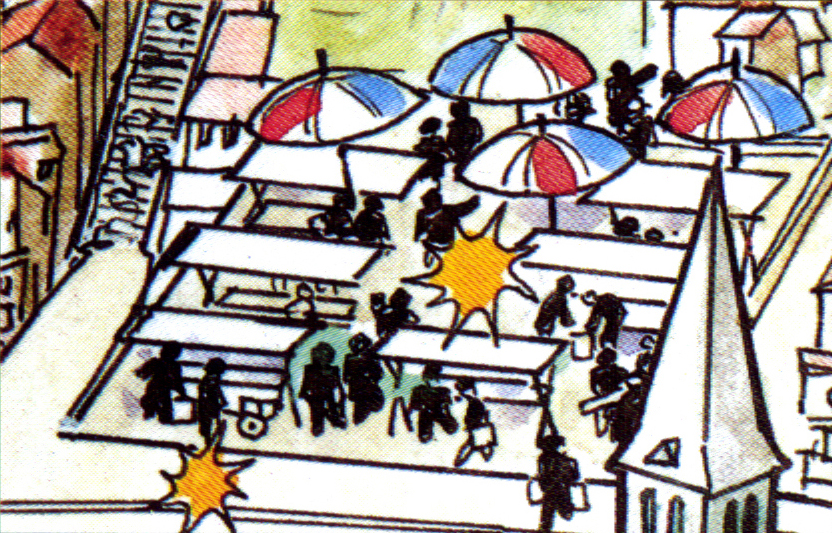
City markets were the only places where citizens of Sarajevo could buy food. They occasionally worked during the siege depending on grenades and snipers. There you could buy some types of edible and less edible plants, as well as homemade teas. Humanitarian aid, such as "Truman eggs" (powdered eggs that were stored after the Second World War), cigarettes and humanitarian lunch packs, were sold and exchanged there. Markets were favourite targets of the aggressors, and a large number of Sarajevo citizens were killed or wounded there. There was not a single market in Sarajevo that was not the scene of a massacre. At the end of the summer of 1995, some sheltered street corners were turned into markets.
"The prices at the market usually went up when the roads to Sarajevo were closed. And those moments were usually the hardest. Because the supply at our markets was small. And we in fact depended on that, on our well-known tunnel. On the goods that came into Sarajevo, on humanitarian convoys that came and usually the moment a humanitarian convoy entered, the goods would appear, which was amazing. But it wasn’t amazing for us at the markets. Then the value of the goods that were there, that is, their prices would fall and it was salvation for us when a convoy came. Not only that we got some of the food that was intended for us, something at the market for smaller, a bit smaller prices, that even then were sky-high. And the supply at the market wasn’t big either." - Borka Cerić, Housewife
© FAMA Collection; Oral History: 'The Siege of Sarajevo 1992-1996'
Housewives invented recipes for preparing dishes from what they had available. Recipes for meals, for making cigarettes or coffee-like drinks spread around the city and were exchanged. There was even a TV show called "Little Survival School" with recipes and specific advice for everyday life. Cheese made from milk powder, lentil steaks, war pizza - these are just some of the improvised war meals. It is important to note that there were periods of hunger during the siege of Sarajevo in which there were not enough resources to prepare meals.
"I used everybody men, women, everyone who knew how to cook something. I called people from Dobrinja and Vojnicko polje I would call anyone who had some interesting recipe. One of my colleagues, Brana Ninković, said in one show: 'To make sarma from some kind of leaves, if you don't have meat, you can do it without meat, if you don't have pepper, you can make it without pepper, so your stuck with some kind of cake'." - Senad Malohodžić, Journalist
© FAMA Collection; Oral History: 'The Siege of Sarajevo 1992-1996'
"We produced all sorts of recipes for making coffee. From well-known lentils and maize to the use of elder. And we produced a whole number on making cigarettes when they disappeared. Our basic receipt was colt’s foot. And we gave plenty of recipes for making alcohol: brandy from apples, or pears, and sparkling wine from berries." - Besim Avdagić, Journalist at the magazine "Zadrugar"
© FAMA Collection; Oral History: 'The Siege of Sarajevo 1992-1996'
During the siege, the citizens of Sarajevo planted and harvested vegetables in makeshift gardens and sometimes traded them for other necessities. Some collected snails, while others fished. Everyone tried in their own way to feed their families, to help their neighbours and friends. Improvisation and innovation became the man's strength.
"On May 4, 1994 I saw a fish in the small Dobrinja River. And I’m an angler. I didn’t want to say it to those other fellow anglers. There are lots of anglers in Dobrinja. I was just about to take some water to throw it into the toilet. And then I saw that trout. I went home although the snipers were shooting from above, right down the Dobrinja River. I took my fishing gear. I didn’t have any bait, so I had to find an earthworm. And with the earthworm I got the fish. That was a great joy. I caught it. After that a lot of neighbours went to fish. Because, it got around immediately, everybody knew. Whatever you did, we were locked up all the time, everybody knew. No matter where you went. And all of Dobrinja River knew I caught the fish." - Antun Leko, Citizen
© FAMA Collection; Oral History: 'The Siege of Sarajevo 1992-1996'
"We used every bit of space, windows, balconies, the sides of streets. We planted out in anything we could find. Sometimes old tins, cheese boxes, we filled everything we could with earth and sowed seeds in it and so we made our own nurseries and later planted them out in any place we could." - Smiljka Vukašinović, Professor at the Faculty of Agriculture
© FAMA Collection; Oral History: 'The Siege of Sarajevo 1992-1996'
"One should try to protect plants that are frost resistant, to be able to pick them longer. Cover them with plastic. We got foil in the humanitarian aid packages; it will be a big help in prolonging the picking time for cabbage, salad, and some other plants we have sown this summer. Pick; pick everything that can be picked from the garden. Gather all of the celery, pick the parsley. Dry its leaves, you will find good use for it during the winter and the following spring." - Ana Mrdović, Horticulture expert
© FAMA Collection; Oral History: 'The Siege of Sarajevo 1992-1996'
One of the basic sources for preparing food was humanitarian aid, which reached the citizens through different channels during the siege of Sarajevo. Domestic and international humanitarian organizations often find very risky ways to deliver food to citizens, who have used the contents of humanitarian packages, often of dubious quality and shelf life, to make new sorts of meals.
"On February the 15th, 1993 we had a new round of humanitarian aid with 1250 grams of beans, 300 of oil and one kilo of flour. It is very important to emphasize that with every new shipment there was less quality food. Sometimes the food was spoiled and had to be discarded. For example, flour was discarded a few times; the beans had weevils and so on." - Samija Popara, Local community of “Babića Bašča”
© FAMA Collection; Oral History: 'The Siege of Sarajevo 1992-1996'
"The system was such that it organized a donator’s conferences or to be giving donations in merchandise in 1992, during the entire 1992 donations that were arriving were lacking in its quality and quantity. What UNHCR was trying to do was to direct those donations with the number of users in Sarajevo, that was between 300-350 000 people. The amounts were such, the needs so urgent, that it wasn’t possible to keep the goods in storage for long enough to check exactly where they had come from, the exact date of production, the exact place of production, and the exact contents. So that, for example, we used the IKAR cans for two years before someone sent them for a real quality test. Sometimes we were sent crackers that dated from ‘67, if not older. We sometimes got goods that had expired, or were on the border." - Amira Sadiković, UNHCR
© FAMA Collection; Oral History: 'The Siege of Sarajevo 1992-1996'
"We had minimal criteria; we were satisfied with just enough to keep us alive. It was very little - a litter of oil, a kilo of sugar, half a kilo of salt, any kind of legumes, a few potatoes when we could get them, macaroni - they were the main things, rice and so on. Along with the regular humanitarian aid that came by air from the international community, from Caritas and Dobrotvor, and more recently from Adra and Merhamet that was what helped the people of Sarajevo to survive in ’93 which was the worst year, to live on into the next year." - Džemal Subašić, Citizen
© FAMA Collection; Oral History: 'The Siege of Sarajevo 1992-1996'
© FAMA Collection - Visual Archives 1992-1996 (Jelena Oksenfeld)
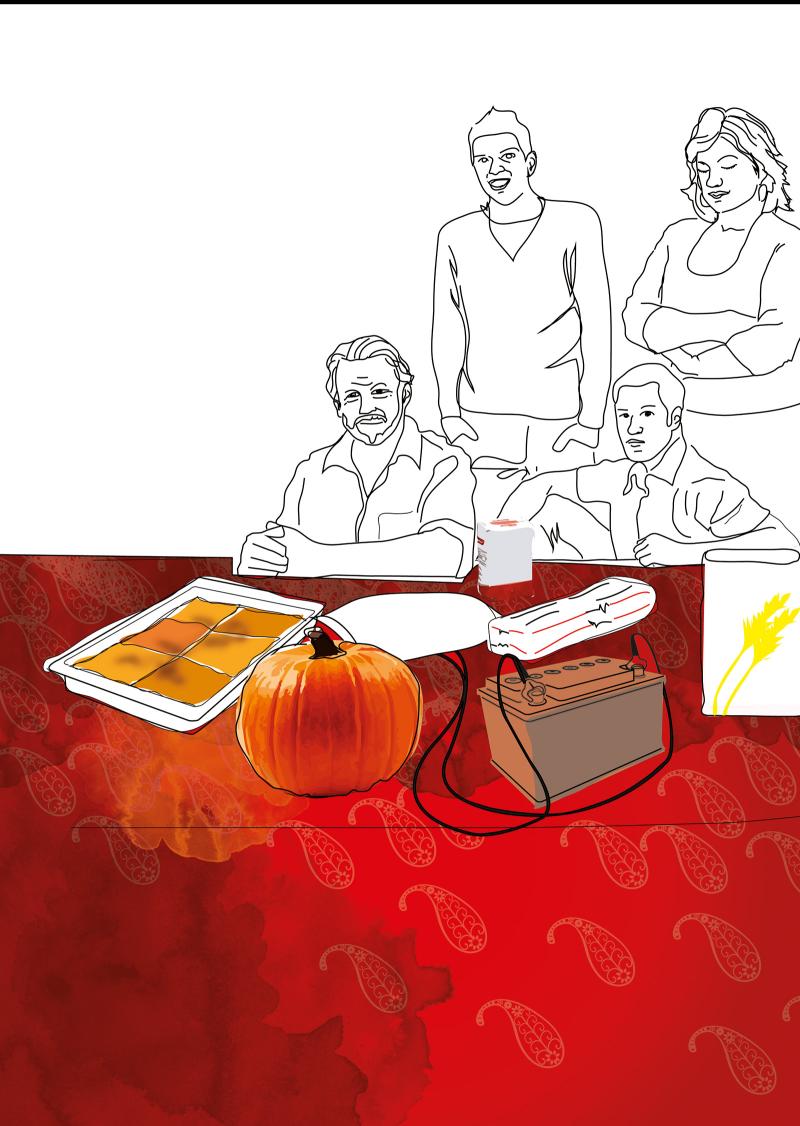
Can you describe the “family economic chain”?
My husband received cigarettes in the army, I worked without any income (out of love), we received humanitarian aid, and from my mother-in-law and mother vegetables from the garden.
year of birth: 1964
profession: Journalist
gender: Female
city district: Bistrik
© FAMA Collection; 'Survival Questionnaire' - The Siege of Sarajevo 92-96
During the siege of Sarajevo, citizens found ways to keep warm, to bring home water in canisters or in baby strollers as simply and safely as possible, to prepare meals from the scarce resources they had, or to make candles and improvised lamps to illuminate the living space. Over time, a whole collection of recipes and tips for survival was created, which were collected and exchanged. We spoke with Šemsa Mehmedović about human resourcefulness, inventiveness and strength.
telecommunication engineer
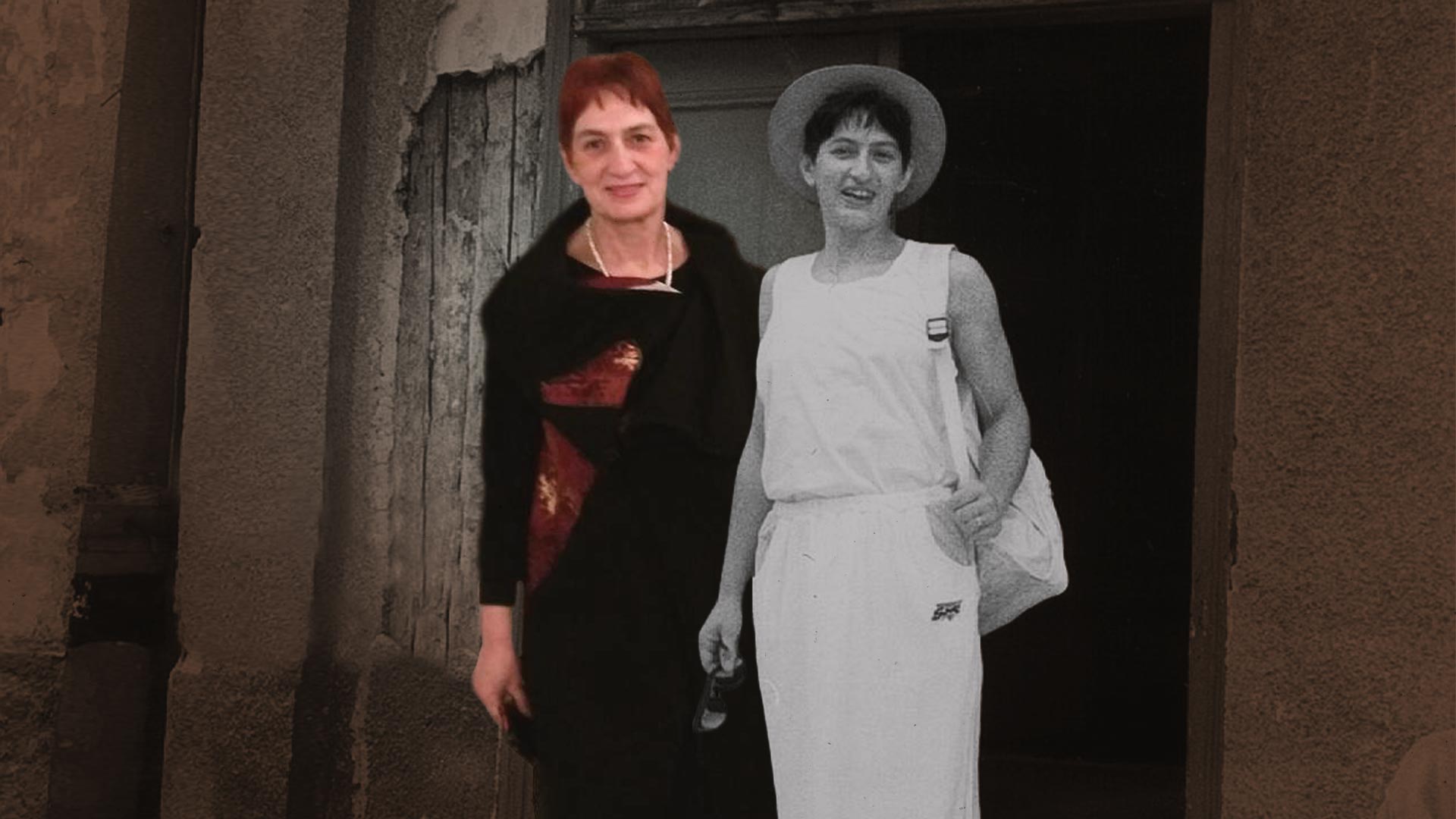
Photo: Šemsa Mehmedović - Sada (personal archives) i nekada (© FAMA Collection - Visual Archives 1992-1996)
The FAMA collection, more precisely the Oral History 1992-1996, contains, among other things, your video statement about how the citizens of Sarajevo kept warm during the siege, more specifically how you and your family came up with innovative ways to heat the house during the icy Sarajevo winters. Can you remember those moments when it was necessary to find firewood in impossible conditions during the siege of Sarajevo? How did you handle it?
Šemsa Mehmedović: In the absence of “real” wood, we had to think up/identify objects that could burn, to heat our house, to make lunch. It was incredible how many possibilities there were: plastic and rubber objects, pieces of clothing and shoes, pieces of carpet, books that we could part with. The books were the last thing on the list and with a heavy heart, but with the conviction that, when the war ended, books would be bought again. In order to provide firewood, and the aforementioned items for burning had already run out, the only thing left was to saw the trunk of an ash tree that grew in our garden. My husband was in the Bosnian Army, and I was alone with my five-year-old son. My feeling at that time, and throughout the war, was that I wanted to do, could do, and knew everything that needed to be done. I found an old saw in the shed, sawed and split my first tree that, with rational consumption, provided us with warmth for days.
Today, the house is full of books again! And new ones are constantly arriving, being bought.
My feeling at that time, and throughout the war, was that I wanted to do, could do, and knew everything that needed to be done.
"Everything that could be burned was put in our oven. At the beginning I had some wood to make fire. My family had a few planks. But this reserve was used up very fast and after that I was forced to use my imagination to solve this problem. I personally sawed trees; I learned how to do it. I would make briquettes out of coal dust. We all had our own techniques. We had to find a way to prepare wood so that it could be burned. It is hard to remember everything those fires were made from. We used all kinds of things that were not important to us. Books for example. Plastic bottles and everything else made from plastic. Plastic was very good to make fire but it smelled badly. We burned pieces of carpet, or sheets. Some people had to burn their wooden floors and furniture. Thank God, I was not so desperate. But once I burned a whole volume by Sholokhov, I still remember - it was "And quiet flows the Don". Nevertheless, whatever was burned, clothes or something else, sooner or later was gone. And we had to find something new. It was '95 and we had to organize heating during the whole summer, but we did not have anything to make fire with. It came to my mind that I could make fire from little branches. They were tiny, thin and small but I made little bundles wrapped together with old socks. I guessed that it was my original invention. But the result wasn't great. It took a lot of work to make such a bundle and it would burn up in a second. I made lots of those bundles with my son. That effort was not only useful for heating but also it was healthy for my mind. Because when I was doing something useful, I was all right, I felt O.K. I believe that this manual work saved my sanity." - Šemsa Mehmedović, Telecommunication engineer
© FAMA Collection; Oral History: 'The Siege of Sarajevo 1992-1996'
How would you, from today's perspective, explain the resourcefulness of the citizens of Sarajevo during the four-year siege?
Šemsa Mehmedović: The aggression against our country was terrible. It was not only an attack on lives and property, but also an attack on our human dignity. To surround, kill, demolish everything, completely destroy the spirit of a people - that was the goal of the aggressor. The citizens of Sarajevo stayed and survived, offering resistance in all possible forms and levels. Everyone did what they knew and could. Resistance was primarily reflected in the strength of the spirit, and resourcefulness and ideas for survival are the result of precisely this truly indomitable strength. It was important to me that we all always be neat and clean, that the house sparkles, and all with a minimum of water that I had to bring myself. It was important to me that my son had a sense of security, the warmth of the home atmosphere, that we talked a lot and that we figured out together how to keep warm, what to eat, and all without panic and stress but always through socializing and playing. It was a recipe for staying sane.
It was important to me that my son had a sense of security, the warmth of the home atmosphere, that we talked a lot and that we figured out together how to keep warm, what to eat, and all without panic and stress but always through socializing and playing. It was a recipe for staying sane.
In addition to firewood, the citizens of Sarajevo were constantly looking for food and new recipes. The challenge was how to make an edible meal out of nothing. Do you remember any recipes? How did you use basic humanitarian aid? What was in the humanitarian packages and do you remember what the meals prepared from the ingredients in the packages looked like?
Šemsa Mehmedović: Humanitarian aid was indeed an important basis for survival. We had, albeit in quite limited quantities - flour, oil, rice, beans, lentils. And to make the food tasty, everything was missing: spices, sugar, vegetables, not to mention eggs and meat. Sometimes we would get a can of "ICAR" that we didn't know whether it was wise to eat or not, because the taste was bad, and probably the quality too. One of the favourite dishes (a wartime recipe) was rice pie. Rice is mixed with a little yeast and water and left to ferment, so it tastes like cheese, and from that, "sirnica" pie was made. From boiled beans and any spices we could find, we made an excellent pâté. It was both delicious and nutritious. We made soup from the lentil and rice, a lentil pie, and somehow I managed to make the same meal look a little different every time. And I think those ideas for a "diverse" diet were also a form of resistance.
We made soup from the lentil and rice, a lentil pie, and somehow I managed to make the same meal look a little different every time. And I think those ideas for a "diverse" diet were also a form of resistance.
"I wrote a diary. I am one of those people who wrote a diary. Since the first day when we left Dobrinja, the chetniks drove us out, I started to write a diary. I cannot explain why I was doing it but it was like some kind of ultimate need, I had to write. It was a space where I was trying to make it easy for myself, where I expressed my feelings. It was very hard for me, but not harder than it was for the others. My husband fought in the war and he kept coming and going back. Every time he left there was a terrible emptiness that had to find its place on the paper. When I remember certain situations, I feel that I'm about to start to cry. I wrote my diary until one day in 1996. It was the beginning of 1996. And I gave birth to our daughter. I waited for that moment for seven years. After we had a son, that miracle took place during the war. People were in despair, there was shooting all over the place, and I was the happiest person in the world. At the same time my husband got out of the army after four years of trenches, mud, and fear. My mother got back from Germany after 3 years and 7 months. Until that day I was writing my diary every day, but then I had to destroy that witness. I wanted to forget everything and put it behind me, because the most beautiful things were happening to me. We had no place to live, we were without material things, but I gave birth to my daughter and that was the most beautiful thing in that moment. I burned my diary. I wanted that, when the ship sank, that the water covers it and that no marks are left on our souls. We will keep it in our memory but we have to live on." - Šemsa Mehmedović, Telecommunication engineer
© FAMA Collection; Oral History: 'The Siege of Sarajevo 1992-1996'
Considering that we found your video in our archive under the "Survival Tips" section, can you give us a comment on your video statement regarding keeping a diary during the siege? What did the act of writing down your thoughts and fears during the siege mean for your mental health and survival?
Šemsa Mehmedović: Part of my daily wartime ritual was writing. I recorded everything: events, thoughts, and of course the hope that one day this war would end and that we would see it through alive and well. Fear was a luxury I could not allow myself. When Dayton was signed, when my husband was demobilized from the Army of Bosnia and Herzegovina, our daughter was born. My son got the sister he had long wanted. We had nothing, not even a crib for the baby, she slept on the table in a borrowed carrier at first. But we were alive, healthy, and with that little baby a new life began. In peace. That's when I decided to destroy my war diary and I didn't regret it. Everything that was important to preserve was there!
We had nothing, not even a crib for the baby, she slept on the table in a borrowed carrier at first. But we were alive, healthy, and with that little baby a new life began. In peace. That's when I decided to destroy my war diary and I didn't regret it. Everything that was important to preserve was there!
In the FAMA collection we also have a photo of you from the time of the siege. You are standing at the entrance of the house, smiling, in white clothes. The photo radiates incredible optimism. Can you remember the moment when this photo was taken? How did you move around the city at that time, knowing that there was a risk of injury and death? How do you explain your great strength and indomitable spirit?
Šemsa Mehmedović: That day, armed with optimism, with the desire to get some food, I set off for the Markale market. In my backpack I carried some items that I intended to exchange for food. Everything was there: a toiletry bag, decorative hairpins, some jewellery (costume jewellery), some personal clothing that I did not need. I managed to exchange everything for some powdered milk and sugar. It was a magical feeling to take those groceries home. Happy that my child would eat something delicious and high-quality, I really did not even think about fear.
Happy that my child would eat something delicious and high-quality, I really did not even think about fear.
What was your day like during the siege?
Šemsa Mehmedović: You would get up early. The first thing you did was fetch water. I would fetch water from the city brewery. Washing dishes, bathing, doing laundry – everything required water. The broom replaced the vacuum cleaner, and there was also a device called an aspirator for manual vacuuming. Dusting and polishing furniture seemed to be of vital importance. It was actually a therapy called work – doing something useful from morning to night. I was absorbed in my work and had no time to feel bad. Then I would play with my son and do housework, and also, inventing games and stories that we still remember today. We would spend hours fantasizing about hiking and what to take in a backpack when going to the mountains. I would make candles from the remains of used candles. While doing housework, I would often sing as loud as I could. I had a collection of the magazine "Politikin zabavnik" and read to my son every day, but a little at a time so that it would last as long as possible. My favourite moments were when my husband could spend the night at home. We would make tea from something or coffee if we had it. And the three of us would talk long into the night, each of us anxiously waiting to part ways again.
It was actually a therapy called work – doing something useful from morning to night. I was absorbed in my work and had no time to feel bad.