


The Siege of Sarajevo 1992-1996
“We celebrated life in a time of death”
Macro Story #20: Celebrations and holidays

The living conditions during the siege of Sarajevo were a kind of test of physical and mental endurance. The people of Sarajevo watched the collapse of the existing world every day and witnessed death, hunger and existential uncertainty. In such extreme conditions, there is a need to use "peacetime" activities and rituals to enable individual and collective "summoning" of the normal life that existed before the siege, but also to maintain the hope that such a life will continue after the siege becomes a thing of the past. Citizens wanted to celebrate life in such conditions. They celebrated birthdays and wedding anniversaries, organized weddings and celebrations - of course, without everything that is necessary in normal circumstances for such celebrations.
"You see, my husband is Italian. He came here with the United Nations. He arrived in 1994 and he's still here. And so when we would tell our friends and family about everything we had to go through, it all sounded so unbelievable. You know, when you talk about how you had to bathe by a gas lamp, with cold water. And how during one dinner, to use one example, which was at the Majestic Restaurant, the electricity went out four times. How we planned for when our wedding would take place, because there was a gas shortage, and that among other things determined the date of our wedding. And it was unbelievable for those Italians, when they heard all these stories. But as I said, it all gave the event a special sort of charm. We got married at the Central District Registrar's office. That's where my official residence is. After that we had a modest, but pleasant lunch at the Majestic Restaurant and afterwards there was a small party at my parents' apartment. We had some of that infamous 'stolen' electricity. Our neighbours, who were lucky enough to get 'stolen' electricity all the time, were kind enough to lend us some for that evening since I had just gotten married. And so we borrowed some of their electricity for a lamp and a TV, so we, uh, watched that videocassette which an Italian woman who was a journalist had filmed." - Amira Silvestri, Citizen
© FAMA Collection; Oral History: 'The Siege of Sarajevo 1992-1996'
"Well, that wedding of mine, the decision itself, to get married in the middle of the war was just as normal to me at that time, regardless of everything else. I mean, it was total poverty. How we would arrange the wedding, how we would entertain the people, our dear friends that would be there and so on. Nothing could discourage us, not even the fact that I had no wedding dress, nothing to wear, nor my husband who was also a refugee, but he got shoes from a dear friend of ours, a jacket from a relative of mine, and a pair of pants. And I say: 'What am I going to do?' He says: 'Well, look into your closet, you’ll find something.' And so it was, I found a little dress that I bought a long time ago somewhere in Athens and of course I had to wash it. There was no dry-cleaner's, anything, but after all, after washing it I couldn't iron it, you know. So dressed like that, in my crumpled dress, I received the wedding party and everything. I still remember to this day, how my husband's best friend, Goran, said to me: 'How can you go to your wedding in such a creased dress?' But I really didn't mind, nor did it bother me, or mean anything to me, that creased dress. We were still in all of that, we were so… how shall I put it, in that lovely atmosphere. And even as we were going, we went on foot, you know, to the wedding. We didn't even have a car, there was nothing, we all went on foot, and when we were coming back unfortunately, they shelled, so that we had to…we ran in different directions just after we got out. We ran apart and then we went to a little restaurant, where my husband's company organized a sort of luncheon for us and there we even had real meat." - Smilja Gavrić, Citizen
© FAMA Collection; Oral History: 'The Siege of Sarajevo 1992-1996'
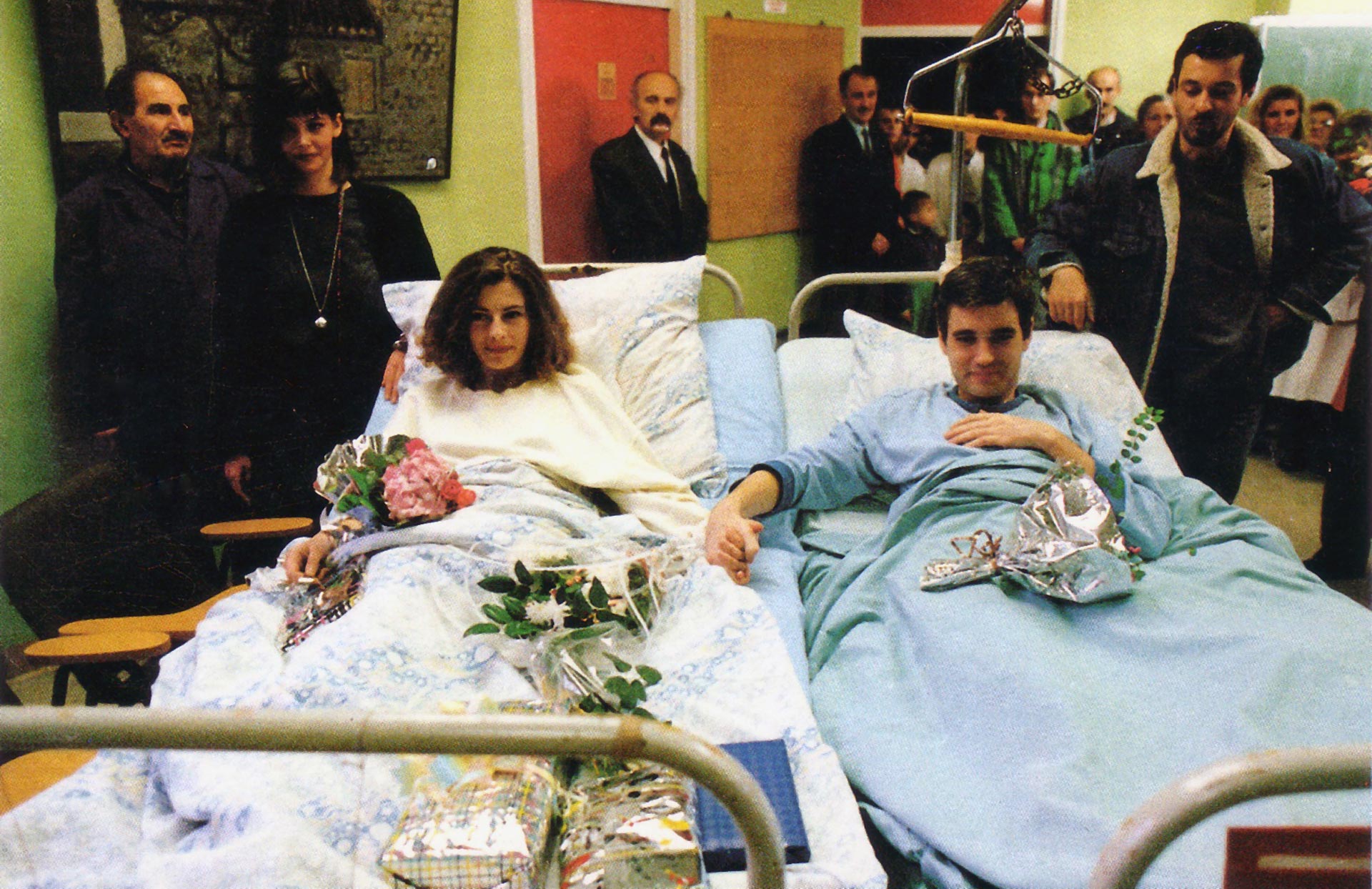
© FAMA Collection - Visual Archives 1992-1996 (Željko Puljić)
Svetozar Pudarić and his wife Sanda got married in hospital beds, after being seriously wounded in a mortar attack on the city. Their wedding photo, recorded in the premises of the Sarajevo hospital, became a symbol of the steadfast spirit of Sarajevo.
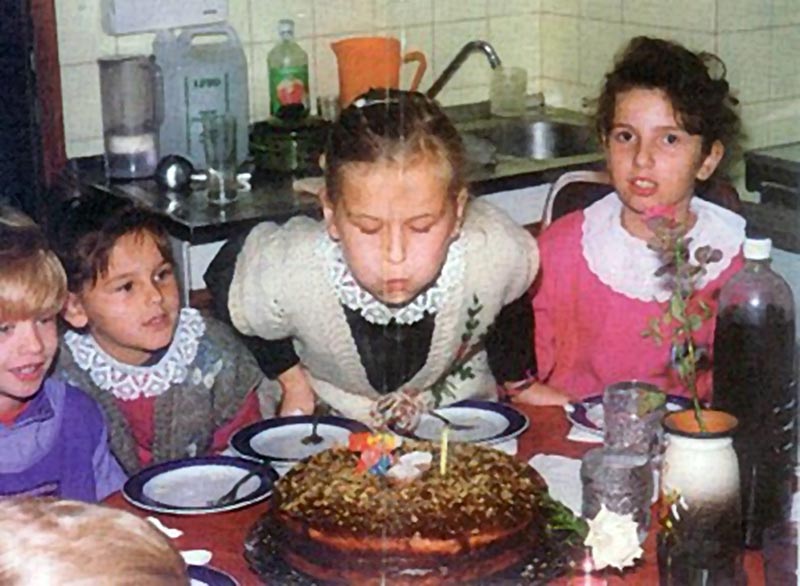
© FAMA Collection - Visual Archives 1992-1996 (Željko Puljić)
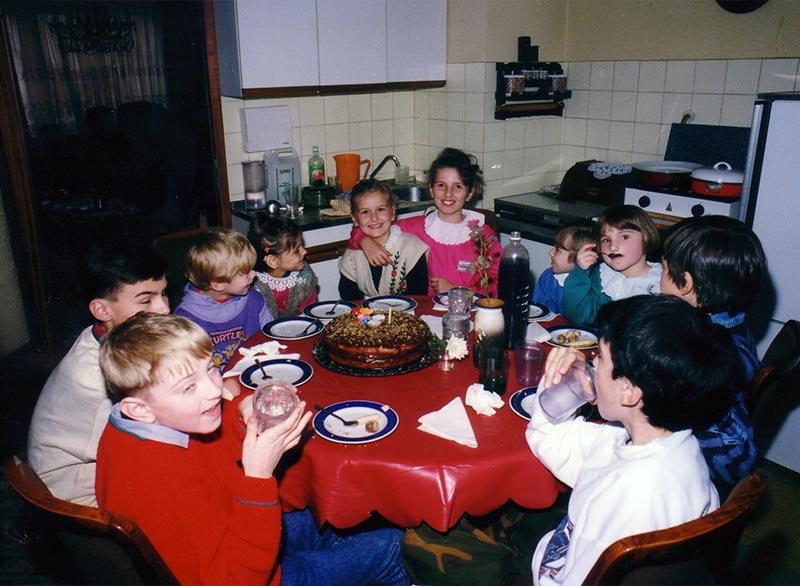
© FAMA Collection - Visual Archives 1992-1996 (Željko Puljić)
Children's birthdays during the siege of Sarajevo.
"That's our little tradition, the Ball of Roma, because it's been passed down from generation to generation. When the worst cold of January passes, and there's plenty of food and drink. It's like our other celebration of the beginning of winter. As the old people say, it's our tradition. We have it every year. But not in '92 and '93. We didn't have the right circumstances, and we couldn't because of our brothers. They were shooting at us, aiming at us. And in '94 we felt a little more at ease, so we started to have the Ball of Roma again." - Alija Abazi, President of the managing board of the Association "Braća Romi"
© FAMA Collection; Oral History: 'The Siege of Sarajevo 1992-1996'
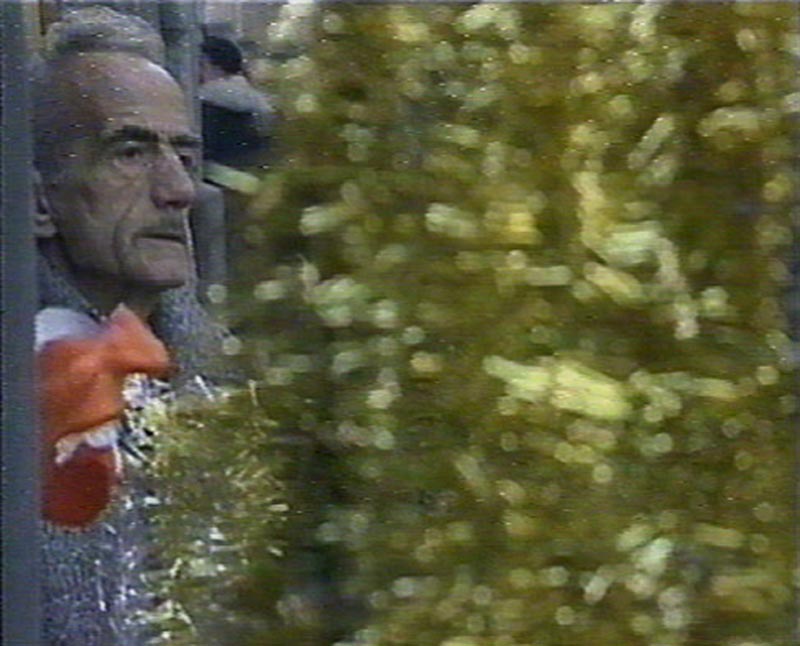
Celebrating New Year's Eve during the siege of Sarajevo meant joy among family and friends and gave citizens hope that the abnormal situation they lived in would soon end. Each wartime New Year, of which there were four, was believed to herald the end of the siege and bring a new beginning in peace.
"We received a package of the ZDF TV station, which were sent to the employees of TV BH. Those were presents that contained all the necessary ingredients to make pizza. That was a kind of a Beckettesque situation, because we had nothing to bake pizza in, so we had to make a fire and heat the whole kitchen. We had yellow cheese and catch-up and everything else that is necessary for such a meal. There were different kinds of pizzas inside that package and that was something new for the whole family. That made things look less dark than they were and we were in a good mood. We didn't watch television. We listened to music that was played on cassette players, which were connected to power batteries. People with batteries were happy, and I'm glad that I was one of them. Usually we would listen to music, we didn't dance, and if we had no battery, then a good old acoustic guitar was always accepted. New Year's celebrations were very interesting because, we had four war celebrations, every time we would say to each other: 'By God, next one will be in peace.' Four times it didn't work, but finally we managed to have them after war." - Una Bejtović, Music school student
© FAMA Collection - Visual Archives 1992-1996
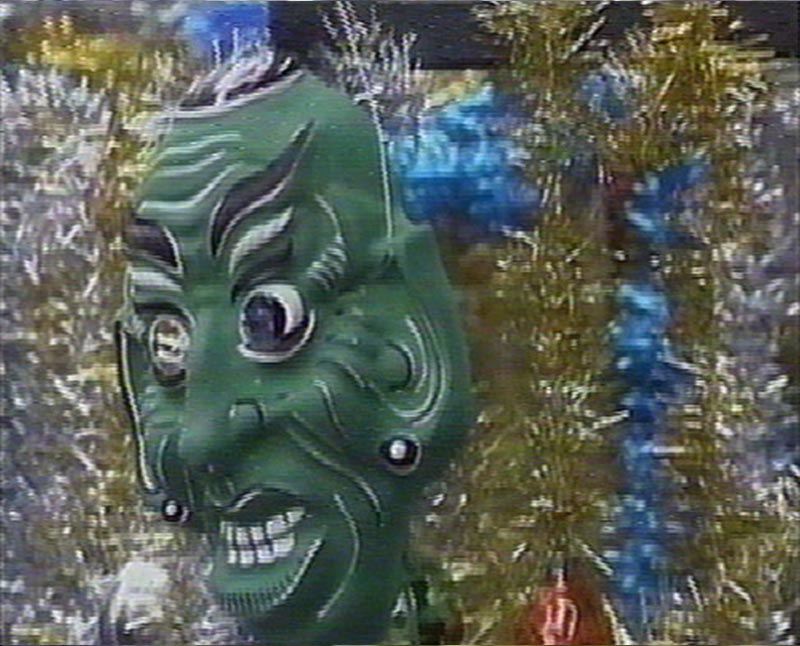
© FAMA Collection - Visual Archives 1992-1996
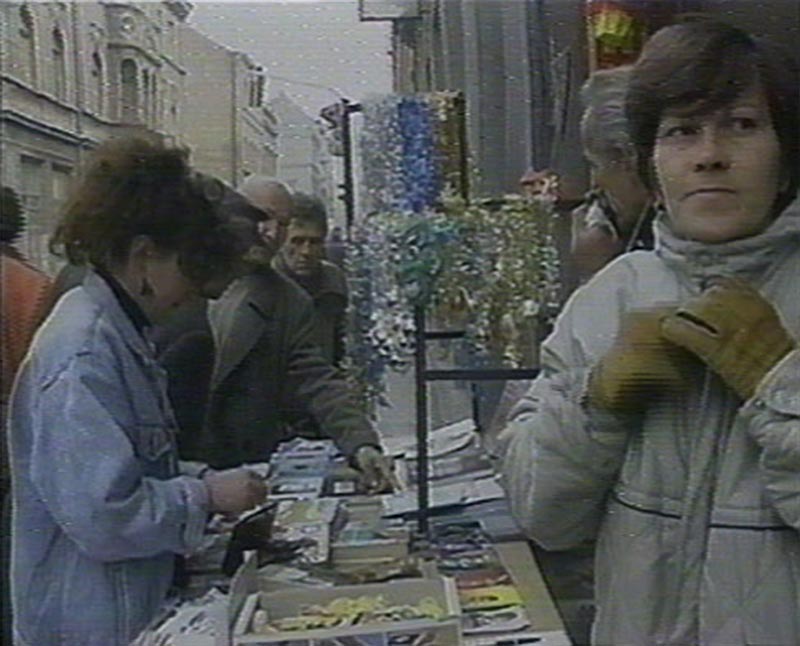
© FAMA Collection - Visual Archives 1992-1996
"Realizing that the power supply to the city was uncertain and that it depended on the aggressors' intentions we got an idea of finding an alternative power supply. This project, the project S-35 supplied power to the city by a 35 kV line. The important thing was that the supply could not be hindered by anyone. It all went underground and all the experts, and there was many from all over the world, could not understand how it was done. But we had promised a TV viewing and one bulb for the New Year celebration. Of course, some people should switch their stoves on and so before New Year 1994/95 we had a test. We started with the system on an experimental basis, the now famous system of supplying each household with 100 kWh per month, or 3.3 kWh per day per household." - Irfan Durmić, Director of the Electric Company
© FAMA Collection; Oral History: 'The Siege of Sarajevo 1992-1996'
Celebrations and holidays brought joy to the citizens of Sarajevo during the four years of the siege and in a way restored the old normality of life. Families, friends and neighbours gathered, met, shared beautiful moments, despite the lack of everything necessary for celebrations. New Year and Santa Claus had a special meaning for children. How important was the acting and pedagogical work with children and young people during the siege and how important was the effort for every child's smile, explained Mladen Jeličić Troko, who performed countless plays for the children of Sarajevo in the costume of Santa Claus.
"A human, a Sarajevan by birth, a Bosnian by choice, an actor, entertainer, presenter, and a culture vulture by orientation."
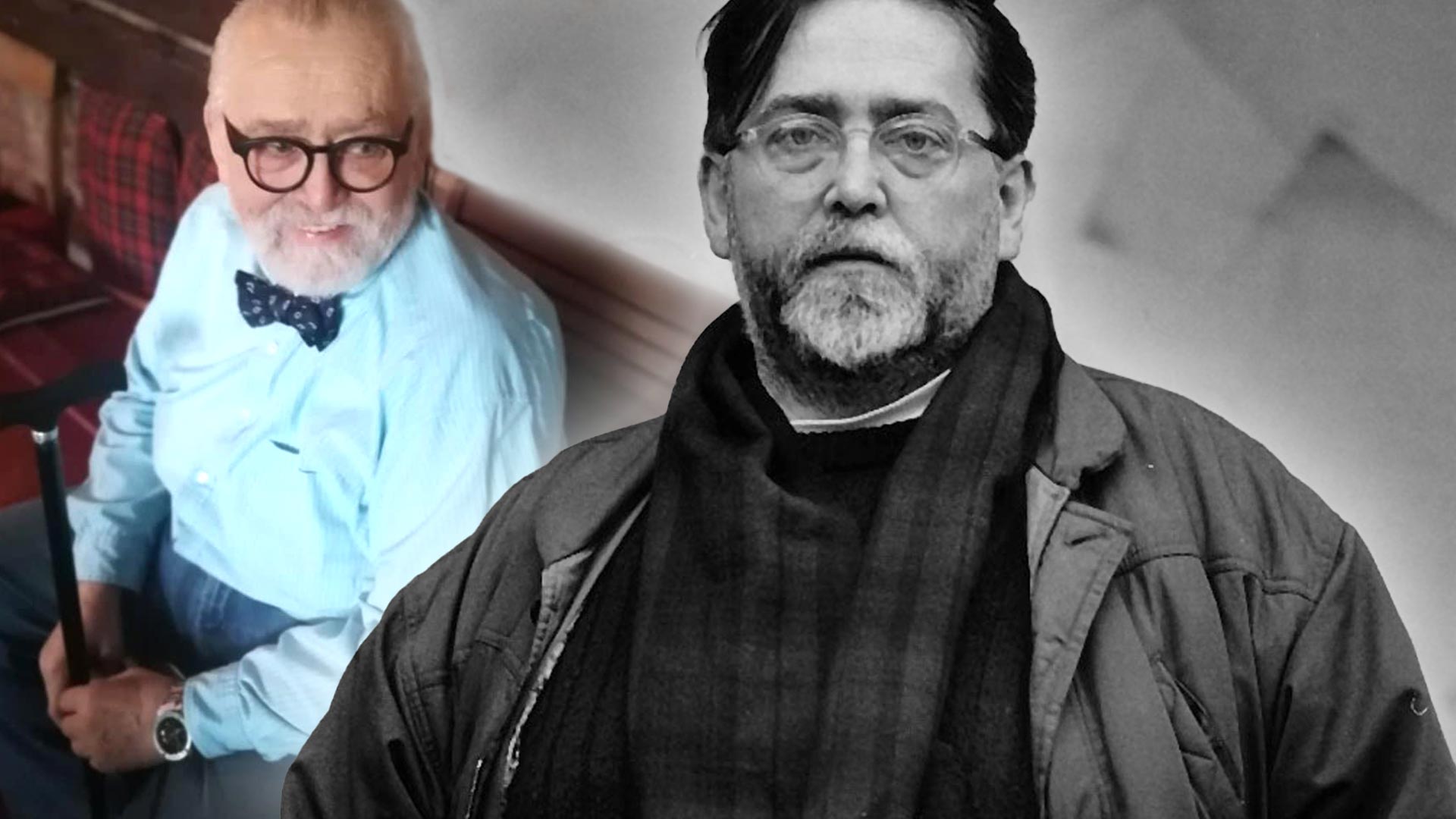
Photo: Mladen Jeličić Troko - Now (personal archive) and Then (© FAMA Collection - Visual Archives 1992-1996 (Milomir Kovačević))
You are remembered by younger generations as a beloved actor who led numerous projects before, during and after the siege, and an actor in numerous plays and TV shows for children. From today's perspective, how do you view the fact that you are remembered by numerous generations of children and young people as an indispensable part of their childhood? Did you understand your mission and role in their upbringing at the time? What motivated you to dedicate yourself to them?
Mladen Jeličić Troko: Many questions in one and they give the opportunity to write an essay, but let's get started. Today, when I am living the last part, the one that is left to me and I have the time and the right to remember and browse through memories (without any excessive modesty), I feel enormous pride. I meet many middle-aged people who thank me for a happy upbringing and wonderful memories from a happy childhood, and the memory of that beautiful period. How can I not be proud? I recently answered questions about my work for the monograph of TV BiH on the occasion of their 80th birthday and we established that during my working life I hosted and participated in sixteen - yes, sixteen - series. It is a huge opus. Of course, I was not aware of its full significance during the work. When I look back today, those are dozens of hours of broadcasted programs, but I have always had an attitude towards that role that fell to me since 1972 at the "Bosna Filma" Studio in Jagomir. "Tell Me, Tell Me" with Jadranka Stojaković. I come from a family where my great-grandfather was a teacher, and after him the entire lineage on my mother's side was in education, my grandmother a teacher, my mother a librarian, my aunt and uncle professors, and even my dad taught at the Secondary Medical School in Sarajevo for a while. I was aware that there is NOTHING that is done for children that does not have an impact on their upbringing. So everything: a song, a joke, a story. Everything, no matter how light and non-binding the content, must contain elements of education and upbringing. When you enter the children's world and their smart, sponge-like absorbent heads, it is like entering a store with the finest glass products. If you are careless and inattentive, you can cause incalculable harm to one of the young viewers, by giving them the wrong information, wrong instructions.
I was aware that there is NOTHING that is done for children that does not have an impact on their upbringing. So everything: a song, a joke, a story. Everything, no matter how light and non-binding the content, must contain elements of education and upbringing. When you enter the children's world and their smart, sponge-like absorbent heads, it is like entering a store with the finest glass products. If you are careless and inattentive, you can cause incalculable harm to one of the young viewers, by giving them the wrong information, wrong instructions.
What motivated you to dedicate yourself to children?
Mladen Jeličić Troko: I guess there are several reasons. One is tradition. In my family, it is a commitment to education, to passing on knowledge and experience to the young. Then of course my "addiction" to youth and young people. Super smart, unspoiled, innocent children, completely open to communication and receiving new information, interacting with them is like moving into the most beautiful fairy tale.
"My daughter who had diabetes was not here in Sarajevo, because I sent her away with two cousins who also left with their parents. Some toys were left behind that were dear to them. Well, I decided to commit some kind of crime against the memories of my family. I gathered those toys and put on my costume. My Santa Claus costume. And I went to the children’s ward at the hospital, where I had agreed to meet a nurse named Fatima, who is a wonderful person. Not only was she a nurse there, but she was the head nurse at that clinic. She was almost more of a mother to those children than simply a nurse. A friend of mine who had a candyshop before the war gave me some candy. And I stuffed all of those things into two plastic garbage bags. And I went to the hospital and made a little New Year’s party for those children. - Mladen Jeličić Troko, Actor
© FAMA Collection; Oral History: 'The Siege of Sarajevo 1992-1996'
In the FAMA Collection in the Oral History 'The Siege of Sarajevo 1992-1996', we have your video statement in which you describe how, in the midst of the siege of the city, you decided to brighten up the New Year for the children who were accommodated in the paediatric ward by dressing up as Santa Claus and throwing them a little party. How and when did you come up with that idea? How did you prepare, where did you find the costume and gifts? Did you sing to them, recite for them? How did the children in the hospital react to your arrival?
Mladen Jeličić Troko: In that recording for FAMA, I referred to one of my visits to the hospital for paediatrics. However, during the aggression and siege of Sarajevo, according to some records, I performed more than 960 plays in shelters, hospitals, schools, buildings, apartments, and in the Youth Theatre cabaret. At the beginning of the aggression, I already had serious experience working with children in the pre-war period. At the beginning of the aggression, I first consulted with Prof. Dr. Slobodan Loga, a psychiatrist, professor emeritus of the Faculty of Medicine of the University of Sarajevo and a full member of the Academy of Sciences and Arts of Bosnia and Herzegovina, about the state of consciousness of children and how to try to help them in the then assumed circumstances of life in Sarajevo. After the consultations, I probably reacted instinctively and started finding gathering places for children and playing interactive plays for them with stories, some of which, in my opinion, were important. About edible wild plants available in the city, about the dangers of mines and unexploded ordnance, about special explosive devices and how to avoid them. There are too many individual stories with an unreal number of anecdotes of those too-smart children.
I had a Santa Claus costume (SC below) (during my life I wore the costume and played SC for 56 years), in the opinion of some from the guild such as Milena Dravić, Minja Subota, Arsen Dedić, Marina Perazić I was considered the most authentic, the best SC in Yugoslavia.
We mostly did performances together. Before the aggression I played my project “Let’s act out a fairy tale”, i.e. we vote which fairy tale we will act out, we divide the roles, I take on the role of the narrator, and the children-audience play the characters. We told stories, recited, sang. Simply, that hour of time we spent together I tried to move us to some non-existent safe place where there is no war, no pain. Sometimes I even managed to bring them sweets that I received from the UNHCR warehouse from Mrs. Maureen Čerkez who led the project to help children.
We told stories, recited, sang. Simply, that hour of time we spent together I tried to move us to some non-existent safe place where there is no war, no pain.
Kako su djeca u bolnici reagirala na Vaš dolazak?
Mladen Jeličić Troko: For the sake of illustration, here is the story written by cameraman, writer and painter Jan Beran Jr., who won the Oscar for special effects in the movie "Aviator":
"Sarajevo, during a dark period, winter 1992... In front of Markale, I meet Troko. We haven't seen each other for a long time, so we're glad we still exist. Come on, says Trole, keep me company, I'm going to the Military Hospital. I'm thinking I could visit a couple of comrades from Hrasno brdo. One of them, Šljivo, is seriously wounded, we've arranged a special room for him, he's lying there with an injured knee in the hospital elevator... Yes, the bed is a bit on the edge, but it's not crowded.
Along the way, we talk about our friends, who is alive, who is dead, and who has left the city. He tells me that Mia is in Zagreb, that she is not well, but just let all this stop and it will be ok... We got to the hospital, he takes me to the second floor, stops in front of the door of the big room, takes something from his pockets, turns around: on his nose is a red ball, on his head is some kind of cap - a clown from of the circus Moira Orfei... I couldn't even find my way around, and he disappeared into the hospital room... A burst of children's laughter, giggles, happy chatter... I dropped in to see the party.
I've been through a lot in my life, I'm not afraid of anything in the world, neither God nor people, but the scene I saw then still sometimes creeps into my dreams and then I wake up in a sweat... A large hospital room, full, packed, of wounded children, without arms, legs, eyes. Bloody bandages, the smell of death and chemicals. I've never seen more sadness in one place.
In front of them, in the little space that is not filled with bunk beds: Troko, Mladen Jeličić, my friend, the bravest man I know, alone in front of a huge wall of tragedy, fooling around and making faces, cheering up those poor little human beings in the Sarajevo Military Hospital, while his own child is seriously ill in Zagreb. Jan Beran”
After the play, everyone got a kiwi except for one. In desperation, I offered the boy 1 kg of powdered milk, a bag of Cedevita and a box of biscuits. The boy said in tears, "Troko, I would like the other children to have ' a HAIRY POTATO'." Even today, my stomach hurts when I think about that moment, and I saw a lot of bloody and ugly things.
It is known that at that time you performed numerous plays and recorded TV shows for children. Can you tell us more about it? What activities did you have during the siege? What events from the time of the siege do you particularly remember?
Mladen Jeličić Troko: Memory is a tricky category; I know what is written down and what exists in the archives. In April 1992, Slaviša Saša Mašić, director, and Maja Anzulović, editor of children's and educational programs at RTV BiH, came to get me to work on the TV school project, because schools were closed, and we started with 30 episodes, the same number of letters in the alphabet. At the same time, we also made 54 documentary shows about children and their activities in the besieged city, as well as about the suffering, the dead, and the wounded. Plus a lot of programs, right after the war. I remember another interesting project that Ante Hrkač, the best puppeteer, and I and my team did to mark the 50th anniversary of the UN. We made an interactive show to raise awareness about mines and unexploded ordnance, as well as various explosive devices for special warfare. We toured almost the entire BiH for children of all nations. In cooperation with Rusmir Hanić and Muhamed Muminović, we wrote several manuals and a textbook on the dangers of various types of weapons. Mostly my head only keeps good memories, but of course I also remember others, sometimes terrible, sometimes painful. There is one that has remained in my memory as very sad. I performed a play in the Youth Theatre Cabaret. At these "permanent" performances, I tried to encourage some of the foreign military units to bring something for the children, sweets, fruit, juices. There was a complete shortage in the city. The Egyptians often brought us various products, sometimes they even made cake for the children. On this occasion, they brought 62 kiwis. Before the start of the play, I counted the children in the hall and there were 61. Great. But during the play, I didn't see, two more children came... After the play, everyone got a kiwi except for one. In desperation, I offered the boy 1 kg of powdered milk, a bag of Cedevita and a box of biscuits. The boy said in tears, "Troko, I would like the other children to have ' a HAIRY POTATO'." Even today, my stomach hurts when I think about that moment, and I saw a lot of bloody and ugly things.
Of course, we were aware of the importance and need for what we were doing, and those who were experts in that field and to whom we turned for advice warned us about it. Any activity in the field of culture is always important and always brings improvement. What I did during the aggression and the war I called “separate reality”. I tried to draw the children into some imaginary world in those moments, to make that time different for them from the current reality.
Do you think that your performances and activities for children were events that, like all other "impossible" celebrations, performances and events in the field of culture, were intended to give children hope that there is a tomorrow and that play and laughter do not stop just because circumstances have changed and because everything has become "impossible"? Were you aware at the time of the fact that you were not only bringing joy and play into the lives of children, but that you were giving them the strength to survive and be children in such difficult days and years?
Mladen Jeličić Troko: Of course, we were aware of the importance and need for what we were doing, and those who were experts in that field and to whom we turned for advice warned us about it. Any activity in the field of culture is always important and always brings improvement. What I did during the aggression and the war I called “separate reality”. I tried to draw the children into some imaginary world in those moments, to make that time different for them from the current reality. I cannot claim that about giving them strength, but there is no doubt that we were helpful and important to them. On one occasion after the war, I found myself at the same table with General Mustafa Hajrulahović Talian. His words spoken to me at that time were the most significant recognition to us who worked for children. He said: “Troko, you are not aware of the great contribution you have made to BiH and to the mental health of children, Maja (note: Anzulović), Saša (note: Mašić) and you have maintained normality among children in BiH.” In fact, until that moment I hadn't thought that children across BiH could watch us on TV, there was no electricity in Sarajevo and we weren't even remotely as popular as in the rest of the country.
In the FAMA archive we have your interview, which was published in LIFE magazine in 1995. One of the questions was: What would you call this period of your life? Your answer was: Introduction to the reign of evil (hell) and entry into purgatory. How would you answer this question today, what would you call that period of your life (the siege of Sarajevo)?
Mladen Jeličić Troko: I don't think I would change my answer. I would only add that the acquaintance with evil occurs in some other and somewhat less bloody forms. As for purgatory-post-war-period, it dragged on like a hungry year.
Describe your typical day during the siege of the city?
Mladen Jeličić Troko: Every day I tried to visit the paediatrics, bring water, try to find a piece of bread for the family, find some food, then gardening, we have a small piece of yard where during the siege there was a garden that meant a lot to us, some Swiss chard, lettuce, beets, onions, some tomatoes. I was constantly in contact with the Koševo clinic and took care of diabetic children, provided insulin, sometimes food. Carried packets of food for diabetic children. I found that almost all diabetic children live on the top floor of the building where they live. Then a visit to an old couple in the neighbourhood in Bjelave, and to a very old lady who was a friend of my grandmother. Some activities I would rather not write about. Mostly that's it, during the warmer evenings sitting in the dark with the neighbours in the garden.
Looking back from today's distance, would you have done anything differently then?
Mladen Jeličić Troko: It's hard to say, I'm a man who makes decisions impulsively, I did everything I thought was right and helpful to my fellow citizens.