


The Siege of Sarajevo 1992-1996
“Survival Art Museum as a knowledge transfer modul”
Macro Story #24: Survival Art Museum

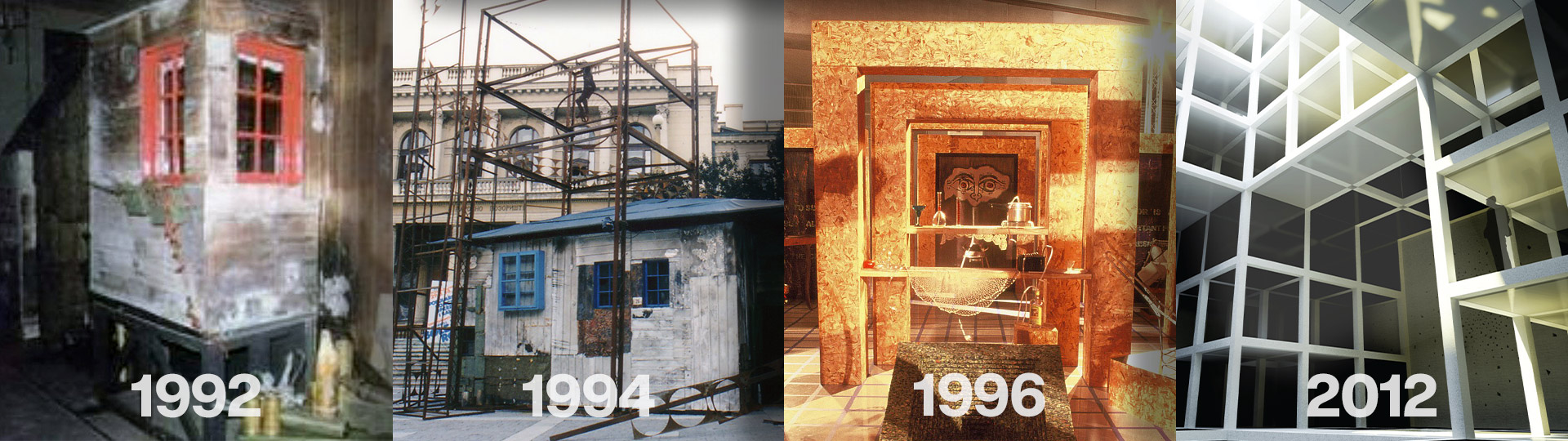
1992-1994-1996-2012-2026
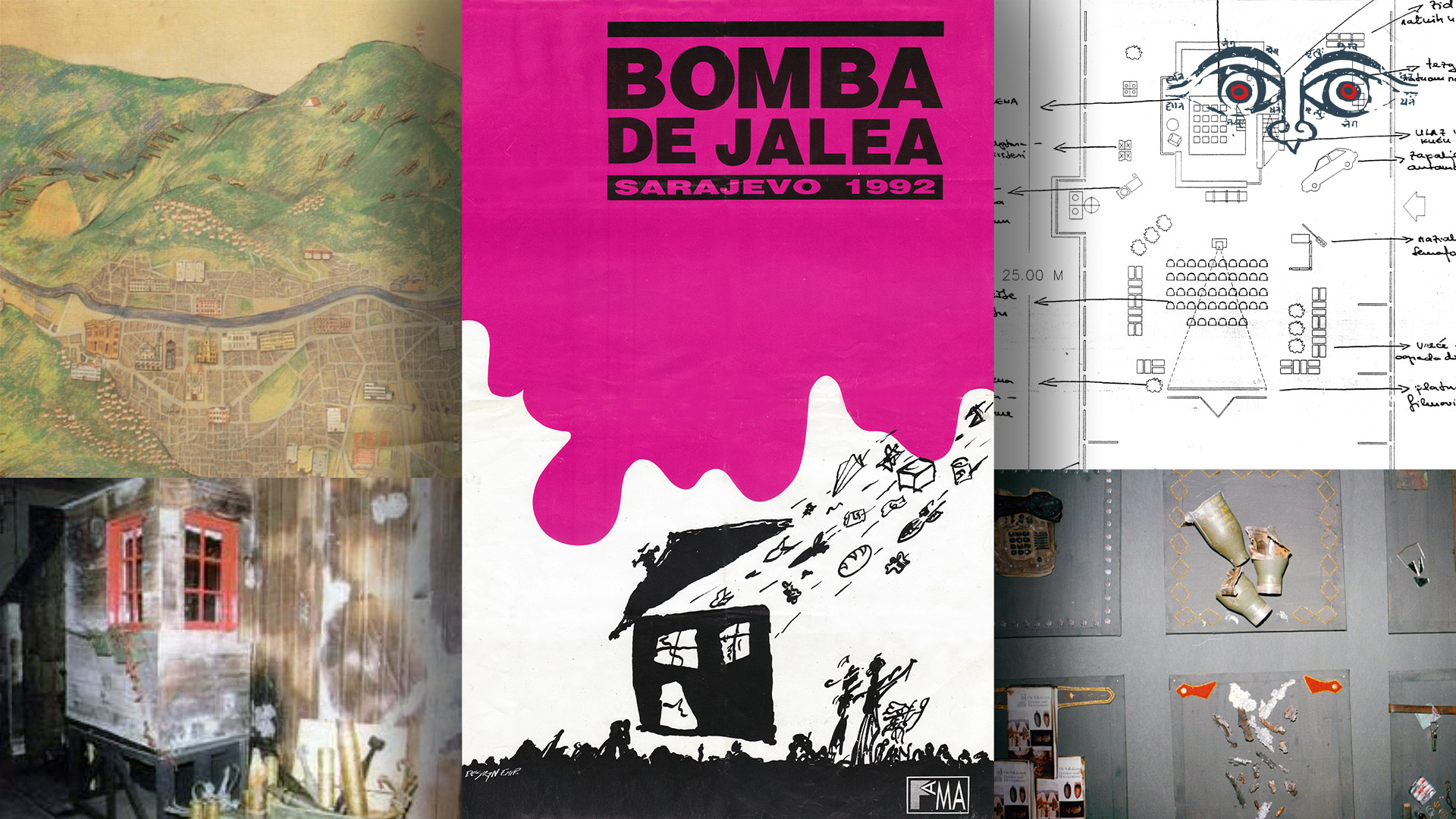
On April 5, 1992 Sarajevo, the capital of the Republic of Bosnia and Herzegovina, was attacked. The city which lies in the valley of the Miljacka river is surrounded by mountains on which 260 tanks, 120 mortars and many weapons of smaller calibre were placed – all pointing at the city. On May 2, 1992 the city was completely blockaded.
Every day the city was hit by some 4,000 shells – targeting, among others: hospitals, schools, mosques, churches, synagogues, maternity hospitals, libraries, museums, and the places where the citizens stood in lines for bread and water. The aggressor destroyed the Post Office and the city was left without telephones, its water, gas and electricity supply was cut. The food supply was fast disappearing. The city was surrounded by snipers in the hills who at any time and place could hit their moving and fixed targets. They were not visible to the citizens of Sarajevo.
Yet, amidst all this destruction and suffering, Sarajevans have shown to the world the power of survival as they continued to work, create, and maintain their cosmopolitan principles amidst all the odds. As such, Sarajevo became a powerful symbol and a lesson for future generations.
Sarajevo 1992
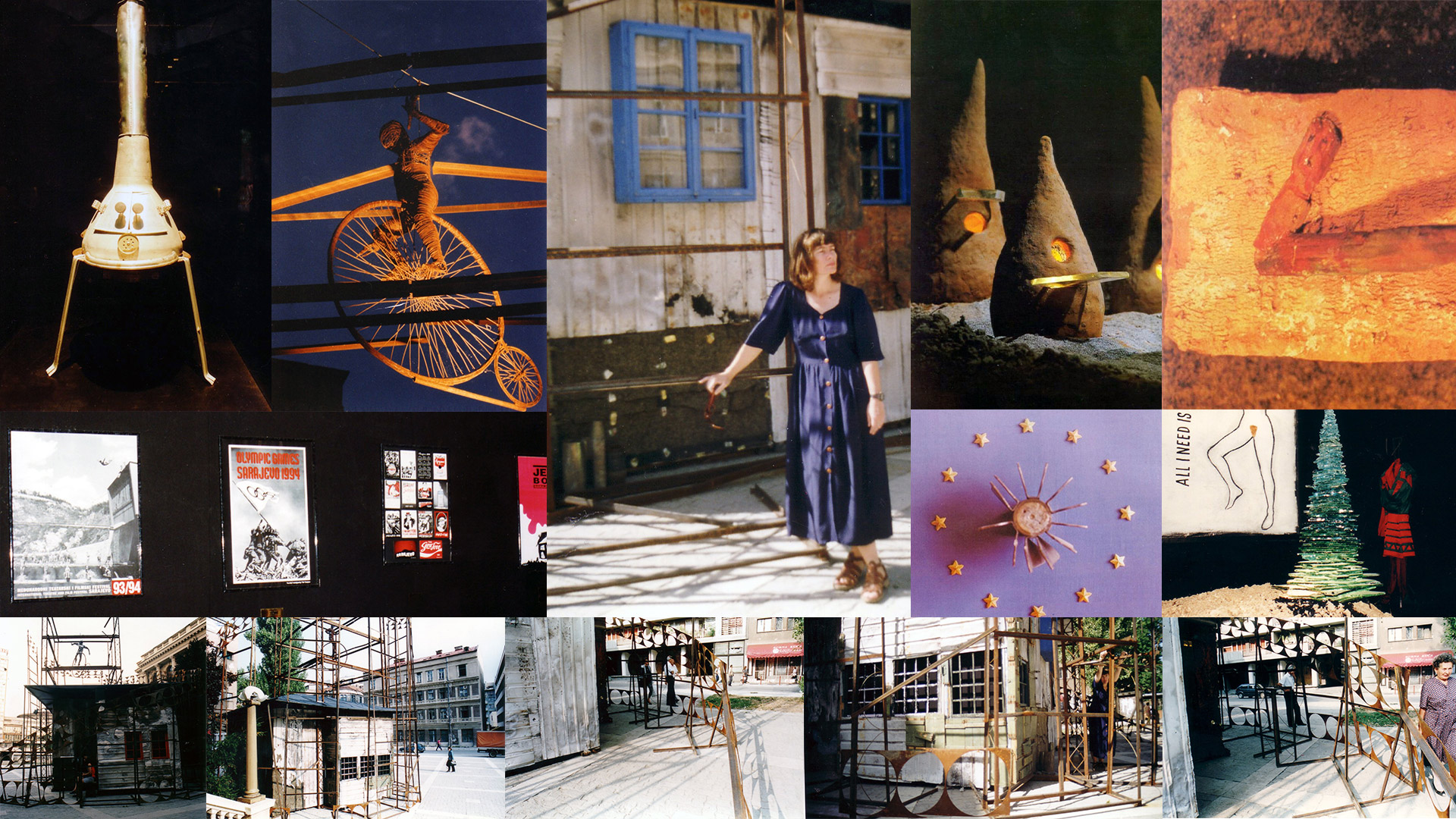
In the summer of 1992, amidst the general destruction, a structure nevertheless emerged in the besieged Sarajevo – the structure of the Bosnian House, later called the Survival Art Museum (SAM). Although we had no idea at the time that we were starting to build a siege museum, because our dominant driving force was FREEDOM FROM FEAR, with this project FAMA began to achieve its ultimate goal: to collect, preserve, contextualize, package and present to the rest of the world the phenomenon of the Siege.
Little did we know as we built in the summer of 1992, confronting the fear of terror, that the future Siege Museum (FAMA Collection) would represent a truly unique repository of human knowledge – human ingenuity, creativity and intelligence expressed in the midst of an urban post-cataclysm. It would be a legacy of recordings of faces and voices that shaped resistance to the longest siege in modern human history. Here is how the story unfolded that summer of 1992:
architect, constructor of the "Bosnian House"
Idea
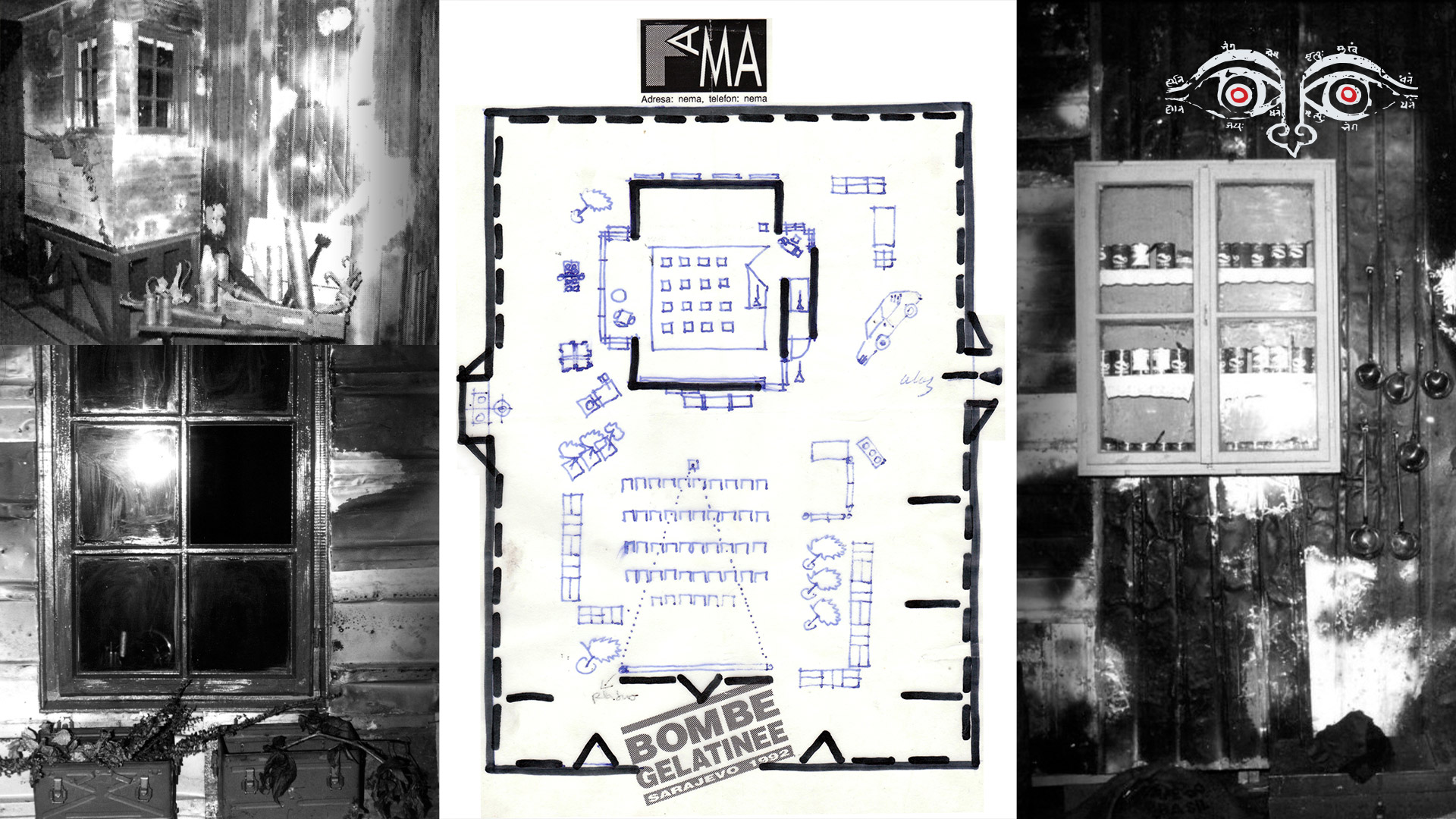
"The idea of building a Bosnian house that Suada came to me with one June morning, then, just as it does today after more than 30 years, seems surreal and completely crazy. I remember that Suada was so convincing then in explaining her idea, claiming that right now, when everything around us is collapsing, we need to build. Her idea was to make a house that resembles a typical Bosnian house from our neighbourhoods, in real size, and to build it from materials from shelled and burned Sarajevo houses, in order to create a theatre in that house, a stage for various artistic activities. Although surprised by Suada's proposal, I agreed without hesitation and without unnecessary questions. My first thought was that a work occupation was salvation for us to preserve our sanity and the only possible way of our resistance to this unimaginable destruction in the midst of which we found ourselves."
Floor plan
"The exterior of the house was to be a 'real' Bosnian house in terms of composition and volume, with all the characteristic elements, veranda (doksat), hipped roof, small windows on the ledge of which there were flowerpots with blooming geraniums, and in the interior, atypical for Bosnian houses, a unique space without walls.
At first glance, due to the chosen type of building, it seems to be a romantic reminiscence of our Bosnian house, which is synonymous with peaceful, harmonious family life, but at the same time it is a chilling testimony of destruction, because the material used to build this 'new' Bosnian house are the remains of demolished and burned Sarajevo houses, with numerous scars from shells, shrapnel and arson."
Location
"Since the dimensions of this house-theatre were ambitiously conceived, as far as I remember it had between 50 and 60 m2 of surface area, it was necessary to find a 'plot' for its construction. Of course, at a time when hundreds of shells were falling on the city every day, it was not possible to carry out this undertaking in an open space. Since the Scouts’ House is in my immediate neighbourhood, on Mejtaš, it occurred to us that the large hall of the Scouts' House would be an excellent 'location' for our house. And from the moment we came up with this life-saving idea, the concretization of the idea began."
Material
"The material for the construction of the house, the wall coverings, the windows, the doors, all of this was brought from various locations, and mostly from the abandoned and destroyed complex of the Marshal Tito barracks (which is practically in the city centre and extremely exposed to enemy positions on the slopes of Trebević, from where there is constant shooting).
Of course, it was extremely risky, given the position of the abandoned Marshal Tito barracks, to enter that complex, remove burnt sheet metal from the military barracks, remove doors, windows... to drag - even though they were empty - heavy wooden military crates for weapons and ammunition, load them into some wrecked Caddy and often under sniper fire, driving at top speed from Pofalići, transport all that to Mejtaš. Whatever they brought, I tried to use and apply creatively, because I could not choose, but work with what I have, aware of the fact that what I have is worth its weight in gold because of the courage invested to bring that material."
Construction process
"I don't remember exactly how long we built the house, a month, two. I only remember that it was summer, that the days were long, that it was hot, that there was no water or electricity, that the city was shelled almost every day, that sirens were blaring non-stop, that we hardly paid attention to the sound of snipers anymore and that we often sat in the sun on the south side of the Scouts' House, as ideal sniper targets, and longed for the sea! Suada used to dream out loud about the sea and Halid Patković, an extremely nice man and a very skilled painter, so that our wish would be fulfilled, painted in the Bosnian house, across an entire wall - the back wall, in a large dimension, I think somewhere around 4.5 x 2 m - the endless open sea. We called the painting 'Longing for the Sea'!"
Opening
"When we finished building the house, the actors who were gathered around this project - Amina Begović, Mirza Halilović, Jesenko Selimović, Žan Marolt and others - and who also came to the Scouts' House almost every day, worked with Suada on a performance about the art of survival, which was an integral part of the 'Jelly Bomb' project, and was shown when we officially opened the doors of the Bosnian house - the theatre house to numerous guests, friends, family members of the participants, and foreign journalists, many of whom were in the city during that first summer of war. The performance was excellent, the actors motivated, the audience delighted with them, but also with the unexpected building and the space inside it. All of us, both participants and guests, were in a special mood, happy and excited, and at the same time, looking at the result, in disbelief that we had succeeded.
The Bosnian House, as it was built then, served its intended function for a short time, and was dismantled sometime around the end of the summer of 1992."
Ognjenka's text was taken from the Macro Story #17 - BUILDING AND INNOVATION
actress, presenter, adviser
Performance
"In the first months of the siege of Sarajevo and the aggression against Bosnia and Herzegovina, something that would later be called the Miracle of Cultural Resistance began to happen. For us, who lived in Sarajevo, it was no Miracle at all, but just a way of life that chose you. While so many shells were falling on the city, that it was already starting to be counted in the thousands, fired by an invisible enemy from the hills, trying to demolish everything that could be demolished and kill everything that moved, Suada Kapić decided to start building. In the hall of the former "Scouts' House", a team of artists built a real Bosnian house from materials found on demolished sites. In that space, actors, artists, and intellectuals of the city gathered around a project also called "Jelly Bomb". The name itself indicates that the world calmly watched while a city and a country in the heart of Europe were destroyed, and instead of stopping it, they washed their conscience by sending us lunch packages, so that at least we don't die completely hungry. In some packages, we actually received jelly in a bag, so that was also an association. For us participants in that project, it was more than anything a sign that they can destroy houses and people, but they cannot destroy our spirit."
Sarajevo 1994
Open space
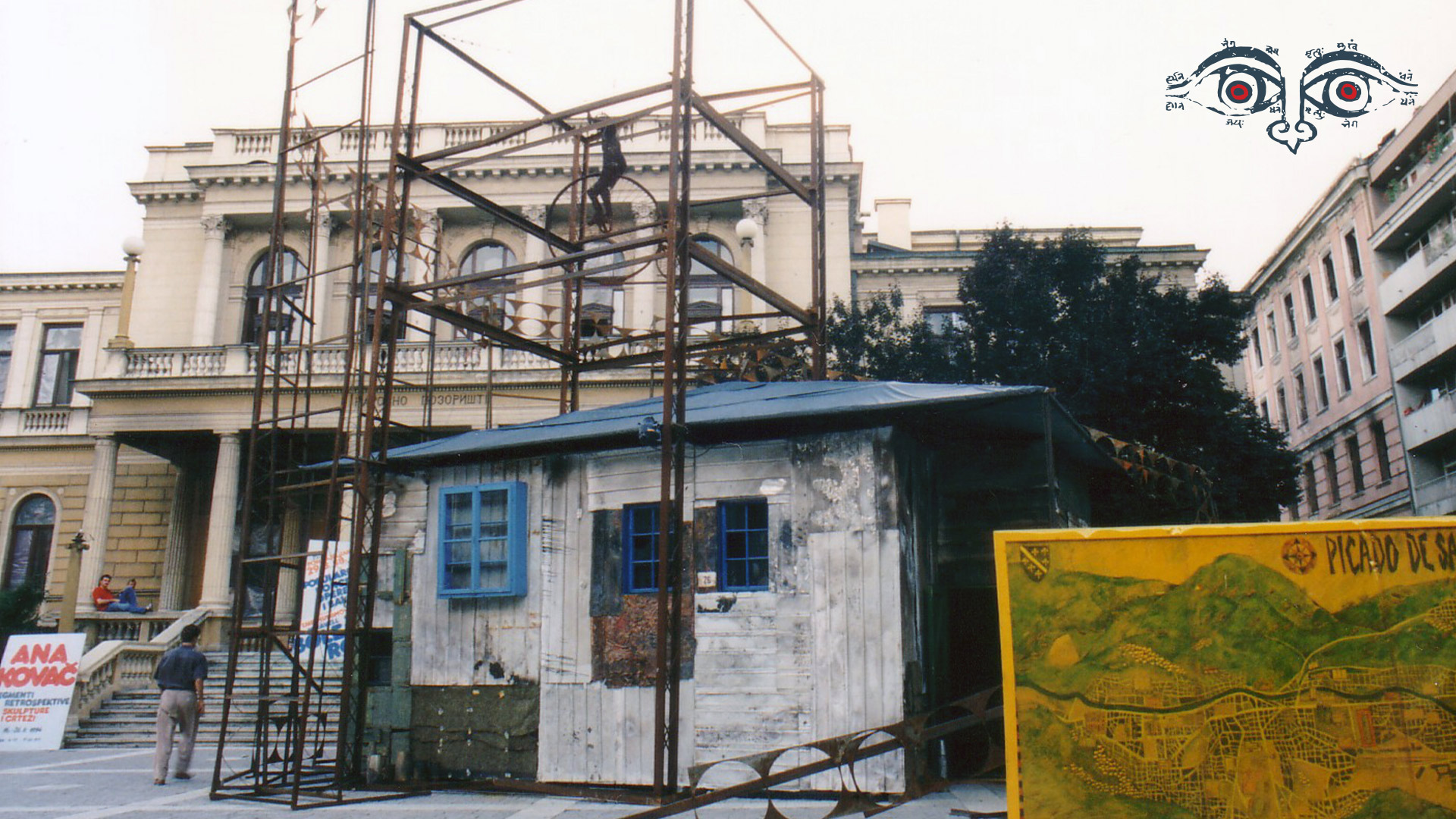
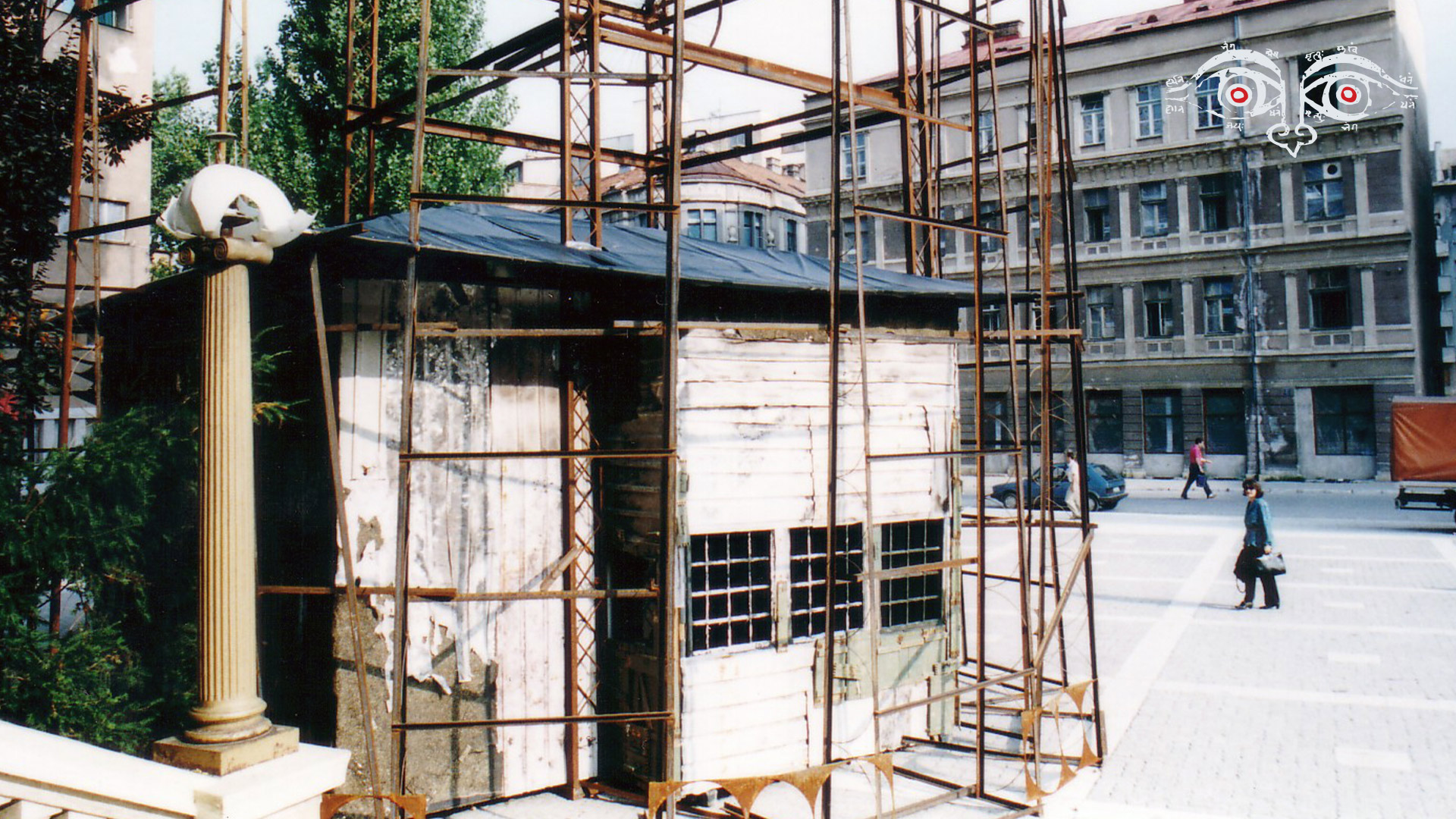
The citizens of Sarajevo were locked up, and they just ran to cross the streets of the city and hid behind containers. In the summer of 1994, during the unstable truce, FAMA conquered part of the open space in front of the National Theatre and installed parts of the Bosnian House 92. and in the interior, we exhibited theatre costumes, posters, jewellery and sculptures created during the siege, now as part of a more massive cultural resistance to terror. Citizens came, looked around and commented, it looked like it was a small trip to normality.
Each Sarajevan had his or her own invention and philosophy of survival ("We were all inventors of our personal survival technique"). We established a huge data base on this subject, whether it is mental or existential survival (which went together). Examples: 'DEFIANCE as resistance to terror and mental survival', 'Not thinking about tomorrow', 'The will to live', 'Good will', 'Isolation from the media which can undermine your motivation', 'Doing useful things', 'Don’t whine, this consumes energy', 'The little stove made from a can of beans with a metal straw for a pipe', 'The team that guaranteed survival - my father, brother, me', 'Black barrels to hold heat and warm up rainwater for showering', 'The laundry is boiled in a black plastic bag', 'One shoe for cooking beans', 'Cooking batteries', 'Taking a bath with half a gallon of water', 'Hand fan out of tin', 'Never throw out anything you can use!'…
actress, presenter, adviser
"What started as a performance in 1992 turned into the Siege Museum, and in 1994 the house, now as an installation, was placed in front of the Sarajevo National Theatre and thus began its new life."
architect
"When an exhibition was set up in the square in front of the National Theatre, today's Susan Sontag Square, back in 1995, which included some artifacts that spoke of the creativity and skill of the people of Sarajevo to survive, the Bosnian House was only exhibited in outline, set up as a smaller-scale construction, serving more as a reminiscence of the house we built in the summer of 1992. But regardless of that improvisation - because even in 1995 (Sarajevo was still under siege, the war was still going on), it was impossible to build this house in an open space, moreover, identical to the one we built in the summer of 1992 in the Scouts' House - it is valuable that its name and the very idea of the house were in a way the seed from which the idea of the Survival Art Museum was born."
Tokyo Big Sight 1996
Knowledge transfer
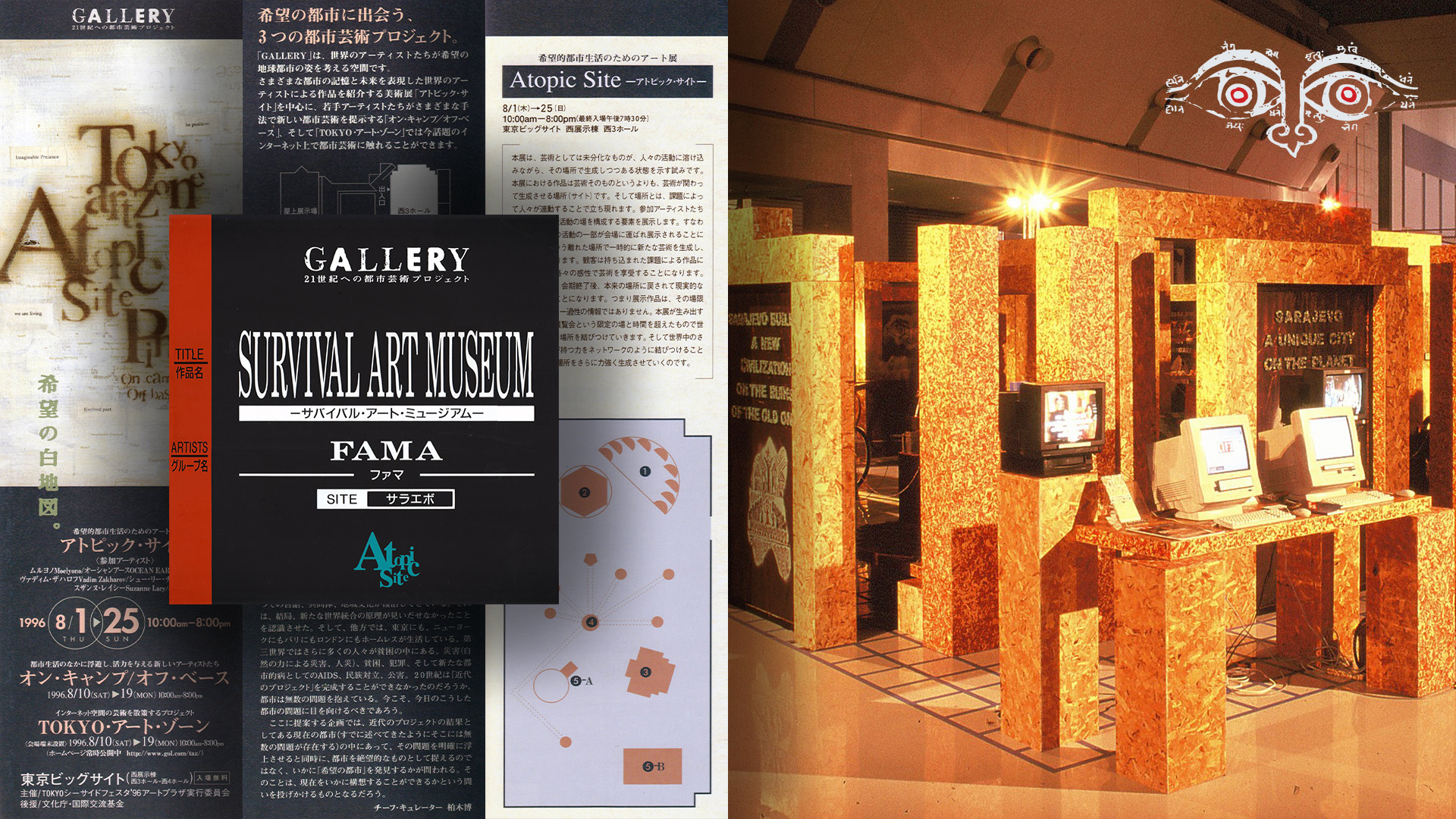
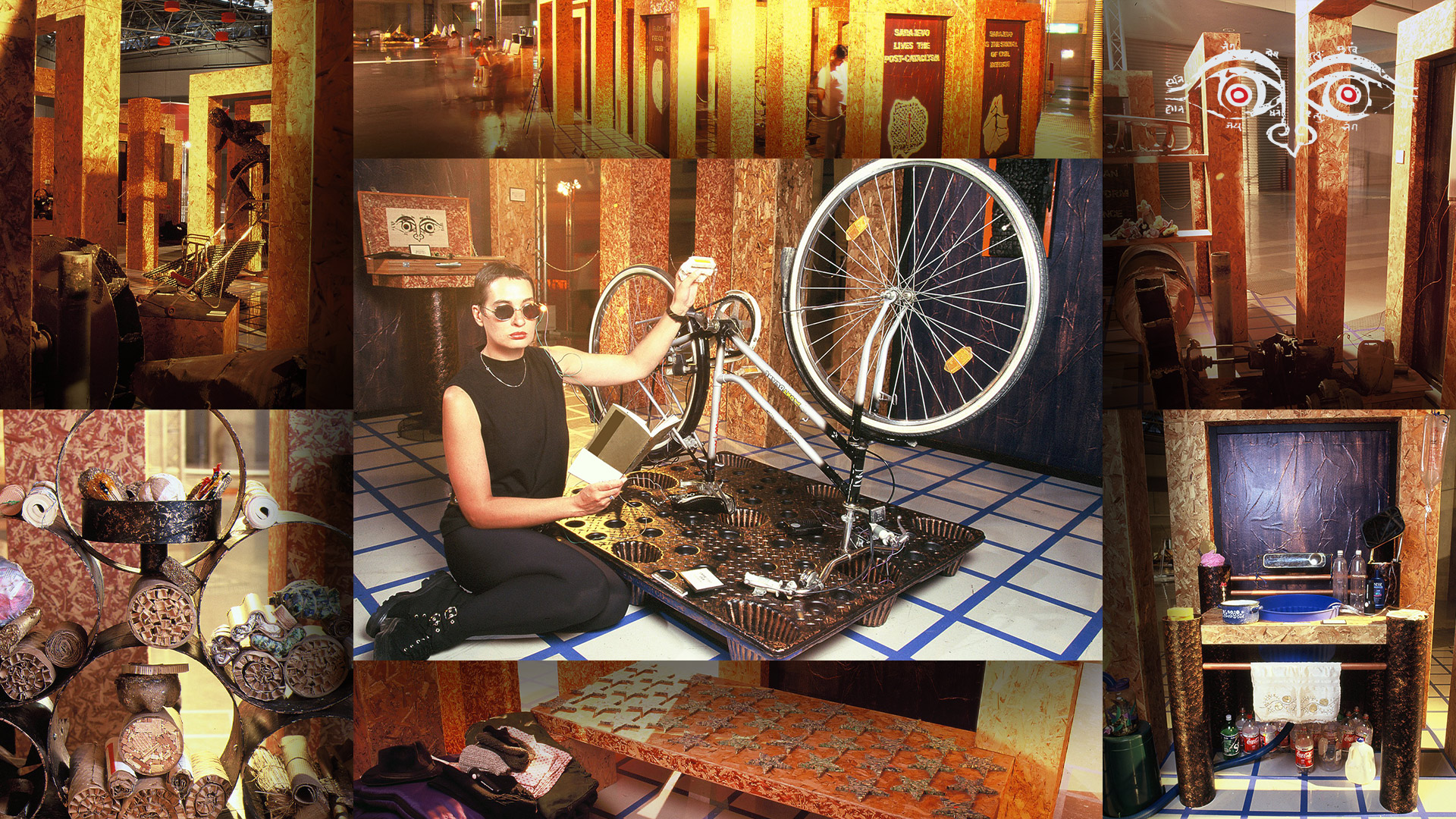
It was only in 1996, after the blockade of the city, that the exhibition was able to cross the physical borders, and it presented its concept and FAMA collection in Tokyo. With a million visitors during three months, numerous publications, essays, videos, TV shows, school classes, lectures at universities, interviews were published. FAMA transmitted knowledge that was unknown and unrecorded in modern history until then, and will be used when needed.
P3 art and environment, producer of the Survival Art Museum at Tokyo Big Sight
"The curators asked FAMA to present the survival of Sarajevo in this exhibition.
In the city under armed siege, with its water, gas, and electricity networks destroyed, everything was inevitably conserved and reused. Even when driven to the brink, they displayed remarkable resourcefulness, mutual aid, and a sense of dignity in confronting overwhelming violence. This was a way of being human that they masterfully brought to life as an exhibition. Thus, the exhibition became a styled city distilled from the essence of survival. On weekends, an actor Amina, from the Sarajevo National Theatre, dressed in FAMA-recommended survival suits, embodied the spirit of the city and led guided tours.
After dropping them off at their lodging from the airport—a 15-minute walk from the nearest station at dusk—I was completely exhausted. Unbelievably, on the very day we started setting up the installation, I couldn't even manage to pick them up. Yet they arrived at the venue, which took an hour and a half to reach by transferring trains, right on time.
In Tokyo back then, where there were hardly any English signs and certainly no Google Maps, they did it all without anyone's help.
I came to understand that the Sarajevans are those sent into this world as models for how people survive beyond all calamities in every sense."
Knowledge transfer Sarajevo-Tokyo
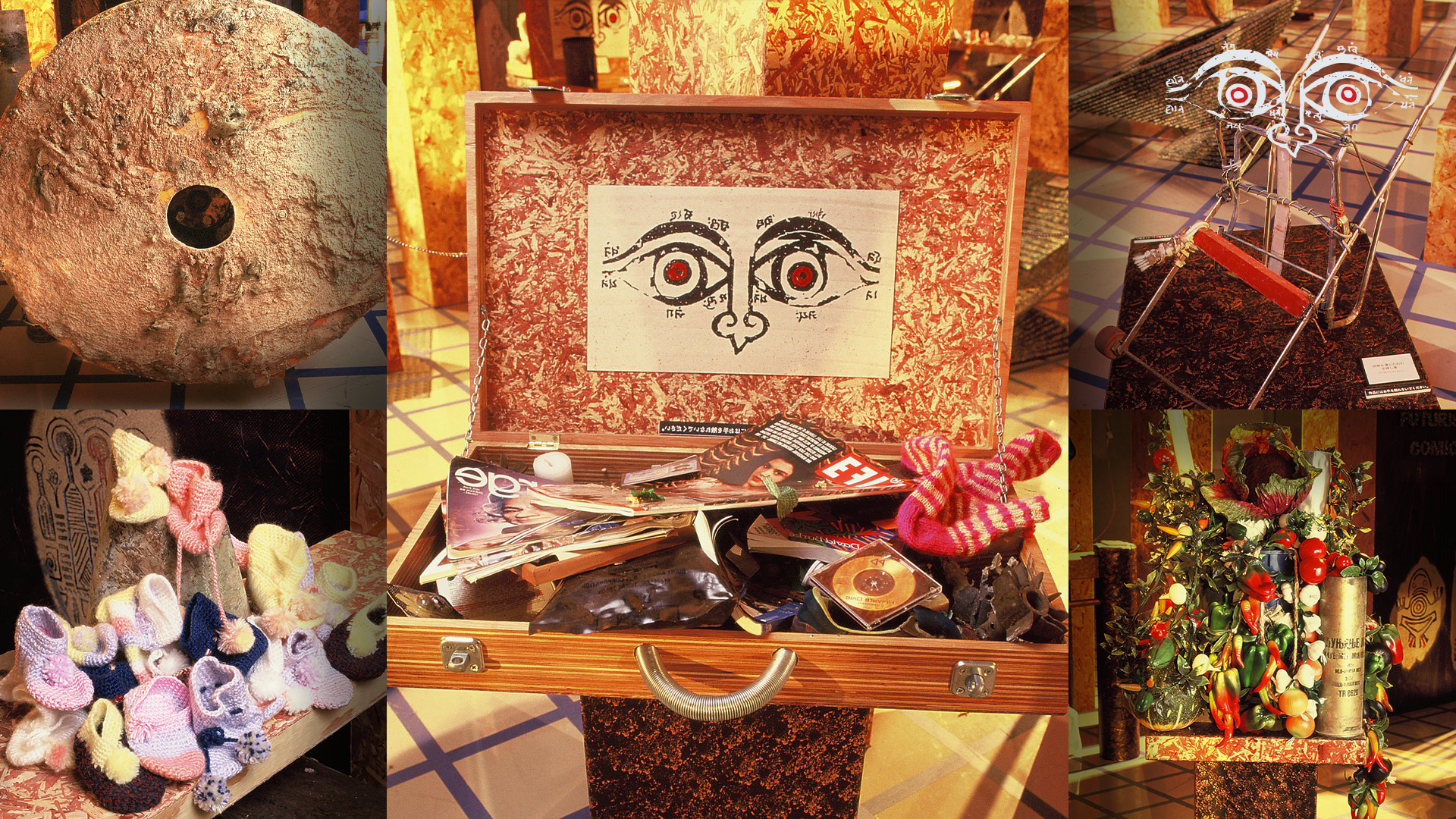
"Sarajevo experience has shown that when structures of our modern lives collapse, all it remains is the ingenuity of the citizens to use their mind when facing something 'New', as they stood on the ruins of the 'Old.' In the process, citizens have discovered new basic civilization elements. Recycling and work became the law of survival. Whilst, the creativity the very foundation of sanity. This capacity to adapt to the consequences of such catastrophe may be traced to ancient survival mechanism that enables the human race to continually evolve as it faces ever more risks. It is sometimes called a 'post-traumatic growth' - whereby external disasters may shake us, but they can also make us more resilient and equally determined not to give up. The Museum aims to become a homage to human experience and ingenuity that was exhibited in impossible conditions as a powerful lesson and as a symbol for rest of the world."
actress, presenter, advisor
"In 1996, the Siege Museum was invited to a large, world exhibition to Tokyo. Exhibits from Sarajevo that were used to survive the war and the siege were being transported to the exhibition. I was, again, lucky to be a part of this important project. A new house was built, in which things that meant survival were placed. Canisters, an improvised stove for heating, a gas burner, a bicycle for generating electricity, a cart for transporting everything... My task was to guide the audience through the museum and explain how we came up with ideas to create what we don't have and how a day was spent without the basic means of living, electricity, gas, food, water. And how, despite all that, it is possible to survive, thanks to dexterity and innovation. In the course of a month, with two presentations per day, we had a million visitors. After each presentation, people stopped me, asked additional questions, touched by our story, some even cried, although we, without any pathos, talked about everything rationally. It was strange to be in Tokyo, where every street consumes more electricity than the entire city of Sarajevo used during the siege. I wondered if people, in that world of technique and technology, could understand what it was like to be taken back to the Middle Ages. They understood and wondered if they could live like that. Today, there are many cities in the world that are living on the edge of survival, and I just wish there were as few museums like this as possible."
Knowledge transfer Sarajevo-Tokyo
"As uncertainties of 21st century risk society are spreading across the globe, we are confronted with difficult questions and choices, and very few answers and options. When looking from this perspective, the experience of Sarajevo Siege highlights capacity of human mind, body and soul to respond and to survive a major urban cataclysmic event and defy terror. Suddenly, terms like recycling, adaptation to change, freedom from fear are trending high on global agenda – even though they were tried and tested some 20 years ago by Sarajevans themselves. As such, the Museum is in a position to bridge the gap between fear and hope, and between uncertainty and opportunity by advancing its unique collection and educational model for the benefit of humanity."
Sarajevo 2012
The FAMA authors worked diligently to preserve the memory and integrity of the siege phenomenon from as far back as 1992, with the aim of creating a permanent "Siege of Sarajevo Museum".
The aim
The aim of the museum setting was to present the story of the siege in the light of contemporary events, obstacles, fears and aspirations by mapping facts, evidence, causes and consequences - offering educational material for facing the challenges of the 21st century. The purpose of the Museum is to, as such, for the benefit of the global public, become a symbol and monument for the Human Mind - Achievements - Survival - Creativity - Ingenuity that the citizens of Sarajevo showed during four years of terror at all levels. This project is based on evidence, with the help of which we can, through the transfer of knowledge, equip individuals to respond to the challenges of the risky society of the 21st century, teaching them how to find meaning in the art of living, which is today's new normal that needs to be transferred and used.
Thematic units
A core of the Museum - comprised out of 60 individually crafted Thematic Units (boxes), symbolically representing a particular Level/Layer of the Siege experience. Each unit, will house a particular object, a story, an interactive content, or it will provide interaction with a particular topic/theme – exposing invisible links and unique 'Survival Tip' for the future. Although, each unit can function in its own right, combined together, they will form a 'Full-Picture' of what it meant to be under the siege. In the process, this labyrinth of different experiences will, in a way, re-create the urban setting as visitors will move through the tunnel, secret passages and along protection elements. At the end, when all the units and corners were explored in
their individual context, the user will climb to the Platform (symbolically depicting the view from the hills) in order to grasp the full-picture, by gazing over the Collection below him. Only then, can one even attempt to grasp the scale and scope of the explored phenomenon by observing its multi-layers in one snap-shot.
The factor of surprise
The 'Factor-of-Surprise' will be maintained throughout the Collection, resembling the true nature of the Siege, as such, each time a Visitor opens the door to the unit or ends up in a certain area of the Museum, he will not know what is waiting for him behind the next door/corner. Whether, he will be able to learn how to make French fries without potato, how to train for a marathon under a sniper fire, how to reflect on mental and cultural survival, or how to operate under a candle light will make the whole experience so much more valuable and interactive. By using a specially designed mobile phone application, the visitor will be able to access additional data and information on every element of the Collection by deploying its augumented reality feature.
Interaction
By mixing 'Human-Touch' (a stove made out of traffic light) with 'High-Tech' (a touch screen with 3D animation) we will allow the visitor to observe the artifact, engage with information, and learn how to apply the survival tips in its own form of adaptation to changes in our contemporary societies. By interacting with content, the Visitor will follow the chronology of the siege; explore its causes and consequences (oral history); experience, for a moment, as what it means to be 'besieged'; and reflect on life & death. Whilst on a practical level, the visitor will learn how to: find water where there is no water; generate light without electricity; materialise heating when there is no fuel; listen to the music by riding one’s own bicycle; plant a survival gardens with vegetables; or design fashion creations from UNHCR protective plastic foil and stage a fashion show.
The architectural idea of the Sarajevo Siege Museum: Between the unit and the whole
It looked like it wasn't going to be an imaginary museum when we first presented the concept and architectural solution to the public at the promised location.
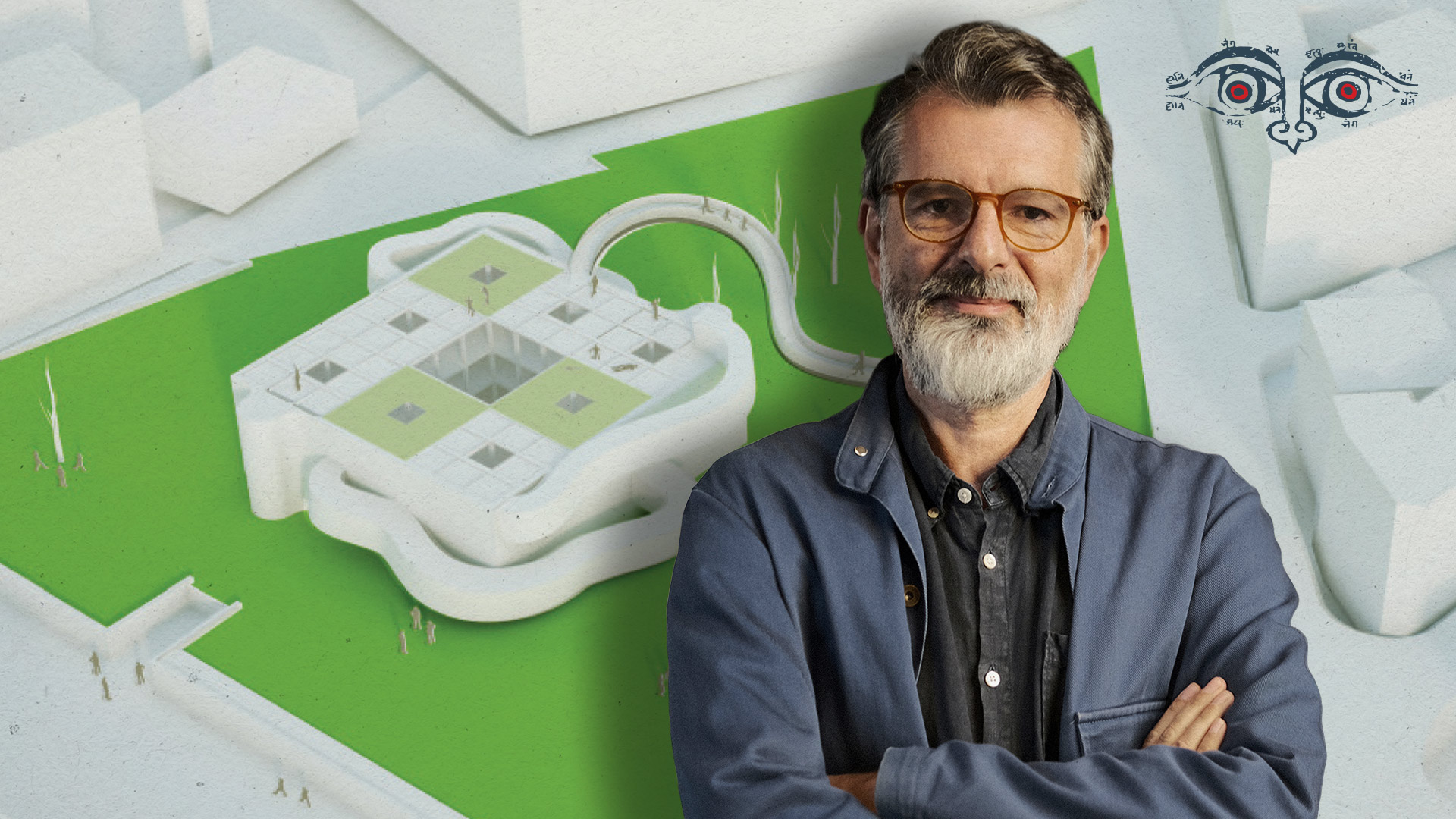
Architectural conceptual design: STUDIO ZEC + ahA + FILTER
leading architect of the museum project
"When we started thinking about the Siege of Sarajevo Museum, also known as "The Art of Survival 1992-1996", we were faced with perhaps the most difficult task of contemporary museology: how to spatially articulate an experience that is both deeply personal and collectively traumatic? How to design a framework for a memory that is both fragment and whole, individual and collective, rational and irrational?
In the work of our team – Studio Zec + ahA + Filter – we started from the fundamental paradox of the war in Bosnia and Herzegovina: while propaganda built a story about collective identities, ethnic groups and common enemies, the reality of the siege was always experienced "on one's own skin" – in a hungry stomach, frozen hands, a fear that is unique and untransferable. Every inhabitant of Sarajevo experienced the same siege, but each in their own way. Every house, every family, everybody remembers a different version of the same 1425 days.
This project fits into the broader context of contemporary museum architecture, which faces the question of how to represent trauma, how to memorialize suffering, while avoiding spectacle or banalization. From Daniel Libeskind and his Jewish Museum in Berlin to Peter Eisenman and the Memorial to the Murdered Jews of Europe, contemporary architects are looking for new spatial languages for the unspeakable. In this context, our project differs - we are not only dealing with memorialization, but we are trying to capture and transmit the knowledge that came from the trauma."
Architectural conceptual design: STUDIO ZEC + ahA + FILTER
The visitor moves through a labyrinthine, dynamic space that reflects the experience of life under siege: there is no clear centre, no safe path, but there is a structure - the structured chaos of human survival.
Fractal geometry as the answer
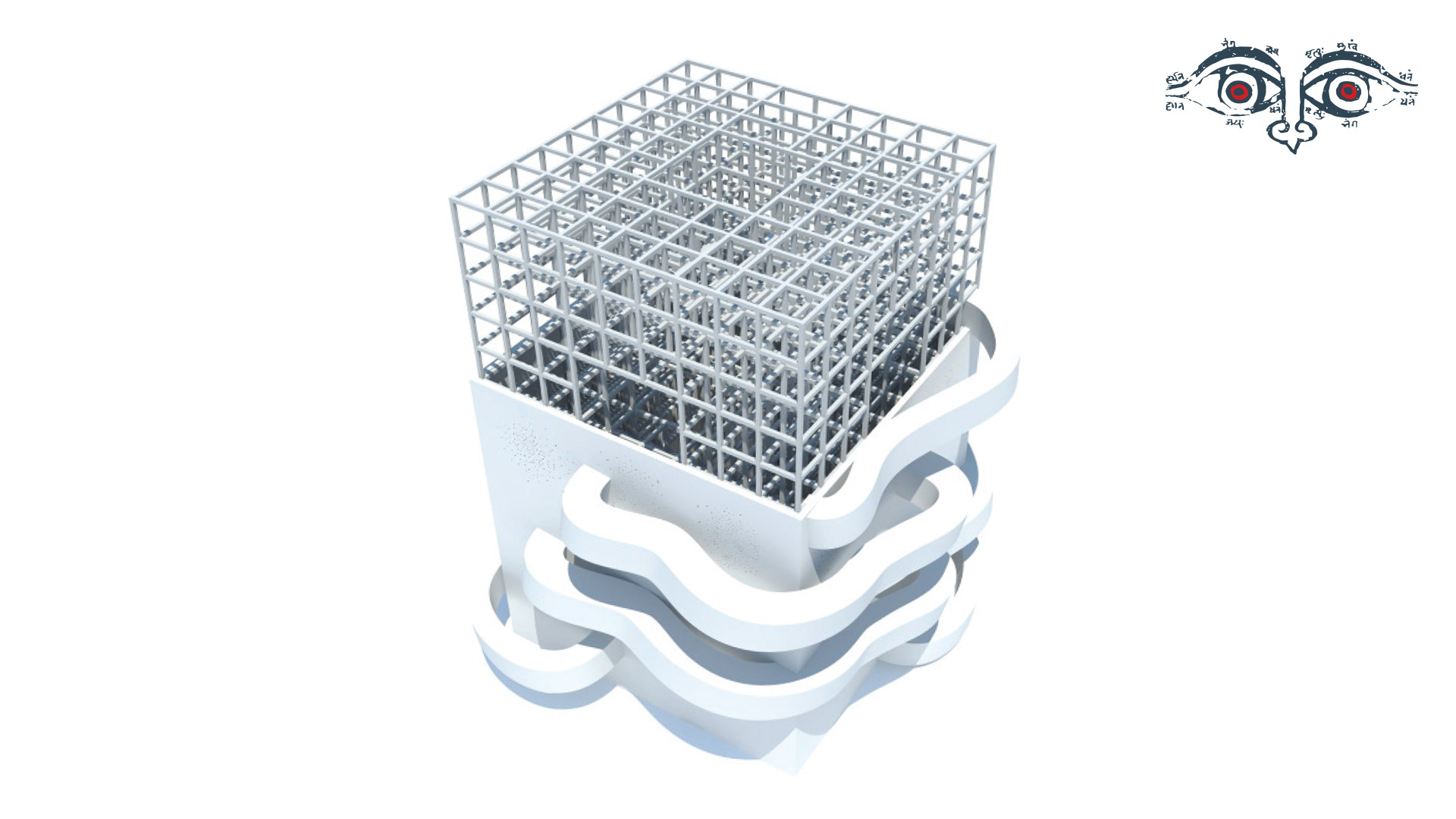
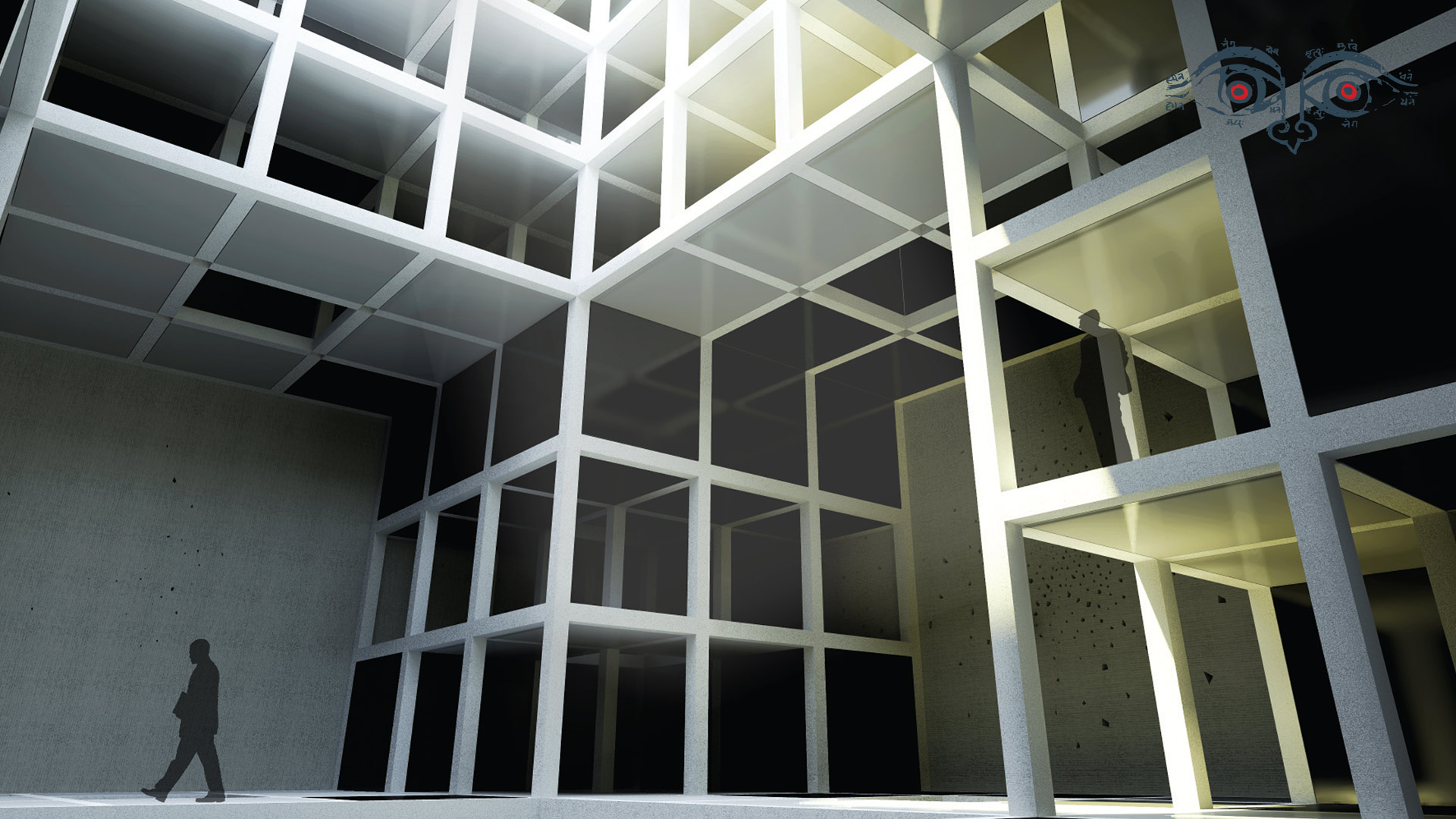
"We found an architectural solution in fractal geometry - more precisely, in the Menger-Sierpinski sponge, a three-dimensional object that simultaneously has an infinite surface and contains zero volume. This choice is not a mere formal game, but a direct translation of a philosophical problem into spatial language.
A fractal, as defined by the mathematician Mandelbrot, is a form in which each part represents a reduced copy of the whole. In the context of the siege of Sarajevo, this definition takes on a new, deep meaning: each individual story of survival contains the entire siege; every improvised stove, every can turned into a lamp, every chicken coop on the balcony – is not only a personal artifact but also a fragment of collective experience. The city collective was under siege, but people lived through it in their own individual ways.
The use of fractal geometry in architecture has its own tradition - from the organic forms of Gaudí's Sagrada Familia to the parametric experiments of contemporary digital architecture. But here the fractal is not an ornament or a formalistic experiment; it is a structural principle that enables the museum to function on multiple scales simultaneously. The Menger-Sierpinski sponge, with its paradoxical nature (infinite surface area, zero volume), becomes the perfect metaphor for the experience of siege: infinitely rich in the details of human survival in exceptional circumstances.
This spatial logic allows the museum to avoid the classic museum hierarchy - where there is a clear narrative line, beginning and end, main story and side stories. Instead, we designed 60 themed boxes that form a meaningful whole in which all parts communicate simultaneously, but where no part loses its specificity. The visitor moves through a labyrinthine, dynamic space that reflects the experience of life under siege: there is no clear centre, no safe path, but there is a structure - the structured chaos of human survival.
This approach represents a radical departure from traditional museology. While the classical museum organizes knowledge linearly and hierarchically - from entrance to exit, from less important to culmination - our museum functions as a network, as a rhizome in the Deleuze-Guattari sense. Every point can be an entrance, every path through the museum is valid, every interpretation is legitimate. This is not relativism, but an acknowledgment of the complexity of the experience we are documenting."
Architectural conceptual design: STUDIO ZEC + ahA + FILTER
The museum celebrates neither collectivity nor individual heroism; it documents the tension between them, the space where both manifest.
Spatial diversity as an architectural principle
"In designing the museum, we deliberately used radically different spatial scales – from urban and public to private and intimate proportions. This spatial diversity is not an aesthetic decision but a direct representation of the "infinity of the human mind in all its rational and irrational powers".[1]
The history of architecture knows several examples where the play with scale is used as a narrative tool. Piranesi used monumental scale in his Carceri (Dungeons) to create a sense of threat and alienation. In our project, the constant change of scale – from large, collective spaces to small, almost claustrophobic "rooms" – reflects the very rhythm of life under siege.
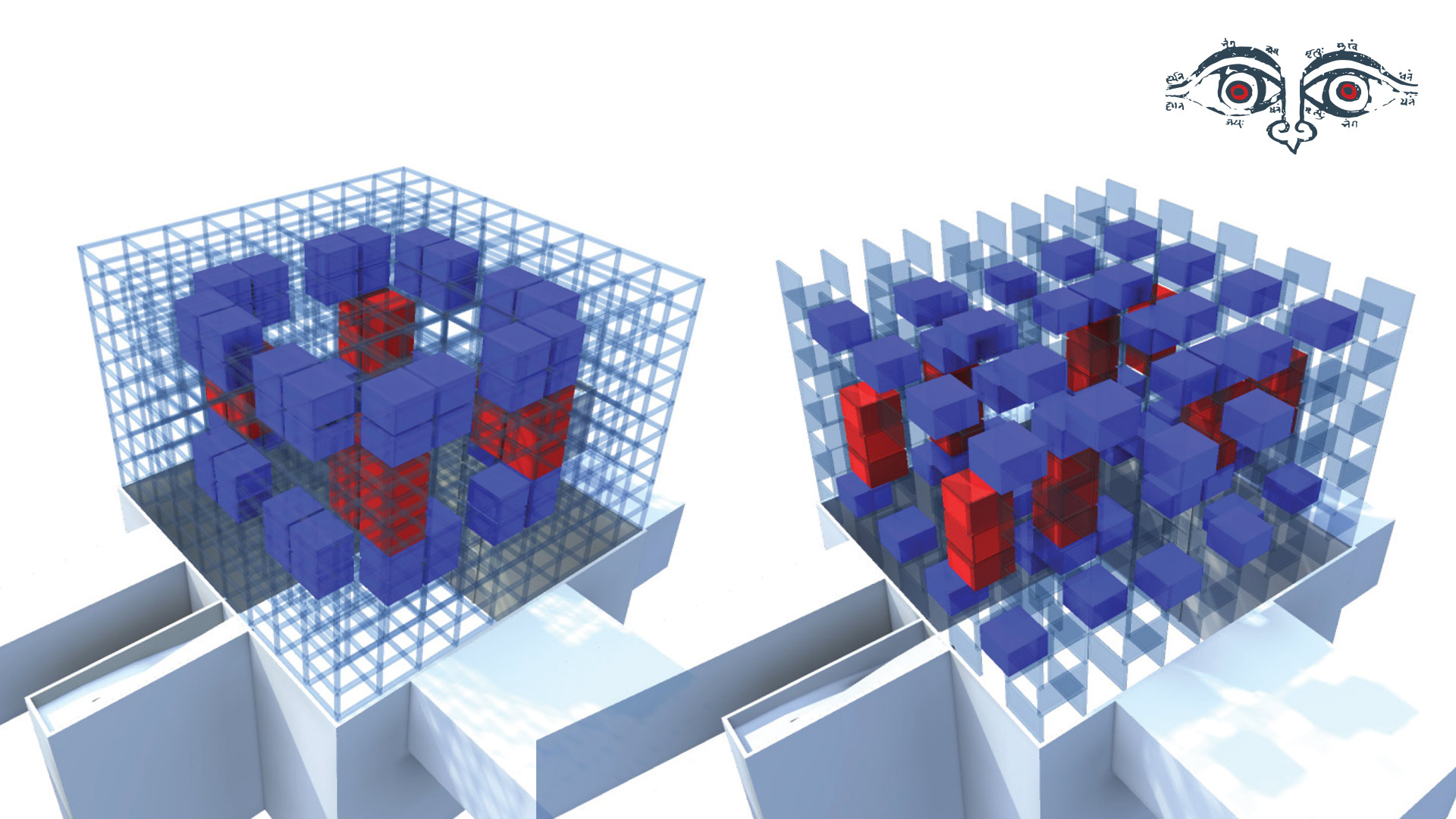
Architecturally, this manifests itself through the relationship between structure and infill, between the skeleton and the organs of the museum. The fractal structure represents the collective framework – it is given, inevitable, as the siege itself was. But within that structure, 60 thematic boxes represent individual spatial articulations, each with its own character, its own atmosphere, its own unique relationship to the visitor. Some boxes are tall and narrow (like corridors in Sarajevo buildings where people moved in fear of snipers), others are low and wide (like shelters where life took place horizontally), others are completely closed with controlled light entry (like basements that have become homes).
This dichotomy – the closed, irrational collective mind versus the open, creative individual mind – lies at the heart of our architectural concept. The museum celebrates neither collectivity nor individual heroism; it documents the tension between them, the space where both manifest."
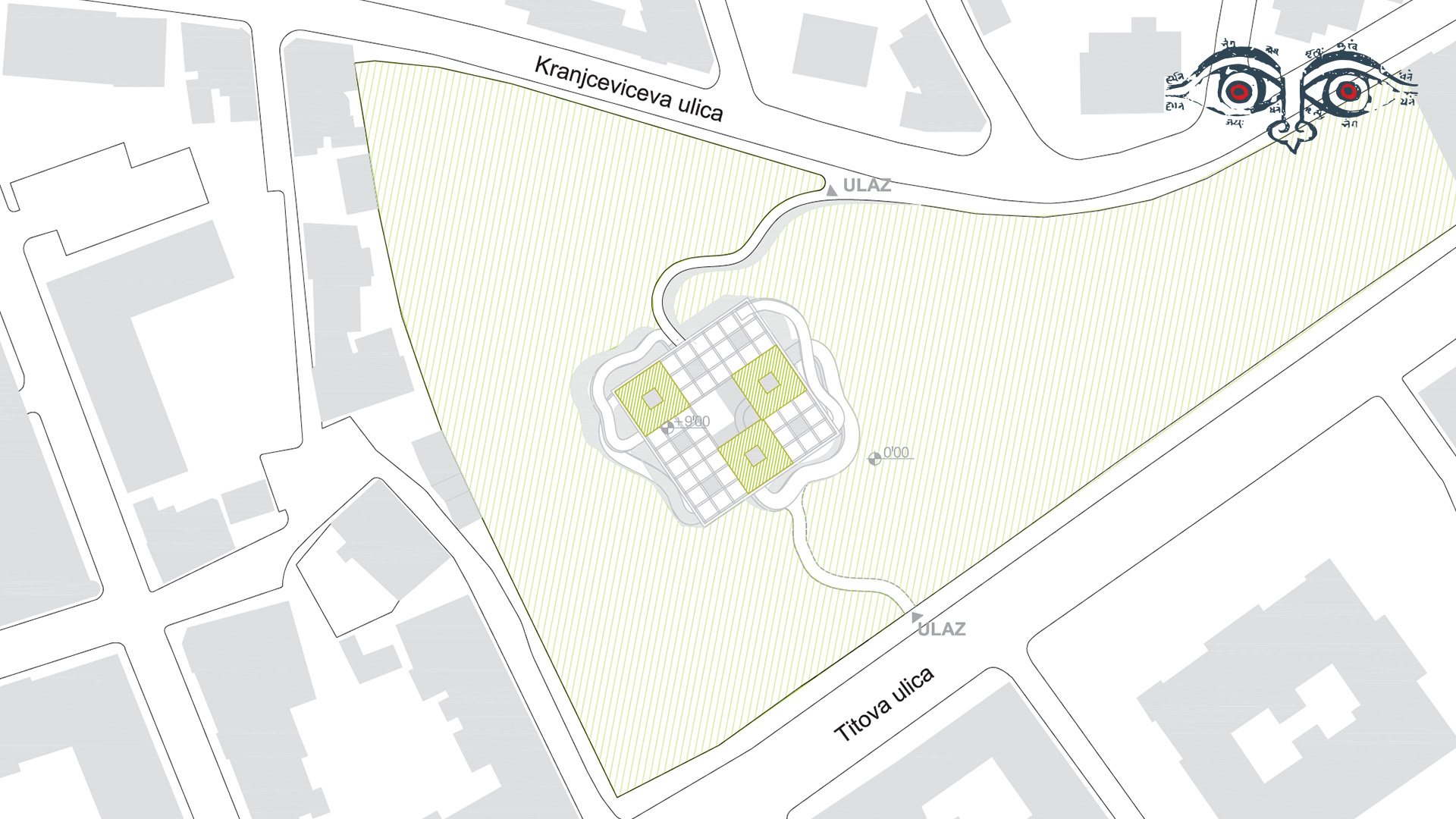
Architectural conceptual design: STUDIO ZEC + ahA + FILTER
60 thematic boxes represent individual spatial articulations, each with its own character, its own atmosphere, its own unique relationship to the visitor.
Boundaries as membranes
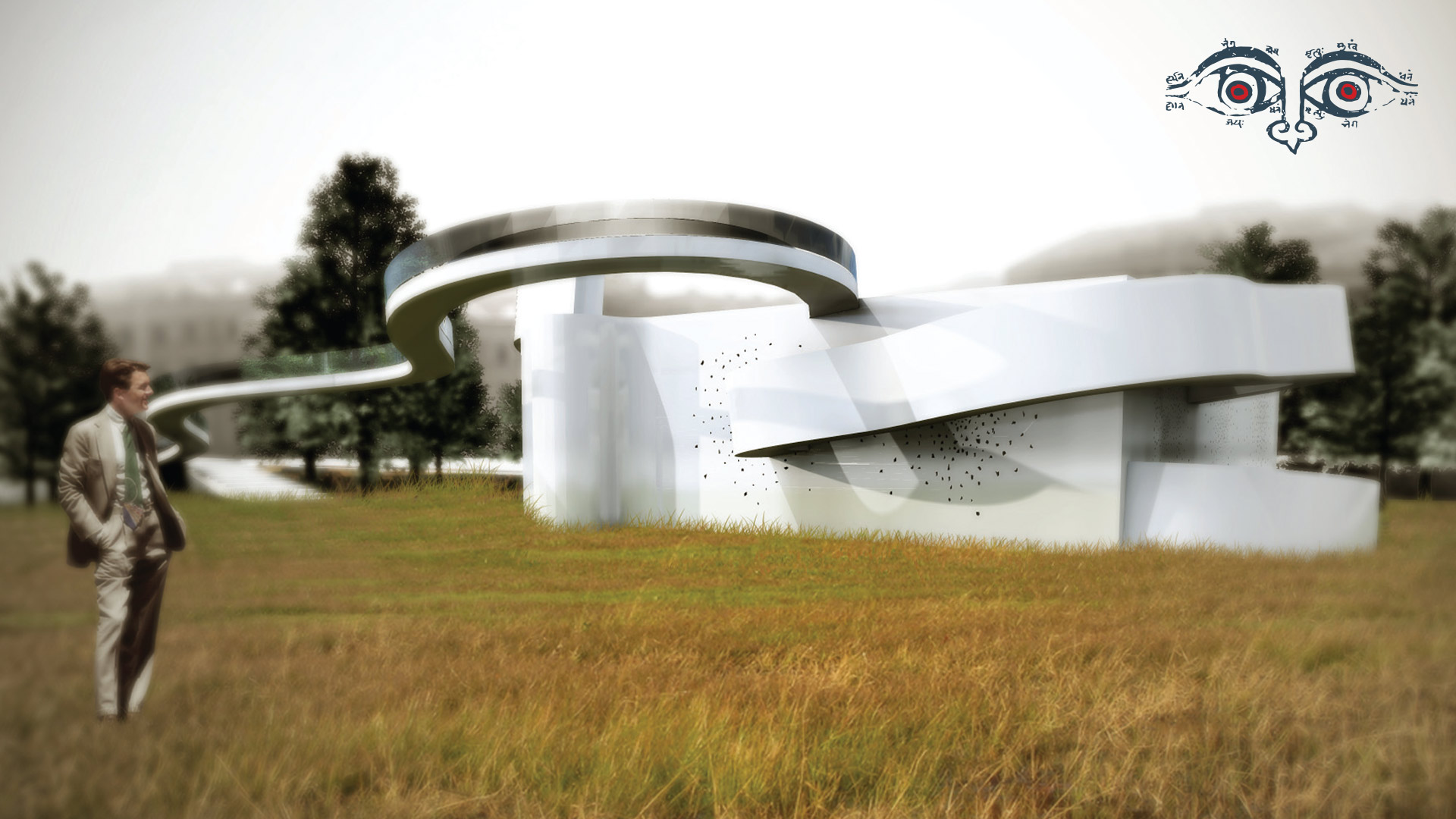
"In the architectural concept, we pay special attention to the boundaries of the museum - Entrance/Exit - conceived as membranes "in which the experience is stored".[2] This is not a random choice of terminology. The membrane is a permeable boundary, a place of exchange, not a wall. Entering the museum is not a transition to another world, but a transformation of the perception of this world.
The membrane concept has a rich history in architectural theory. Gottfried Semper in his work "Der Stil" (1860-63) identified the textile fence as the first and primary architectural action – before the construction, before the roof, comes the membrane that defines inside and outside. This idea of textiles as an original architectural material, as a flexible membrane between interior and exterior, has had a profound impact on architectural expression throughout history – from nomadic tents to contemporary tension structures and double skin facades. In our project, the entrance/exit is not a monumental gate (as in classical museums where architecture is used to impress and establish authority), but a transformation zone, a transitional space where the visitor prepares for a different way of perception.
Physically, this zone is projected as a series of semi-transparent layers – the material equivalent of transitioning between states of consciousness. The visitor does not come to "learn about the siege" as a finished historical event, but to change, if only for a moment, his way of thinking. We designed the museum as an infrastructure – it is not a static object but a system that can be dynamically filled with knowledge, memories and creativity that changes over time.
This approach is different from the monumental memorials we know. While traditional memorials - from ancient mausoleums to modernist monuments - have always strived for permanence, static, imprinted in stone or concrete as a lasting testimony, our museum accepts fluidity, changeability, adaptability. This is not accidental - it is a direct lesson from the siege: survival depends on the ability to adapt, on accepting change as a constant.
Here we return to the paradox of the individual and the whole: each visitor will have his own experience of the museum, create his own path through the labyrinth, focus on different boxes, build his own narrative. But at the same time, they all participate in the same structure, they are all part of the same system. Just as the citizens of Sarajevo during the siege developed individual survival strategies within the same closed system of the city."
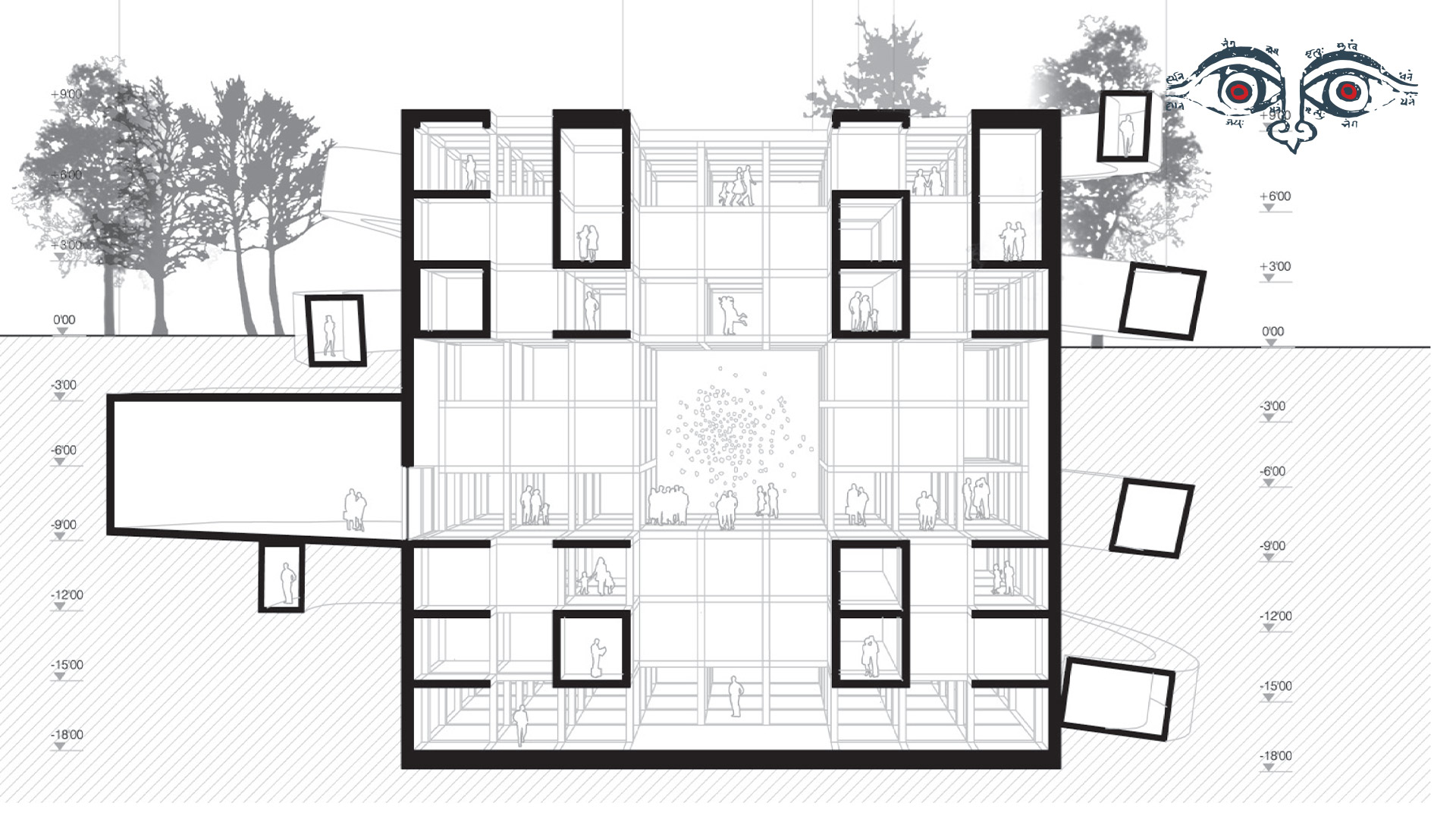
Architectural conceptual design: STUDIO ZEC + ahA + FILTER
The materials we choose are not neutral - each carries a meaning. Recycled elements, taken from real buildings from the time of the siege, become part of the structure - not as museum installations but as constructive elements.
Museum as Infrastructure
"The central question of the project is: how can the architectural space simultaneously preserve the material artifacts of the siege and transmit the immaterial knowledge of the philosophy of survival that created these artifacts?
We find the answer in a radical redefinition of what a museum as a type of institution can be. The traditional museum - from the British Museum to the Louvre - functions on the principle of accumulation, classification, preservation. The objects are taken out of their original context, placed in a neutral, controlled space and presented as part of a larger story created by the institution.
Our museum does the opposite. Instead of taking objects out of context, we try to reconstruct the context - not physically (that would be Disneyland falsification) but cognitively and experientially. Each thematic box is not just a display but a micro-environment that activates different ways of perception and thinking.
The heritage of Sarajevo is not a collection of objects but a collection of knowledge. Not a siege museum, but a survival museum. Not a retrospective of suffering, but a prospective of resilience. In the 21st century, when terms like "art of living", "recycling", "adaptation to change" and "freedom from fear" are high on the global agenda, Sarajevo offers empirically tested answers.
Here we return to the idea of the museum as infrastructure. Infrastructure is a system that enables something else - the road enables transport, the electrical network enables lighting, the water network enables hygiene. Our museum is an infrastructure for the production of knowledge, for the transformation of experience, for the transfer not only of information but of ways of thinking.
Cedric Price, a British architect known for his radical ideas (Fun Palace, Potteries Thinkbelt), spoke about architecture as an enabling force - a force that enables, not imposes. Our museum follows this logic: it does not tell the visitor what to think, but gives him the tools to reconstruct the experience himself, to interpret it himself, to draw his own conclusions.
That is why we are not designing the museum as a traditional building, but as a system that enables the transmission of not facts but ways of thinking. "Living history", philosophy, technology through time - all these make up layers of experience that the visitor needs to "experience as it was and as he can understand and learn"."[3]
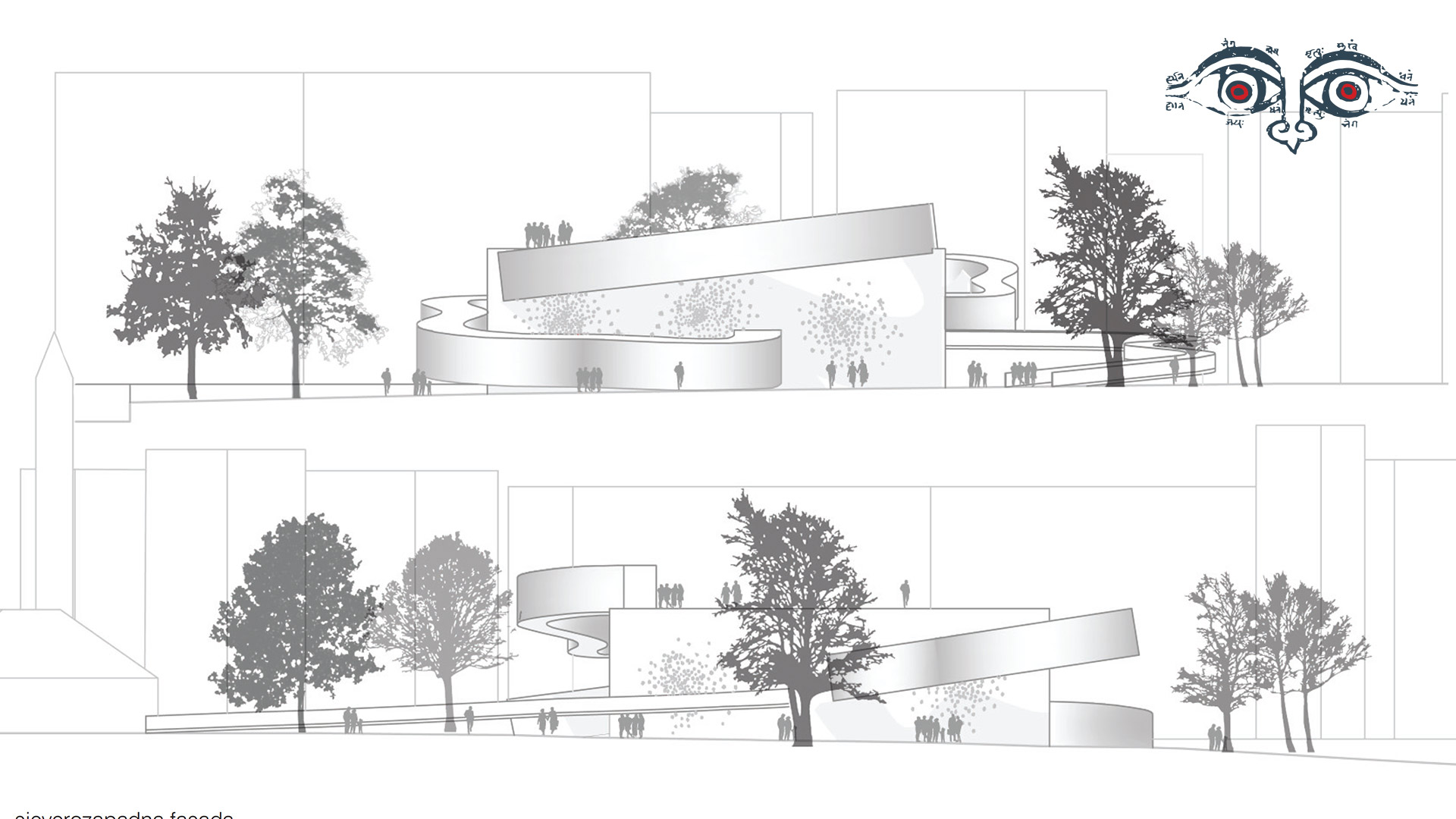
Architectural conceptual design: STUDIO ZEC + ahA + FILTER
Instead of taking objects out of context, we try to reconstruct the context - not physically (that would be Disneyland falsification) but cognitively and experientially. Each thematic box is not just a display but a micro-environment that activates different ways of perception and thinking.
Materialization of the concept
"The materials we choose are not neutral - each carries a meaning. Recycled elements, taken from real buildings from the time of the siege, become part of the structure - not as museum installations but as constructive elements. Wood from old Bosnian houses becomes part of the skeleton of the museum. Bricks from demolished buildings become part of the entrance membrane. This is not sentimentality but an architectural principle: material as a carrier of memory.
But at the same time, we also use modern materials and technologies. Glass surfaces that enable controlled transparency, LED systems that can simulate different light regimes (from complete darkness to glaring sun - like during a siege), acoustic panels that enable different sound environments (from silence to the sounds of grenades). Technology here is not a spectacle but a tool for creating an experience.
This combination of old and new, authentic and simulated, analog and digital - reflects the very act of survival in the siege where old knowledge and new conditions had to be combined into creative hybrid solutions. Burning wood in a makeshift stove (old technology) while listening to the radio on batteries (new technology). Cooking traditional food (cultural heritage) with a minimum of ingredients (crisis).
Spatially, the fractal structure is materialized through a modular system of metal frames that are repeated at different scales – from structural elements that support the building to smaller frames that define individual boxes. This system enables flexibility: boxes can be added, replaced, redefined without disturbing the basic structure. It is an architecture that anticipates change, that is designed to evolve.
Light becomes a key architectural element. Different parts of the museum have different lighting regimes – some are completely naturally lit (like the rooftop gardens that were vital during the siege), others use only artificial light that simulates improvised candles and lamps, others play with contrasts of light and shadow to recreate the atmosphere of life under constant threat. The light here is not only functional - it is narrative, emotional, experiential."
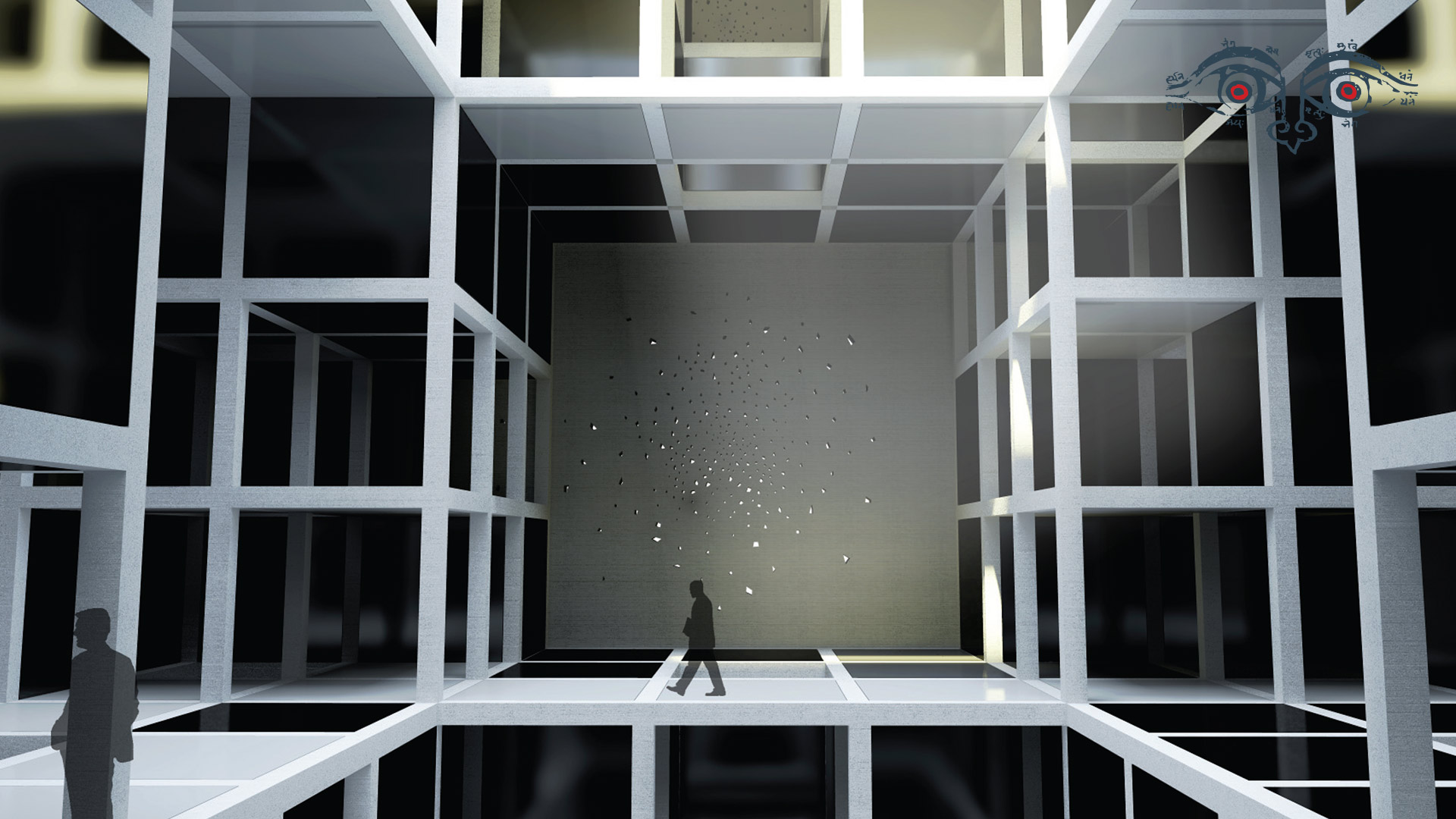
Architectural conceptual design: STUDIO ZEC + ahA + FILTER
Our museum is an infrastructure for the production of knowledge, for the transformation of experience, for the transfer not only of information but of ways of thinking.
The context of contemporary museum architecture
"If we place this project in the wider context of museum architecture of the 21st century. After the Guggenheim effect - where museums like Gehry's Guggenheim in Bilbao became above all spectacular objects, icons, tourist magnets - there was a critical reflection. Is the museum first an architecture or an institution? Does the architecture serve the content or the content for the architecture?
Our museum is trying to find a third way. Architecture is not a neutral background (as in the white cube gallery), but it is not a dominant spectacle either (as with Gehry or Hadid). Architecture is an active participant in the creation of experience - it guides, suggests, enables, but does not dictate.
Perhaps the closest relative to our museum is Sou Fujimoto's concept of "architecture as a forest" - where the space is organized not as clearly defined rooms but as a system of possibilities, where the visitor makes his way through a denser or sparser forest.
In the context of museums dealing with trauma and memory, our approach also represents an alternative. Libeskind's Jewish Museum in Berlin uses architectural form to create a powerful emotional impact – sharp angles, disorientation, emptiness. Eisenman's Memorial to the Murdered Jews of Europe in Berlin uses the repetitive geometry of concrete blocks to create a sense of disorientation. Our museum does not want to shock or disorient - it wants to enable understanding through experience, to convey knowledge, not just emotion."
Architectural conceptual design: STUDIO ZEC + ahA + FILTER
The Museum of the Siege of Sarajevo was designed as a bridge - between the individual and the collective, between local trauma and universal lessons, between fear and hope. His architecture does not provide definitive answers but "articulates a framework for something so complex, incomplete and infinite".
Conclusion: Bridge between Fear and Hope
"In the end, the Museum of the Siege of Sarajevo was designed as a bridge - between the individual and the collective, between local trauma and universal lessons, between fear and hope. His architecture does not provide definitive answers but "articulates a framework for something so complex, incomplete and infinite".[4]
In this sense, the museum reflects the essence of the experience we are documenting: life under siege was both collective and extremely individual, rational and irrational, organized and chaotic. People have accepted that "abnormal is normal", that change is a constant, that energy should not be spent on questions but on action.
The fractal structure of the museum, with its 60 thematic boxes, does not try to homogenize the experience, but quite the opposite - to preserve its complexity, diversity, and even contradiction. Because if anything, the siege of Sarajevo proved that the human mind under pressure produces an endless variety of responses - from the most irrational hatred to the most creative solidarity.
The architecture of this museum, therefore, does not only serve to house the content, but is an active participant in the transfer of knowledge. It forces visitors to find their own way, to create their own narrative, to experience fragmentation and connection at the same time. Exactly as the inhabitants of Sarajevo had to do between 1992 and 1996 - each for himself, all together."
Architectural conceptual design: STUDIO ZEC + ahA + FILTER
People have accepted that "abnormal is normal", that change is a constant, that energy should not be spent on questions but on action.
Footnotes:
[1] Studio Zec + ahA + Filter, "The Siege of Sarajevo Museum - The Art of Living 1992-1996 Fama Collection", ArchDaily, published on: https://www.archdaily.com
[2] Ibid.
[3] Internal project document of the Museum of the Siege of Sarajevo, guidelines for conceptual development, 2010-2012
[4] Studio Zec + ahA + Filter, "The Siege of Sarajevo Museum - The Art of Living 1992-1996 Fama Collection", ArchDaily, published on: https://www.archdaily.com
What can happen to 'them' can easily happen to 'us'. Numerous events in recent history have shown us that a transboundary crisis operates in one and every space simultaneously – as a result, we will soon realise that our reality has become a Shared Reality. As such, the inherently flawed concept of defining relationships within society, and among different groups as 'them' and 'us' is simply not applicable in the current scheme of things. For when interconnected risks become the New Normal, what can happen to 'them' can easily happen to 'us'. Subsequently, it becomes clear how little difference it will make if you are situated north or south of the equator, or if you are governed from the left, or right of the political centre. The only distinction that will matter will be between those who are resilient to incoming changes, and those who are not. The comparative history of mankind best illustrates that there is an all-comprehensive mind we are all part of, we all share. At some point we realize that we, as human race, all think alike. That’s why Sarajevo experience is so important for the human kind as a great heritage of human potentials in extreme conditions. Therefore, it is our objective to launch an evidence-based philosophy of Adapting to Changes using Creativity as we progress through the 21st century. The FAMA COLLECTION has become a new museum digital format, and is considered to be the largest independent collection of multi-media projects pertaining to the Siege of Sarajevo (1992-1996) and related events in reference to the Fall of Yugoslavia (1991-1999) in the world. Over the years, the collection has grown, amidst impossible conditions (the siege and post-war transition), in variety of pioneering concepts, topics and international acknowledgments. In addition to its scale, historical-educational importance and mapping approach to 'documented documents' and collective memory, the Collection itself, projects a new approach as to how facts and evidence can be documented, and causes and consequences of the events mapped-out in a genre that is accessible to a wide-spectrum audience. Currently, all the projects are being digitised and integrated through highly interactive online educational platform known as FAMA Collection.